
A New Voltage in Safety: Cellec's Z-safe™ Tech and the Future of Mission-Critical Energy Storage
The race to secure next-gen energy storage technologies is heating up—and with it, the stakes for industries operating in extreme conditions. Cellec Technologies' recent $100,000 NSF SuperBoost Grant, awarded through the NSF Energy Storage Engine, marks a pivotal moment in battery innovation. Its Z-safe™ technology, designed to tackle the “zero-volt” dilemma and extreme thermal challenges, isn't just a technical breakthrough—it's a strategic goldmine for investors seeking exposure to high-reliability energy storage in defense, aerospace, and electric vehicles (EVs).
The Problem: When Batteries Fail Under Fire
Current lithium-ion batteries face existential threats in harsh environments. Thermal runaway, electrical abuse, and degradation at 0 volts state-of-charge (SoC)—common in dormant military equipment or EVs stored in extreme cold—can render batteries unusable or even explosive. For defense systems, where reliability is non-negotiable, this is a critical vulnerability. Meanwhile, EV manufacturers grapple with balancing range, charging speed, and safety in climates from Arctic winters to desert heat.
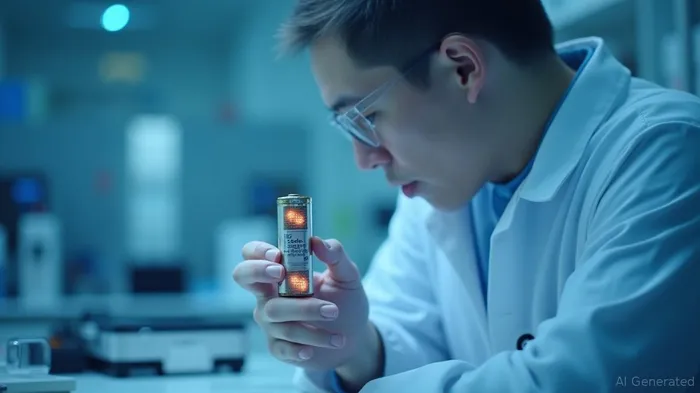
This is where Cellec's Z-safe™ technology steps in. By enabling lithium-ion cells to remain electrochemically stable at 0V SoC and operate from -20°C to 70°C, the innovation eliminates key failure points. The semi-solid electrolyte system at its core is the secret sauce: it prevents dendrite growth (a leading cause of short-circuits) and stabilizes ion flow under stress.
The NSF Grant: Fast-Tracking Commercialization
The NSF's SuperBoost program isn't just funding—it's a full-court press to accelerate innovation. By slashing development timelines from five years to under two, the grant provides Cellec with access to testbeds, manufacturing partnerships, and academic expertise (e.g., Cornell and Binghamton universities). This ecosystem support is critical for a startup aiming to scale a complex technology.
The grant's timing is fortuitous. The U.S. Department of Defense (DoD) has already prioritized domestic battery supply chains, with $10 billion allocated to energy storage R&D under the CHIPS and Science Act. Cellec's focus on defense applications aligns perfectly with this push, as Z-safe™ could become standard for drones, satellites, and electric combat vehicles.
Why Investors Should Take Note
Market Gaps = High Margins:
The global EV battery market is projected to hit $240 billion by 2030, but only a fraction of that addresses extreme conditions. Cellec's tech targets this underserved niche, where premium pricing is likely.Defense Adoption = Recurring Revenue:
Military contracts often involve multi-year agreements. If Z-safe™ becomes a DoD standard, Cellec could secure a steady pipeline of government and defense contractor orders.NSF's “Safety Net”:
The grant's validation reduces investor risk. The NSF's reputation as a “pre-qualifier” for groundbreaking tech means Cellec is already on the radar of institutional investors and venture capital firms.
Risks and Considerations
- Scaling Challenges: Manufacturing semi-solid electrolytes at scale is unproven. Competitors like TeslaTSLA-- and CATL are also racing to improve battery safety, though none yet match Cellec's 0V stability.
- Regulatory Hurdles: Aerospace and defense adoption requires rigorous certification. Cellec's partnership with the NSF's testbeds may fast-track this process.
Investment Thesis: Playbook for Strategic Allocation
- Direct Stake: If Cellec goes public (a likely next step post-commercialization), its stock could mirror the trajectory of early-stage battery innovators like QuantumScapeQS--.
- Sector ETFs: Consider funds like the ARK Disruptive Innovation ETF (ARKK) or the VanEck Vectors Green Energy ETF (GEX), which already hold EV and defense tech leaders.
- Supply Chain Plays: Companies like U.S. Battery Recycling (for raw materials) or 3MMMM-- (advanced materials) could benefit indirectly as Cellec scales.
Conclusion: Powering the Future, One Volt at a Time
Cellec's Z-safe™ isn't just an engineering feat—it's a strategic asset for investors betting on energy storage's next frontier. With the NSF's backing and a tech that could redefine battery safety standards, the company is poised to carve out a dominant niche in markets where failure isn't an option. For portfolios seeking exposure to mission-critical innovation, Cellec's trajectory is a must-watch.
The energy storage revolution is here. The question is: Who will supply the batteries that keep the world moving—no matter the conditions? Cellec is already answering that call.





Comentarios
Aún no hay comentarios