
How Voltage Metals Mastered Capital Reallocation and Royalty Leverage in a Critical Metals Deal
The mining sector is a study in capital allocation: where to invest, when to pivot, and how to extract long-term value from assets even after they're sold. Voltage Metals Corp.'s (CSE: VOLT) recent completion of its option agreement with Plethora Green Energy Corp. exemplifies this strategic calculus, delivering immediate liquidity while retaining high-potential royalty streams in a booming critical metals market. This isn't just a transaction—it's a playbook for maximizing shareholder value in a resource-constrained world.
The Deal: A Symphony of Immediate Gains and Future Upside
On May 12, 2025, Voltage closed its option agreement with Plethora Green Energy, which acquired 100% ownership of mineral claims in Ontario's St. Laurent Township for $450,000, paid in full. But the real magic lies in what Voltage retained: a 1.5% net smelter return (NSR) royalty on any future production from the property. This royalty is perpetual—meaning it generates income for Voltage every time the ore is mined and sold—unless Plethora chooses to buy it down to 0.5% or eliminate it entirely by paying an additional $1 million.
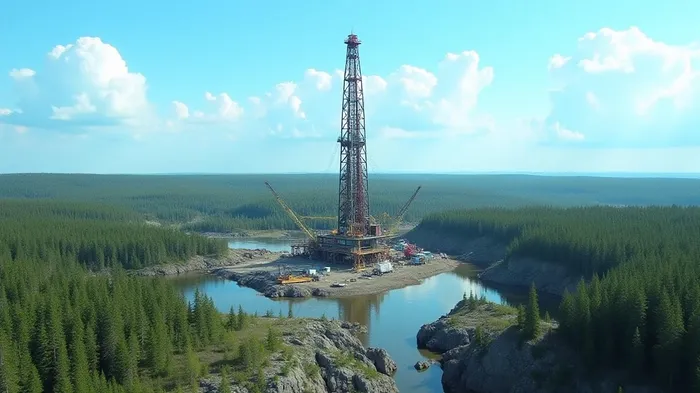
This structure is a masterclass in capital reallocation. Voltage secures $450,000 upfront to reinvest in its core projects, while locking in a self-funding royalty that could pay dividends for decades. For investors, this reduces reliance on dilutive financing while positioning Voltage as a beneficiary of any future success at the St. Laurent property.
Why Royalty Leverage Matters Now
Royalties are the unsung heroes of mining investing. Unlike equity stakes, they offer low-risk, high-reward exposure to exploration outcomes without the operational headaches. Voltage's 1.5% NSR is particularly compelling because:
- It's a guaranteed income stream tied to production, not exploration success. Even if the property takes years to develop, once mining begins, Voltage gets paid.
- The buy-down terms incentivize Plethora to keep the property productive. To eliminate the royalty, Plethora must pay $2 million total—unlikely unless the project is highly profitable. That means Voltage's upside scales with the project's success.
Consider this: If the St. Laurent claims host a million-ounce critical metals deposit (a plausible scenario given its proximity to past-producing mines), a 1.5% NSR could generate millions annually. Even a fraction of that outcome would justify Voltage's valuation.
The Bigger Picture: Voltage's Strategic Focus on Canadian Critical Metals
This deal isn't an outlier—it's part of Voltage's deliberate strategy to focus on high-potential Canadian projects near existing infrastructure, a move that reduces costs and regulatory risks. Ontario's mining-friendly environment and its rich deposits of lithium, nickel, and cobalt (critical for EV batteries) make St. Laurent a prime target.
Moreover, Voltage's ability to walk away from non-core assets while retaining profit-sharing rights frees it to prioritize its strongest projects. The company's October 2023 share purchase agreement with Stichting Legal Owner Plethora Private Equity—a separate transaction—also signals its willingness to partner with deep-pocketed players to advance its pipeline.
Risks? Yes, but They're Manageable
No deal is risk-free. The St. Laurent property might not yield commercial-grade minerals, or metal prices could crater. However, Voltage's royalty model mitigates these risks: the company only gains if the project succeeds. Meanwhile, the $450,000 inflow strengthens its balance sheet to pursue other opportunities.
The Investment Thesis: Buy the Royalty, Not the Rock
Investors should see Voltage as a royalty-driven income play with optionality for capital appreciation as its portfolio projects advance. The St. Laurent deal exemplifies how the company is transforming from an explorer into a capital-efficient royalty engine, a model that's proven lucrative in the oil and gas sectors for decades.
With critical metals demand surging—EV adoption is expected to triple by 2030—and Canada's mining sector on fire, Voltage's timing is impeccable. This isn't just about one property; it's about building a royalty portfolio that turns every successful project into a revenue generator without endless capital chasing.
Final Call: Act Before the Royalty Train Leaves the Station
The writing is on the wall: critical metals are the new oil. Voltage Metals has positioned itself to profit from this shift by monetizing assets smartly and retaining royalty stakes in high-potential projects. With cash in hand and royalties in place, this is a rare chance to invest in a company that's already winning in a sector that's only going up.
The question isn't whether to buy—it's whether you can afford not to.
Voltage Metals Corp. (CSE: VOLT) shares closed at [X] on May 26, 2025. For context, the company's market cap is [Y], and it holds [Z] in cash reserves post-transaction. (Data as of May 26, 2025).







Comentarios
Aún no hay comentarios