
Volta Metals' Springer Deposit: A Game-Changer in the Global Rare Earth Supply Chain
The global transition to clean energy and advanced technologies has thrust rare earth elements (REEs) into the spotlight, with demand for high-performance magnets and critical materials surging. At the heart of this transformation lies Volta Metals' Springer Rare Earth and Gallium Deposit in Ontario, Canada-a project that has recently demonstrated extraordinary potential to reshape the supply chain. With 2025 drill results revealing high-grade mineralization and strategic partnerships advancing metallurgical innovation, Springer's role in addressing global supply chain vulnerabilities and geopolitical risks is becoming increasingly compelling for investors.
High-Grade HREEs and TREOs: A Strategic Asset
Volta Metals' 2025 drilling program at Springer has significantly expanded the deposit's resource base, with all boreholes intersecting continuous rare earth mineralization below the 2012 resource estimate. Notably, borehole SL25-24 returned 0.95% total rare earth oxides (TREO) over 438.9 meters, including a high-grade interval of 1.09% TREO over 351.1 meters, while borehole SL25-23 reported 0.89% TREO over 383.5 meters, with a standout section of 1.71% TREO over 69.5 meters according to drill results. These results underscore the deposit's richness in both light and heavy rare earth elements (HREEs), including dysprosium and terbium, which are indispensable for high-performance magnets in electric vehicles (EVs) and wind turbines according to market analysis.
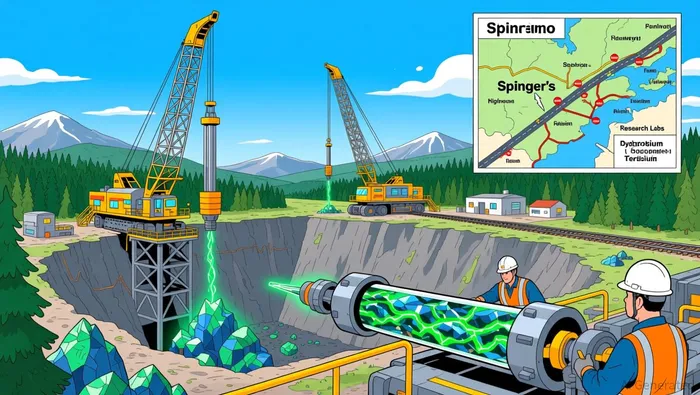
The deposit's open-pit potential at depth and along strike, combined with pending gallium assays, suggests a scalable resource that could meet the growing demand for HREEs. Gallium, a critical component in semiconductors and 5G infrastructure, further enhances Springer's strategic value according to drill program data. By early 2026, Volta plans to update its mineral resource estimate, which could redefine the project's economic viability and attract capital in a market increasingly prioritizing secure, diversified supply chains according to market reports.
A Market in Transition: Demand, Geopolitical Risks, and Investment Trends
The global rare earth market is projected to exceed 220,000–250,000 metric tons of demand in 2025, driven by the energy transition and technological innovation. Permanent magnets, which account for nearly 30% of total consumption, are a key growth driver, with neodymium demand reaching 55,000 metric tons and dysprosium demand hitting 3,200 metric tons in 2025 according to market projections. These HREEs are expected to grow at over 10% annually through 2025, outpacing the market's overall compound annual growth rate (CAGR) of 6.2% according to financial analysis.
However, the market's resilience is constrained by China's dominance. The country controls 60–70% of global REE production and has strategically consolidated midstream processing and intellectual property, creating structural barriers for competitors according to industry analysis. This dominance is exacerbated by geopolitical tensions, as seen in Afghanistan, where China's "security-for-minerals" arrangements with the Taliban have raised concerns about conflict financing and supply chain ethics according to research findings. For instance, elevated geopolitical risks have been shown to increase China's strategic export volumes, further complicating global access to critical materials according to economic studies.
Springer's Strategic Position in a Diversifying Supply Chain
Springer's location in Canada-a politically stable jurisdiction with robust environmental and social governance (ESG) frameworks-further strengthens its appeal. As countries like the U.S. and Europe implement policies to reduce dependency on China, projects like Springer are positioned to fill critical gaps. For example, European automakers have warned that disruptions in rare earth supply could halt EV production, underscoring the urgency of securing alternative sources according to industry research.
Investment Implications
For investors, Springer represents a rare combination of high-grade resource potential, geopolitical relevance, and strategic alignment with decarbonization goals. The project's proximity to existing infrastructure, coupled with its open-pit expansion potential, reduces capital intensity compared to greenfield projects. Moreover, the pending gallium assays and planned resource update in 2026 could unlock significant value, particularly as recycling and secondary feedstock technologies remain underdeveloped according to market analysis.
However, risks persist. The rare earth sector is capital-intensive, and processing HREEs requires advanced technologies that Volta must scale effectively. Additionally, while Springer's location mitigates some geopolitical risks, global supply chain dynamics remain volatile. Investors must weigh these factors against the long-term inevitability of demand growth and the strategic imperative to diversify sources.
Conclusion
Volta Metals' Springer Deposit is more than a geological asset-it is a linchpin in the global effort to secure resilient, ethical supply chains for critical minerals. With high-grade HREEs, a strategic North American location, and partnerships advancing processing innovation, Springer is uniquely positioned to capitalize on the energy transition and geopolitical shifts. As the market evolves, projects like Springer will not only meet demand but also redefine the economics of rare earths, offering investors a compelling opportunity to align with the future of clean technology.







Comentarios
Aún no hay comentarios