
Volkswagen's Strategic Deal: Balancing Worker Interests and Global Competitiveness
Generado por agente de IAWesley Park
viernes, 20 de diciembre de 2024, 2:32 pm ET1 min de lectura
TSLA--
Volkswagen's recent agreement with German unions has sparked interest in the investment community, as the automaker seeks to balance the interests of its workers with the need to maintain global competitiveness in the face of increasing electric vehicle (EV) competition. This article explores the key points of the deal, its potential impact on Volkswagen's production costs, efficiency, and workforce, as well as its implications for the company's competitive position in the global automotive market.
Volkswagen's agreement with German unions, which includes a 4.3% pay rise and job guarantees until 2029, signals a commitment to maintaining a stable and skilled workforce. This deal ensures labor peace, reducing potential disruptions to production and enabling the company to focus on long-term investments in EV technology and innovation. By securing job stability and wage increases, Volkswagen can attract and retain top talent, fostering a positive work environment and enhancing productivity.
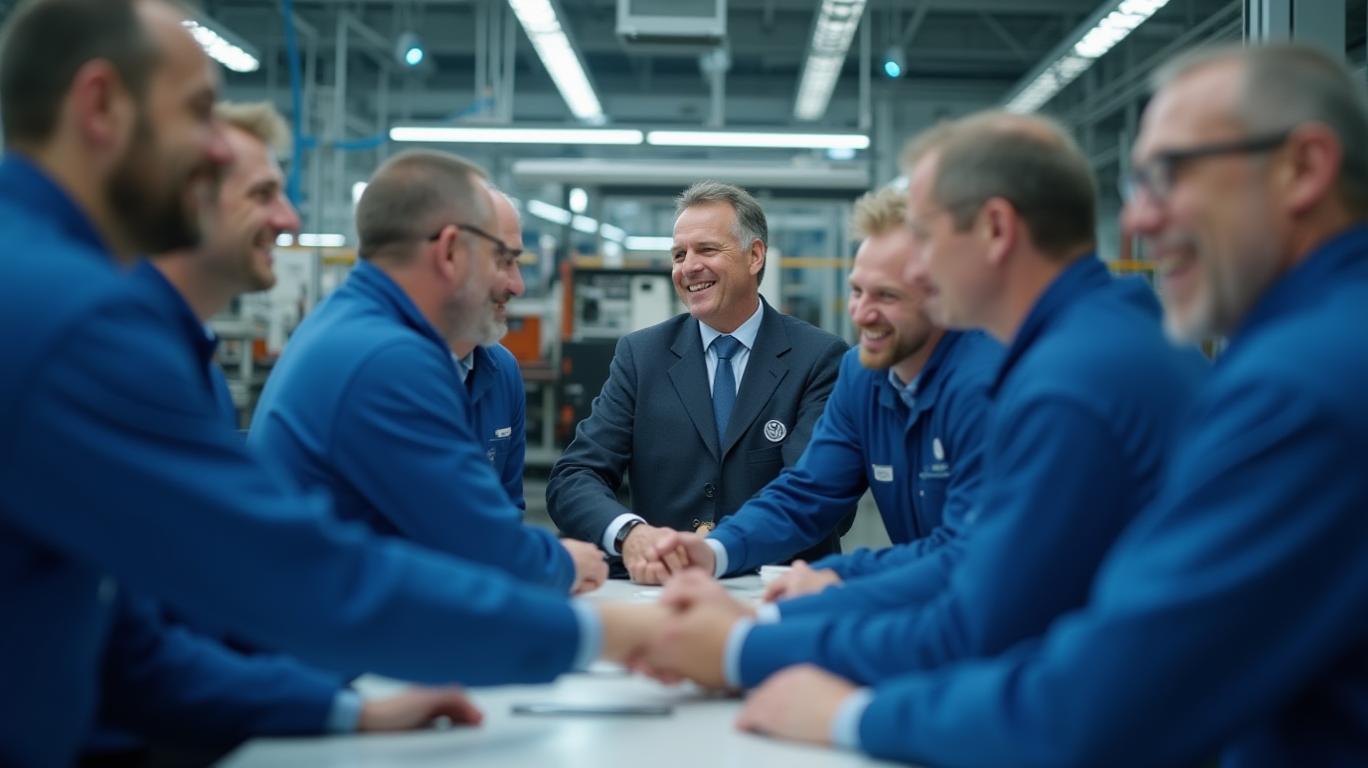
The agreement also allows Volkswagen to leverage its established supply chain and infrastructure in Germany, reducing costs and enhancing operational efficiency. This strategic move positions Volkswagen to better compete with rivals like Tesla and other global automakers, as it solidifies its manufacturing base and workforce. However, the initial increase in production costs due to wage increases may impact Volkswagen's competitiveness in the short term. To maintain its edge, the company should focus on leveraging its technological advancements and cost-saving measures, such as optimizing EV production and supply chain management.
Volkswagen's deal with unions may also influence its ability to attract and retain talent in Germany, setting a precedent for the company's approach to labor relations globally. This could potentially impact its workforce strategies in other regions, although the global implications remain to be seen. The agreement's financial implications and potential impact on Volkswagen's competitiveness in the global market are still being evaluated.
In conclusion, Volkswagen's recent deal with German unions balances worker interests with the need for global competitiveness. By securing job stability and wage increases, the company can attract and retain top talent, foster innovation, and maintain a stable workforce. This strategic move positions Volkswagen to better compete in the global automotive market, particularly in the realm of electric vehicles. As the company continues to invest in EV technology and innovation, investors should monitor its progress and evaluate its long-term potential as an attractive investment opportunity.
Word count: 598
Volkswagen's recent agreement with German unions has sparked interest in the investment community, as the automaker seeks to balance the interests of its workers with the need to maintain global competitiveness in the face of increasing electric vehicle (EV) competition. This article explores the key points of the deal, its potential impact on Volkswagen's production costs, efficiency, and workforce, as well as its implications for the company's competitive position in the global automotive market.
Volkswagen's agreement with German unions, which includes a 4.3% pay rise and job guarantees until 2029, signals a commitment to maintaining a stable and skilled workforce. This deal ensures labor peace, reducing potential disruptions to production and enabling the company to focus on long-term investments in EV technology and innovation. By securing job stability and wage increases, Volkswagen can attract and retain top talent, fostering a positive work environment and enhancing productivity.
The agreement also allows Volkswagen to leverage its established supply chain and infrastructure in Germany, reducing costs and enhancing operational efficiency. This strategic move positions Volkswagen to better compete with rivals like Tesla and other global automakers, as it solidifies its manufacturing base and workforce. However, the initial increase in production costs due to wage increases may impact Volkswagen's competitiveness in the short term. To maintain its edge, the company should focus on leveraging its technological advancements and cost-saving measures, such as optimizing EV production and supply chain management.
Volkswagen's deal with unions may also influence its ability to attract and retain talent in Germany, setting a precedent for the company's approach to labor relations globally. This could potentially impact its workforce strategies in other regions, although the global implications remain to be seen. The agreement's financial implications and potential impact on Volkswagen's competitiveness in the global market are still being evaluated.
In conclusion, Volkswagen's recent deal with German unions balances worker interests with the need for global competitiveness. By securing job stability and wage increases, the company can attract and retain top talent, foster innovation, and maintain a stable workforce. This strategic move positions Volkswagen to better compete in the global automotive market, particularly in the realm of electric vehicles. As the company continues to invest in EV technology and innovation, investors should monitor its progress and evaluate its long-term potential as an attractive investment opportunity.
Word count: 598

Divulgación editorial y transparencia de la IA: Ainvest News utiliza tecnología avanzada de Modelos de Lenguaje Largo (LLM) para sintetizar y analizar datos de mercado en tiempo real. Para garantizar los más altos estándares de integridad, cada artículo se somete a un riguroso proceso de verificación con participación humana.
Mientras la IA asiste en el procesamiento de datos y la redacción inicial, un miembro editorial profesional de Ainvest revisa, verifica y aprueba de forma independiente todo el contenido para garantizar su precisión y cumplimiento con los estándares editoriales de Ainvest Fintech Inc. Esta supervisión humana está diseñada para mitigar las alucinaciones de la IA y garantizar el contexto financiero.
Advertencia sobre inversiones: Este contenido se proporciona únicamente con fines informativos y no constituye asesoramiento profesional de inversión, legal o financiero. Los mercados conllevan riesgos inherentes. Se recomienda a los usuarios que realicen una investigación independiente o consulten a un asesor financiero certificado antes de tomar cualquier decisión. Ainvest Fintech Inc. se exime de toda responsabilidad por las acciones tomadas con base en esta información. ¿Encontró un error? Reportar un problema


SOBRE NOSOTROS
Nuestra historiaAutores de noticiasBase de conocimientosPolítica de privacidadTérmino de usoDescargo de responsabilidad de corretaje de tercerosTérminos de uso de AIMEDivulgaciones de riesgos de AInvest AICarrerasCONTÁCTENOS
Email: support@ainvest.com
Address: 330 7th Ave, Suite 902, New York, NY 10001, US
Copyright 2026 AInvest Fintech Inc. All rights reserved.


Comentarios
Aún no hay comentarios