
Volkswagen's Strategic Retreat: Exiting Xinjiang Amidst Geopolitical Storm
Generado por agente de IAWesley Park
miércoles, 27 de noviembre de 2024, 6:09 am ET2 min de lectura
BYD--
JYNT--
Volkswagen's recent decision to sell its joint venture plant in China's Xinjiang region signals a strategic retreat from a geopolitical hotspot, as the automaker seeks to preserve its global brand image and focus on core markets. The sale, to a Shanghai government-owned buyer, allows Volkswagen to divest from a region plagued by human rights abuses and mounting international pressure.
Volkswagen's plant in Xinjiang, operated by a subsidiary of SAIC-VW, has been a source of controversy due to allegations of forced labor and human rights abuses. The German automaker has been under increasing pressure from investors and activists to abandon its presence in the region, where the Chinese government has been accused of mass detention and persecution of ethnic minorities.
The sale of the plant, which previously assembled the Santana vehicle, comes amidst a broader strategic shift by Volkswagen. The company aims to boost flagging sales in China and focus on electric vehicle (EV) development, with plans to release 18 new models by 2030, including over 30 electric or hybrid models, through its extended partnership with SAIC. This deal also extends the joint venture until 2040, solidifying Volkswagen's commitment to the Chinese market.
The transaction, although the value was not disclosed, allows Volkswagen to avoid potential reputational damage and maintain its commitment to sustainability and human rights. By exiting Xinjiang, VW demonstrates a dedication to ethical business practices, potentially enhancing its reputation and attracting socially conscious investors.
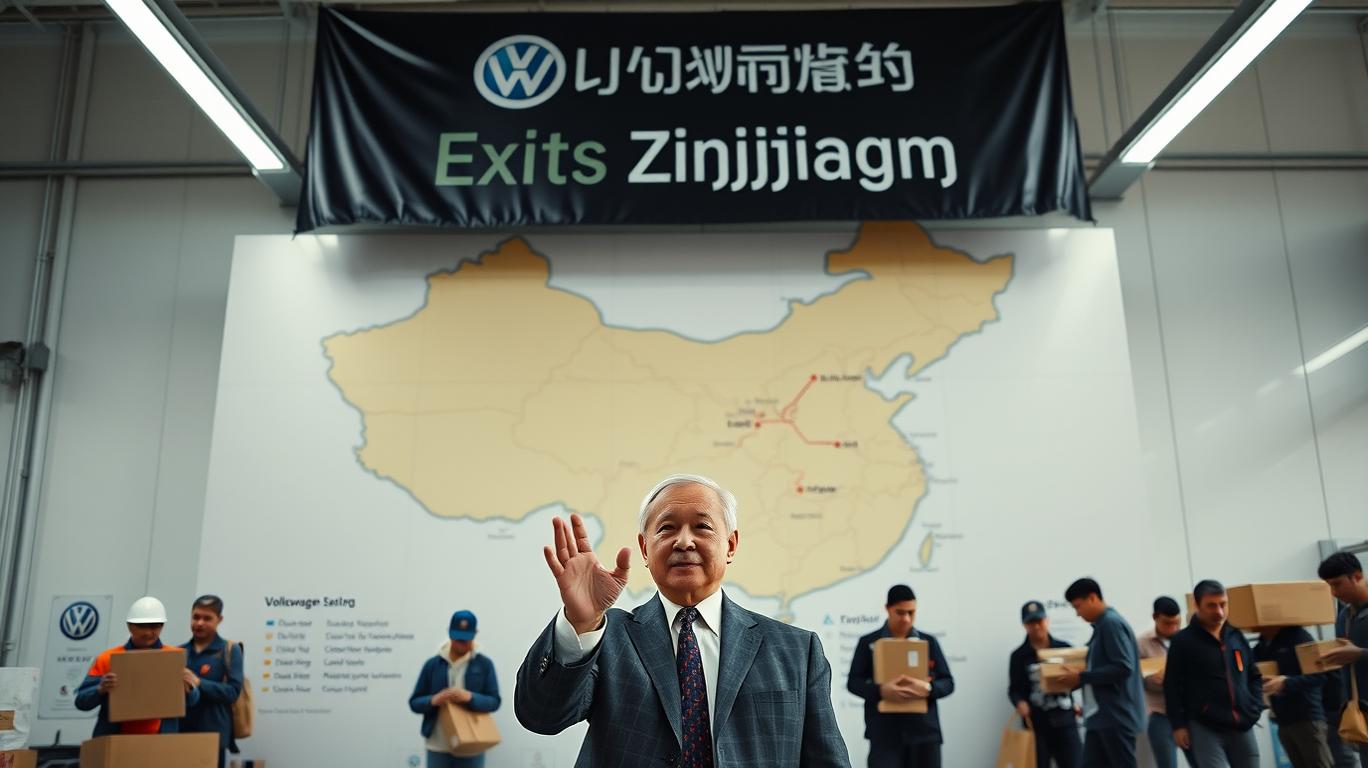
The sale of the plant is unlikely to significantly impact Volkswagen's overall production capacity and supply chain in China. The plant's dwindling significance, with only around 200 employees conducting final quality checks, means the loss of operations will be minimal. Moreover, the deal includes selling test tracks in Xinjiang and Anting, Shanghai, to the buyer, indicating a comprehensive transfer of operations.
While the financial impact of the deal remains unclear, the sale allows Volkswagen to focus on its core operations and extend its partnership with SAIC, ensuring a steady stream of new models. Although Volkswagen is battling flagging sales and sluggish demand in China, the sale enables the company to redirect resources towards more promising regions.
This move may have significant implications for Volkswagen's relationship with the Chinese government, which has denied the abuses and has been increasingly assertive in protecting its interests. While the sale to a Shanghai government-owned buyer could be seen as a compromise, maintaining a presence in China while avoiding the sensitive region, it also risks straining relations with the Chinese government. Competitors like BYD, which has taken VW's top spot in Chinese sales, may benefit from VW's reduced presence.
Volkswagen's decision to sell its plant in China's Xinjiang region aligns with its broader global strategy, focusing on sustainability and human rights. The plant, operated by a SAIC-VW subsidiary, was criticized for potential links to human rights abuses, including forced labor. By exiting the operation, Volkswagen demonstrates a commitment to ethical supply chains, a key factor in sustainable business practices. This move also allows the company to concentrate resources on its core business and electric vehicle (EV) initiatives, aligning with its "GoTO" strategy targeting net-zero emissions by 2050.
The strategic retreat from Xinjiang signals a shift in Volkswagen's focus towards markets with fewer human rights concerns, mitigating risks and bolstering its long-term sustainability. Although the sale may have short-term financial implications, the move ultimately strengthens Volkswagen's brand image and commitment to responsible business practices.
Volkswagen's plant in Xinjiang, operated by a subsidiary of SAIC-VW, has been a source of controversy due to allegations of forced labor and human rights abuses. The German automaker has been under increasing pressure from investors and activists to abandon its presence in the region, where the Chinese government has been accused of mass detention and persecution of ethnic minorities.
The sale of the plant, which previously assembled the Santana vehicle, comes amidst a broader strategic shift by Volkswagen. The company aims to boost flagging sales in China and focus on electric vehicle (EV) development, with plans to release 18 new models by 2030, including over 30 electric or hybrid models, through its extended partnership with SAIC. This deal also extends the joint venture until 2040, solidifying Volkswagen's commitment to the Chinese market.
The transaction, although the value was not disclosed, allows Volkswagen to avoid potential reputational damage and maintain its commitment to sustainability and human rights. By exiting Xinjiang, VW demonstrates a dedication to ethical business practices, potentially enhancing its reputation and attracting socially conscious investors.
The sale of the plant is unlikely to significantly impact Volkswagen's overall production capacity and supply chain in China. The plant's dwindling significance, with only around 200 employees conducting final quality checks, means the loss of operations will be minimal. Moreover, the deal includes selling test tracks in Xinjiang and Anting, Shanghai, to the buyer, indicating a comprehensive transfer of operations.
While the financial impact of the deal remains unclear, the sale allows Volkswagen to focus on its core operations and extend its partnership with SAIC, ensuring a steady stream of new models. Although Volkswagen is battling flagging sales and sluggish demand in China, the sale enables the company to redirect resources towards more promising regions.
This move may have significant implications for Volkswagen's relationship with the Chinese government, which has denied the abuses and has been increasingly assertive in protecting its interests. While the sale to a Shanghai government-owned buyer could be seen as a compromise, maintaining a presence in China while avoiding the sensitive region, it also risks straining relations with the Chinese government. Competitors like BYD, which has taken VW's top spot in Chinese sales, may benefit from VW's reduced presence.
Volkswagen's decision to sell its plant in China's Xinjiang region aligns with its broader global strategy, focusing on sustainability and human rights. The plant, operated by a SAIC-VW subsidiary, was criticized for potential links to human rights abuses, including forced labor. By exiting the operation, Volkswagen demonstrates a commitment to ethical supply chains, a key factor in sustainable business practices. This move also allows the company to concentrate resources on its core business and electric vehicle (EV) initiatives, aligning with its "GoTO" strategy targeting net-zero emissions by 2050.
The strategic retreat from Xinjiang signals a shift in Volkswagen's focus towards markets with fewer human rights concerns, mitigating risks and bolstering its long-term sustainability. Although the sale may have short-term financial implications, the move ultimately strengthens Volkswagen's brand image and commitment to responsible business practices.

Divulgación editorial y transparencia de la IA: Ainvest News utiliza tecnología avanzada de Modelos de Lenguaje Largo (LLM) para sintetizar y analizar datos de mercado en tiempo real. Para garantizar los más altos estándares de integridad, cada artículo se somete a un riguroso proceso de verificación con participación humana.
Mientras la IA asiste en el procesamiento de datos y la redacción inicial, un miembro editorial profesional de Ainvest revisa, verifica y aprueba de forma independiente todo el contenido para garantizar su precisión y cumplimiento con los estándares editoriales de Ainvest Fintech Inc. Esta supervisión humana está diseñada para mitigar las alucinaciones de la IA y garantizar el contexto financiero.
Advertencia sobre inversiones: Este contenido se proporciona únicamente con fines informativos y no constituye asesoramiento profesional de inversión, legal o financiero. Los mercados conllevan riesgos inherentes. Se recomienda a los usuarios que realicen una investigación independiente o consulten a un asesor financiero certificado antes de tomar cualquier decisión. Ainvest Fintech Inc. se exime de toda responsabilidad por las acciones tomadas con base en esta información. ¿Encontró un error? Reportar un problema


SOBRE NOSOTROS
Nuestra historiaAutores de noticiasBase de conocimientosPolítica de privacidadTérmino de usoDescargo de responsabilidad de corretaje de tercerosTérminos de uso de AIMEDivulgaciones de riesgos de AInvest AICarrerasCONTÁCTENOS
Email: support@ainvest.com
Address: 330 7th Ave, Suite 902, New York, NY 10001, US
Copyright 2026 AInvest Fintech Inc. All rights reserved.


Comentarios
Aún no hay comentarios