
Volkswagen's Standoff: Can Dialogue Defuse Employee Walkouts?
Generado por agente de IAWesley Park
sábado, 23 de noviembre de 2024, 6:27 am ET2 min de lectura
AG--
Volkswagen AG, the world's largest automaker by sales, finds itself in a precarious position as it braces for potential employee walkouts in December, according to a recent report by The Wall Street Journal. The German car giant, known for its iconic brands such as Volkswagen, Audi, and Porsche, is grappling with labor disputes that could disrupt its operations and impact its market position. This article delves into the challenges faced by Volkswagen and explores potential strategies to navigate this delicate situation.
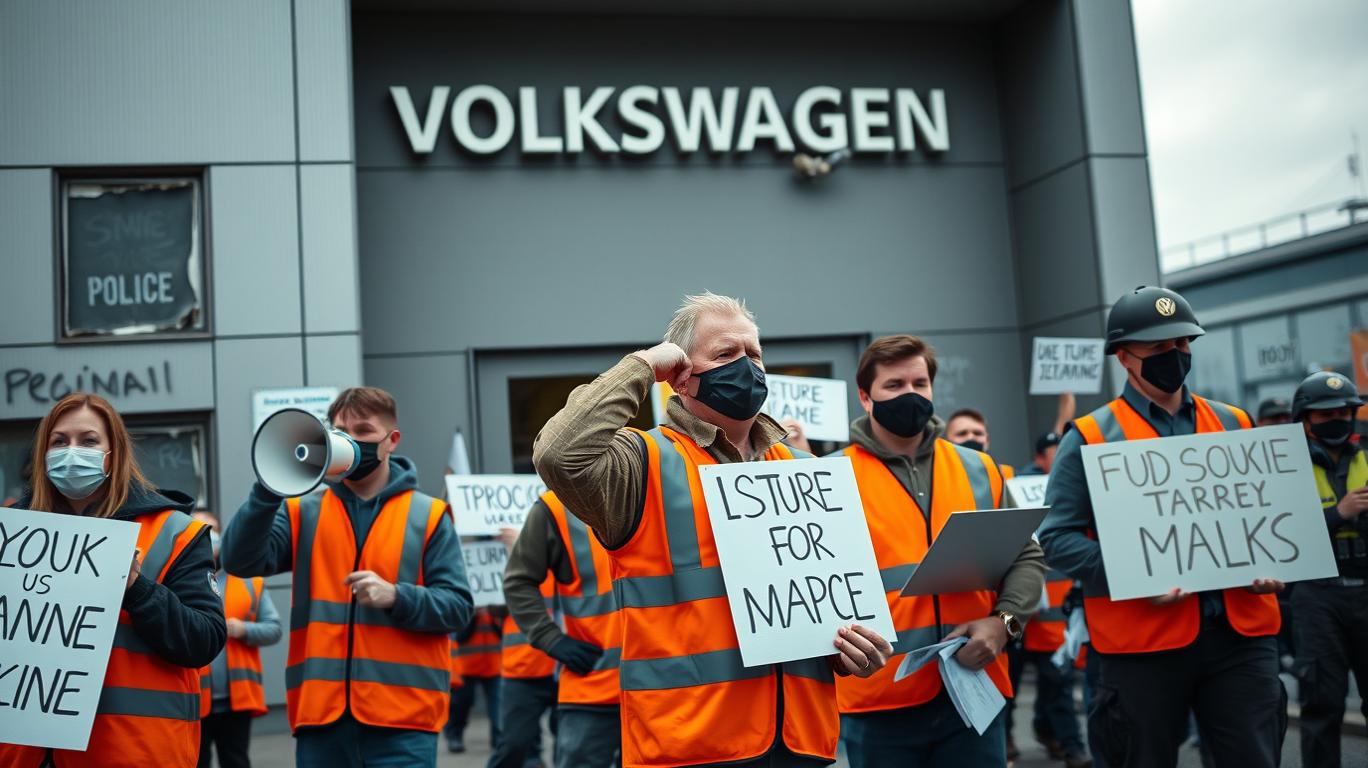
The heart of the matter lies in Volkswagen's ambitious restructuring plans, which include cost-cutting measures and plant closures. The company aims to slash wages by 10% and eliminate bonuses, citing a range of headwinds, including cooling demand and intensifying competition from Chinese automakers. However, these plans have sparked the ire of the IG Metall union, which represents Volkswagen's workforce, leading to threats of limited strikes starting in early December.
Volkswagen's labor disputes are not isolated incidents; the company has a history of such conflicts. In 2018, over 50,000 workers staged strikes over pay, leading to temporary production halts and an estimated loss of €100 million ($116 million) in revenue. However, the strike was resolved within a week, with workers securing a 4.3% pay increase. More recently, in 2023, a month-long strike at Volkswagen's German plants led to a 3% decline in its European market share, but the company managed to regain ground within a year.
To mitigate the potential damage to its brand and market share, Volkswagen must adopt a strategic approach to address the concerns of its employees and stakeholders. Here are some recommendations for the company:
1. Transparent Communication: Volkswagen must be open and transparent about its restructuring plans, financial difficulties, and the reasons behind the proposed cost-cutting measures. This can help employees and the public understand the necessity of these changes and foster trust in the company's decision-making process.
2. Negotiate in Good Faith: Volkswagen should engage in genuine, good-faith negotiations with the IG Metall union, considering their proposals and counter-offers. By demonstrating a willingness to compromise, the company can help build a consensus and reduce the likelihood of strikes.
3. Explore Alternative Solutions: Instead of focusing solely on job cuts and plant closures, Volkswagen should explore alternative solutions such as reducing working hours, offering early retirement packages, or investing in retraining and upskilling programs to help workers adapt to new roles within the company.
4. Diversify Its Production: Volkswagen can diversify its production portfolio to reduce its reliance on a single market or production line. This can help the company better weather economic storms and labor disputes, as well as improve its long-term resilience.
5. Strengthen Its ESG Credentials: Volkswagen can focus on improving its environmental, social, and governance (ESG) credentials to enhance its appeal to both customers and investors. By demonstrating a commitment to sustainability and social responsibility, the company can boost its brand image and mitigate the impact of potential labor disputes.
In conclusion, Volkswagen faces a significant challenge in the form of potential employee walkouts in December. To navigate this delicate situation, the company must prioritize open communication, address worker concerns, and explore alternative solutions to its restructuring plans. By adopting a strategic approach, Volkswagen can work to minimize the damage to its brand and market share while maintaining positive labor relations and a strong competitive position in the global automotive industry.
The heart of the matter lies in Volkswagen's ambitious restructuring plans, which include cost-cutting measures and plant closures. The company aims to slash wages by 10% and eliminate bonuses, citing a range of headwinds, including cooling demand and intensifying competition from Chinese automakers. However, these plans have sparked the ire of the IG Metall union, which represents Volkswagen's workforce, leading to threats of limited strikes starting in early December.
Volkswagen's labor disputes are not isolated incidents; the company has a history of such conflicts. In 2018, over 50,000 workers staged strikes over pay, leading to temporary production halts and an estimated loss of €100 million ($116 million) in revenue. However, the strike was resolved within a week, with workers securing a 4.3% pay increase. More recently, in 2023, a month-long strike at Volkswagen's German plants led to a 3% decline in its European market share, but the company managed to regain ground within a year.
To mitigate the potential damage to its brand and market share, Volkswagen must adopt a strategic approach to address the concerns of its employees and stakeholders. Here are some recommendations for the company:
1. Transparent Communication: Volkswagen must be open and transparent about its restructuring plans, financial difficulties, and the reasons behind the proposed cost-cutting measures. This can help employees and the public understand the necessity of these changes and foster trust in the company's decision-making process.
2. Negotiate in Good Faith: Volkswagen should engage in genuine, good-faith negotiations with the IG Metall union, considering their proposals and counter-offers. By demonstrating a willingness to compromise, the company can help build a consensus and reduce the likelihood of strikes.
3. Explore Alternative Solutions: Instead of focusing solely on job cuts and plant closures, Volkswagen should explore alternative solutions such as reducing working hours, offering early retirement packages, or investing in retraining and upskilling programs to help workers adapt to new roles within the company.
4. Diversify Its Production: Volkswagen can diversify its production portfolio to reduce its reliance on a single market or production line. This can help the company better weather economic storms and labor disputes, as well as improve its long-term resilience.
5. Strengthen Its ESG Credentials: Volkswagen can focus on improving its environmental, social, and governance (ESG) credentials to enhance its appeal to both customers and investors. By demonstrating a commitment to sustainability and social responsibility, the company can boost its brand image and mitigate the impact of potential labor disputes.
In conclusion, Volkswagen faces a significant challenge in the form of potential employee walkouts in December. To navigate this delicate situation, the company must prioritize open communication, address worker concerns, and explore alternative solutions to its restructuring plans. By adopting a strategic approach, Volkswagen can work to minimize the damage to its brand and market share while maintaining positive labor relations and a strong competitive position in the global automotive industry.

Divulgación editorial y transparencia de la IA: Ainvest News utiliza tecnología avanzada de Modelos de Lenguaje Largo (LLM) para sintetizar y analizar datos de mercado en tiempo real. Para garantizar los más altos estándares de integridad, cada artículo se somete a un riguroso proceso de verificación con participación humana.
Mientras la IA asiste en el procesamiento de datos y la redacción inicial, un miembro editorial profesional de Ainvest revisa, verifica y aprueba de forma independiente todo el contenido para garantizar su precisión y cumplimiento con los estándares editoriales de Ainvest Fintech Inc. Esta supervisión humana está diseñada para mitigar las alucinaciones de la IA y garantizar el contexto financiero.
Advertencia sobre inversiones: Este contenido se proporciona únicamente con fines informativos y no constituye asesoramiento profesional de inversión, legal o financiero. Los mercados conllevan riesgos inherentes. Se recomienda a los usuarios que realicen una investigación independiente o consulten a un asesor financiero certificado antes de tomar cualquier decisión. Ainvest Fintech Inc. se exime de toda responsabilidad por las acciones tomadas con base en esta información. ¿Encontró un error? Reportar un problema


SOBRE NOSOTROS
Nuestra historiaAutores de noticiasBase de conocimientosPolítica de privacidadTérmino de usoDescargo de responsabilidad de corretaje de tercerosTérminos de uso de AIMEDivulgaciones de riesgos de AInvest AICarrerasCONTÁCTENOS
Email: support@ainvest.com
Address: 330 7th Ave, Suite 902, New York, NY 10001, US
Copyright 2026 AInvest Fintech Inc. All rights reserved.


Comentarios
Aún no hay comentarios