
Volkswagen's Labour Storm: A Brewing Crisis?
Generado por agente de IAWesley Park
lunes, 2 de diciembre de 2024, 12:11 am ET2 min de lectura
MASS--
The labour unrest at Volkswagen, the world's largest automaker, has escalated with nine German plants set to strike, halting production and disrupting supply chains. This escalation is a red flag for investors, as it signals a tense labour-management dynamic that could impact Volkswagen's financial performance and market share in the long run. Let's delve into the factors driving the labour unrest, its potential consequences, and Volkswagen's strategic response to the crisis.
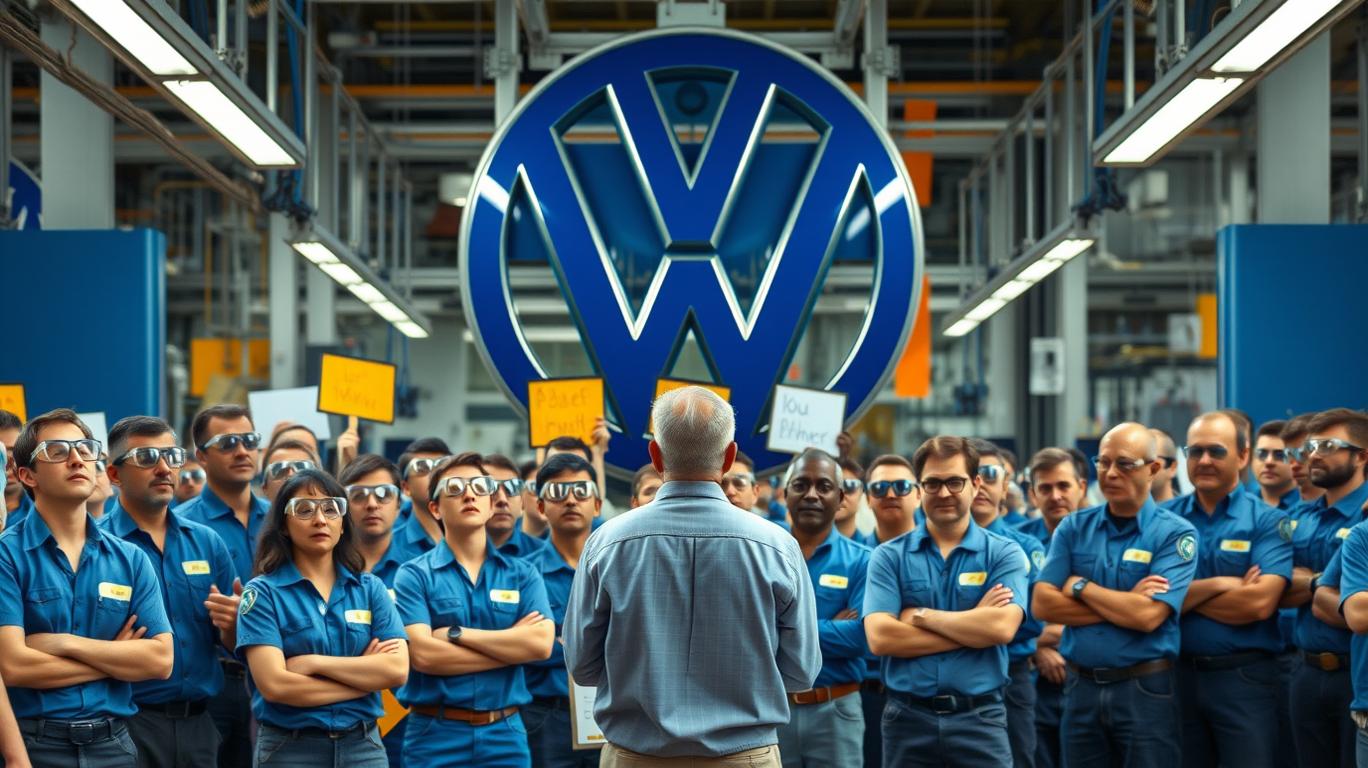
Volkswagen's woes stem from high manufacturing costs at home, a stuttering shift to electric vehicles, and tough competition in key market China. The company announced plans to cut billions of dollars in costs, sparking fears of mass layoffs, pay cuts, and possible plant closures. The powerful IG Metall Union and workers' council have fought to protect jobs since VW announced in September that it was considering the unprecedented step of shutting plants in Germany. The union has proposed measures to save 1.5 billion euros, including forgoing bonuses for 2025 and 2026, which the company dismissed.
If the strikes extend to 24 hours or more, it could exacerbate Volkswagen's already challenging financial situation. The company reported a 64 percent plunge in third-quarter profits in October, highlighting its perilous financial position. Slowing business in China, where homegrown rivals are outselling the German carmaker, has been a particularly heavy blow. Further clouding the outlook is an EU move to impose hefty tariffs on Chinese-made electric cars, which VW fears could trigger retaliatory steps. Its woes reflect a broader crisis in the European auto industry, with demand weak and the transition to electric cars slower than expected.
Volkswagen's strategic response to the labour dispute will significantly shape its long-term labour relations and company culture. If the company maintains a hardline stance, demanding a 10% wage cut and threatening plant closures, it may create a divisive atmosphere and erode trust with employees, potentially leading to further labour unrest. Conversely, if Volkswagen engages in constructive dialogue and considers alternative cost-cutting measures, such as those proposed by the union, it could foster a more collaborative environment, enhancing employee satisfaction and productivity. The outcome of this dispute will set a precedent for Volkswagen's labour relations and company culture moving forward, with potential impacts on employee morale, retention, and future labour negotiations.
In conclusion, the labour unrest at Volkswagen is a brewing crisis that could significantly impact the company's financial performance and market share. The auto giant must navigate this challenge carefully, balancing the need to cut costs with maintaining a positive labour-management dynamic. A strategic approach that prioritizes stability and predictability, through constructive dialogue and mutually beneficial solutions, would best align with the author's investment values, favoring 'boring but lucrative' investments and a balanced portfolio. As the labour dispute unfolds, investors should monitor Volkswagen's strategic response and its impact on the company's long-term prospects.
The labour unrest at Volkswagen, the world's largest automaker, has escalated with nine German plants set to strike, halting production and disrupting supply chains. This escalation is a red flag for investors, as it signals a tense labour-management dynamic that could impact Volkswagen's financial performance and market share in the long run. Let's delve into the factors driving the labour unrest, its potential consequences, and Volkswagen's strategic response to the crisis.
Volkswagen's woes stem from high manufacturing costs at home, a stuttering shift to electric vehicles, and tough competition in key market China. The company announced plans to cut billions of dollars in costs, sparking fears of mass layoffs, pay cuts, and possible plant closures. The powerful IG Metall Union and workers' council have fought to protect jobs since VW announced in September that it was considering the unprecedented step of shutting plants in Germany. The union has proposed measures to save 1.5 billion euros, including forgoing bonuses for 2025 and 2026, which the company dismissed.
If the strikes extend to 24 hours or more, it could exacerbate Volkswagen's already challenging financial situation. The company reported a 64 percent plunge in third-quarter profits in October, highlighting its perilous financial position. Slowing business in China, where homegrown rivals are outselling the German carmaker, has been a particularly heavy blow. Further clouding the outlook is an EU move to impose hefty tariffs on Chinese-made electric cars, which VW fears could trigger retaliatory steps. Its woes reflect a broader crisis in the European auto industry, with demand weak and the transition to electric cars slower than expected.
Volkswagen's strategic response to the labour dispute will significantly shape its long-term labour relations and company culture. If the company maintains a hardline stance, demanding a 10% wage cut and threatening plant closures, it may create a divisive atmosphere and erode trust with employees, potentially leading to further labour unrest. Conversely, if Volkswagen engages in constructive dialogue and considers alternative cost-cutting measures, such as those proposed by the union, it could foster a more collaborative environment, enhancing employee satisfaction and productivity. The outcome of this dispute will set a precedent for Volkswagen's labour relations and company culture moving forward, with potential impacts on employee morale, retention, and future labour negotiations.
In conclusion, the labour unrest at Volkswagen is a brewing crisis that could significantly impact the company's financial performance and market share. The auto giant must navigate this challenge carefully, balancing the need to cut costs with maintaining a positive labour-management dynamic. A strategic approach that prioritizes stability and predictability, through constructive dialogue and mutually beneficial solutions, would best align with the author's investment values, favoring 'boring but lucrative' investments and a balanced portfolio. As the labour dispute unfolds, investors should monitor Volkswagen's strategic response and its impact on the company's long-term prospects.

Divulgación editorial y transparencia de la IA: Ainvest News utiliza tecnología avanzada de Modelos de Lenguaje Largo (LLM) para sintetizar y analizar datos de mercado en tiempo real. Para garantizar los más altos estándares de integridad, cada artículo se somete a un riguroso proceso de verificación con participación humana.
Mientras la IA asiste en el procesamiento de datos y la redacción inicial, un miembro editorial profesional de Ainvest revisa, verifica y aprueba de forma independiente todo el contenido para garantizar su precisión y cumplimiento con los estándares editoriales de Ainvest Fintech Inc. Esta supervisión humana está diseñada para mitigar las alucinaciones de la IA y garantizar el contexto financiero.
Advertencia sobre inversiones: Este contenido se proporciona únicamente con fines informativos y no constituye asesoramiento profesional de inversión, legal o financiero. Los mercados conllevan riesgos inherentes. Se recomienda a los usuarios que realicen una investigación independiente o consulten a un asesor financiero certificado antes de tomar cualquier decisión. Ainvest Fintech Inc. se exime de toda responsabilidad por las acciones tomadas con base en esta información. ¿Encontró un error? Reportar un problema


SOBRE NOSOTROS
Nuestra historiaAutores de noticiasBase de conocimientosPolítica de privacidadTérmino de usoDescargo de responsabilidad de corretaje de tercerosTérminos de uso de AIMEDivulgaciones de riesgos de AInvest AICarrerasCONTÁCTENOS
Email: support@ainvest.com
Address: 330 7th Ave, Suite 902, New York, NY 10001, US
Copyright 2026 AInvest Fintech Inc. All rights reserved.


Comentarios
Aún no hay comentarios