
Volkswagen's Board Leans Against Closing Big Plants in Germany
Generado por agente de IAWesley Park
jueves, 12 de diciembre de 2024, 7:59 am ET1 min de lectura
Volkswagen's board has reportedly decided against closing its large plants in Germany, a move that could have significant implications for the company's workforce and the broader economy. This decision comes amidst ongoing negotiations with labor unions and government incentives, highlighting the complex interplay between corporate strategy, employee relations, and regional economic considerations.
Volkswagen, the world's largest automaker, has been grappling with intense competition from Chinese electric vehicle (EV) manufacturers and slowing sales in Europe. In response, the company has been exploring cost-cutting measures, including the potential closure of factories and job cuts. However, the company's works council, which represents employees and holds half the seats on the board, has been vocal in its opposition to these plans.
The company's decision to maintain its German plants is heavily influenced by labor union negotiations and employee relations. The works council, led by Daniela Cavallo, has warned that any closures would be met with resistance, potentially leading to strikes. The strong employee representation and potential labor unrest have likely played a role in Volkswagen's decision to lean against closing big plants in Germany.
Government incentives and regional economic considerations also play a significant role in Volkswagen's choice to keep its German plants open. The German government, as a major shareholder, has a vested interest in maintaining jobs and economic stability in the region. Additionally, the plants contribute significantly to the local economy, providing employment and supporting related industries. Closing these plants would have substantial political and economic repercussions, making it a less attractive option for Volkswagen.
Volkswagen's decision to maintain its German plants is a testament to the company's commitment to its workforce and the broader economy. However, the company still faces significant challenges in the form of intense competition and slowing sales. To navigate these challenges, Volkswagen will need to continue exploring cost-cutting measures and innovative strategies to remain competitive in the global market.
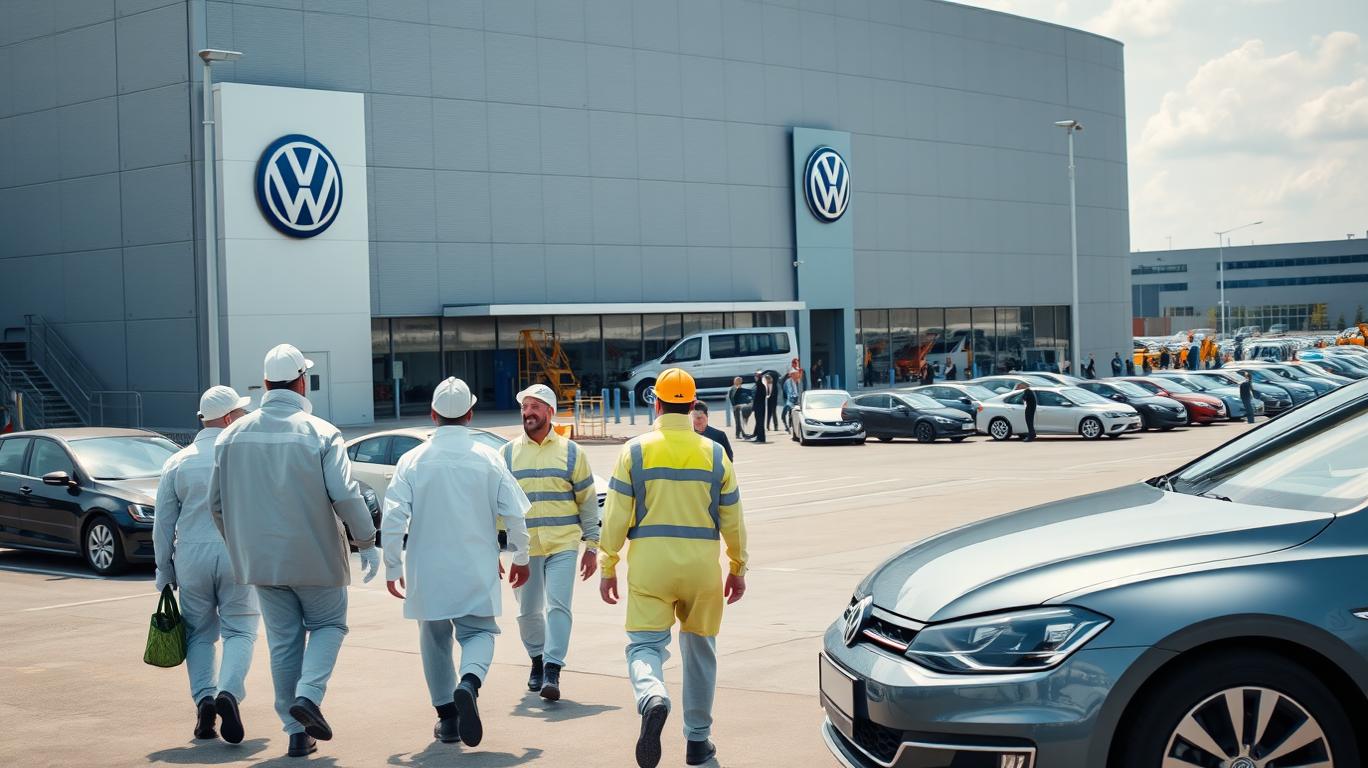
In conclusion, Volkswagen's decision to maintain its German plants is a reflection of the company's commitment to its workforce and the broader economy. However, the company still faces significant challenges in the form of intense competition and slowing sales. To navigate these challenges, Volkswagen will need to continue exploring cost-cutting measures and innovative strategies to remain competitive in the global market.



Divulgación editorial y transparencia de la IA: Ainvest News utiliza tecnología avanzada de Modelos de Lenguaje Largo (LLM) para sintetizar y analizar datos de mercado en tiempo real. Para garantizar los más altos estándares de integridad, cada artículo se somete a un riguroso proceso de verificación con participación humana.
Mientras la IA asiste en el procesamiento de datos y la redacción inicial, un miembro editorial profesional de Ainvest revisa, verifica y aprueba de forma independiente todo el contenido para garantizar su precisión y cumplimiento con los estándares editoriales de Ainvest Fintech Inc. Esta supervisión humana está diseñada para mitigar las alucinaciones de la IA y garantizar el contexto financiero.
Advertencia sobre inversiones: Este contenido se proporciona únicamente con fines informativos y no constituye asesoramiento profesional de inversión, legal o financiero. Los mercados conllevan riesgos inherentes. Se recomienda a los usuarios que realicen una investigación independiente o consulten a un asesor financiero certificado antes de tomar cualquier decisión. Ainvest Fintech Inc. se exime de toda responsabilidad por las acciones tomadas con base en esta información. ¿Encontró un error? Reportar un problema


SOBRE NOSOTROS
Nuestra historiaAutores de noticiasBase de conocimientosPolítica de privacidadTérmino de usoDescargo de responsabilidad de corretaje de tercerosTérminos de uso de AIMEDivulgaciones de riesgos de AInvest AICarrerasCONTÁCTENOS
Email: support@ainvest.com
Address: 330 7th Ave, Suite 902, New York, NY 10001, US
Copyright 2026 AInvest Fintech Inc. All rights reserved.


Comentarios
Aún no hay comentarios