
Volkswagen's Q3 Sales Momentum: A Strategic Play in Europe's EV Transition?
Volkswagen's dominance in Europe's electric vehicle (EV) market has reached a pivotal inflection point. In the first half of 2025, the German automaker delivered 347,900 battery-electric vehicles (BEVs), an 89% surge compared to 2024, securing a 28% market share in the region, according to a Substack analysis. This outpaced TeslaTSLA--, which saw a 14% global sales decline and a 33% drop in European deliveries, per a SupercarBlondie report. The shift reflects Volkswagen's strategic alignment with Europe's EV transition, driven by product diversification, regulatory foresight, and aggressive pricing. Yet, as Chinese EV manufacturers intensify their push into the continent, the sustainability of Volkswagen's lead remains a critical question for investors.
Strategic Foundations: Scale, Partnerships, and Policy Synergy
Volkswagen's success hinges on its ability to scale. The company has nearly doubled its European BEV deliveries in 2025, with the core Volkswagen brand contributing 122,600 units alone, according to an EVBoosters report. This growth is underpinned by a broad portfolio, including the ID.4, ID.7, and Škoda's Elroq, which together cater to diverse consumer segments. According to BloombergNEF, Volkswagen's strategy of "volume over premium" has allowed it to capture price-sensitive buyers, a demographic increasingly critical in a post-subsidy European market.
The automaker's investment in electrification further solidifies its position. With a EUR 122 billion commitment to electrification and digitalization by 2030, Volkswagen is restructuring plants like Zwickau to focus exclusively on EVs and partnering with QuantumScape to develop next-generation solid-state batteries, as outlined in Volkswagen Group's electrification plan. These efforts align with EU policies that incentivize EV adoption through infrastructure expansion and carbon penalties for non-compliance. As stated by Oliver Blume, Volkswagen's CEO, the company aims to achieve 70% BEV sales in Europe by 2030, a target now within sight, according to the Volkswagen Group strategy.
Countering Chinese Competition: Pricing and Innovation
The rise of Chinese EV manufacturers, however, poses a formidable challenge. Brands like BYD, Xpeng, and GAC are flooding Europe with models priced as low as €20,000, often equipped with cutting-edge features such as AI cockpits and built-in refrigeration, per an Autoraiders analysis. Volkswagen's response has been twofold: aggressive pricing and technological collaboration. At the IAA Mobility 2025, the company unveiled the ID. POLO and ID. CROZZ, both priced around €25,000, to directly compete with Chinese offerings, as shown at IAA Mobility 2025. Additionally, Volkswagen has licensed Xpeng's autonomous driving technology for its China-based EVs, as reported by CarNewsChina.
Yet, Chinese competitors are moving faster. Xpeng's Mona series, for instance, is set to undercut Volkswagen's models by up to €5,000 in China, with European launches expected in 2026, according to CNBC. Regulatory hurdles, including EU tariffs on Chinese EVs, have delayed their full-scale entry, but analysts predict these barriers will erode as Chinese firms establish local R&D centers and adapt to European standards, per an Espiria insight.
Regulatory Risks and the Path Forward
Volkswagen's ability to maintain its lead also depends on navigating regulatory headwinds. The EU's 2025 carbon emissions rules threaten fines of up to €1.5 billion for non-compliance, pushing the automaker to accelerate EV sales, according to Fortune. While its current trajectory appears on track, the removal of government subsidies in key markets like Germany-a factor that contributed to a 27.4% drop in EV registrations in 2024-was reported by CNBC.
For investors, the key question is whether Volkswagen's strategies are sustainable. Its partnerships with Chinese firms and focus on affordability suggest a willingness to adapt, but the company must balance cost-cutting with innovation. As one industry analyst observed in a Harici commentary, "Volkswagen's strength lies in its ecosystem-brands, infrastructure, and policy alignment-but it cannot afford to lag in software and AI, where Chinese rivals are setting the pace."
Conclusion: A Leader, But Not Unchallenged
Volkswagen's Q3 2025 sales momentum underscores its leadership in Europe's EV transition. However, the automaker's long-term success will depend on its ability to counter Chinese competition through pricing, technology, and regulatory agility. For now, its 28% market share and EUR 122 billion investment provide a strong foundation. Yet, as the EV race evolves, Volkswagen must prove it can innovate as swiftly as its rivals-or risk ceding ground to a new generation of disruptors.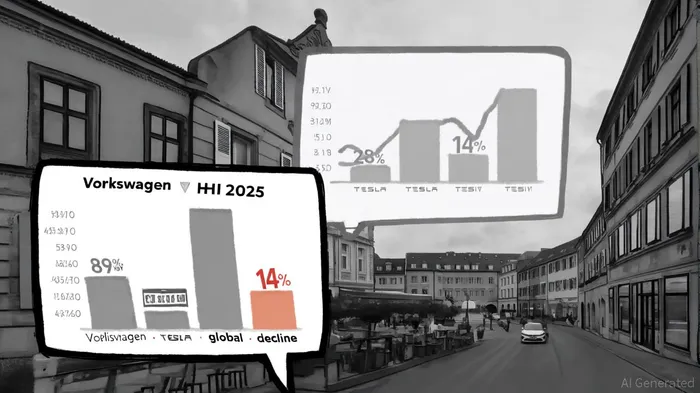





Comentarios
Aún no hay comentarios