
Volkswagen's Legal Battle: A $1.4 Billion Tax Demand and Its Implications
Generado por agente de IAWesley Park
domingo, 2 de febrero de 2025, 2:41 am ET2 min de lectura
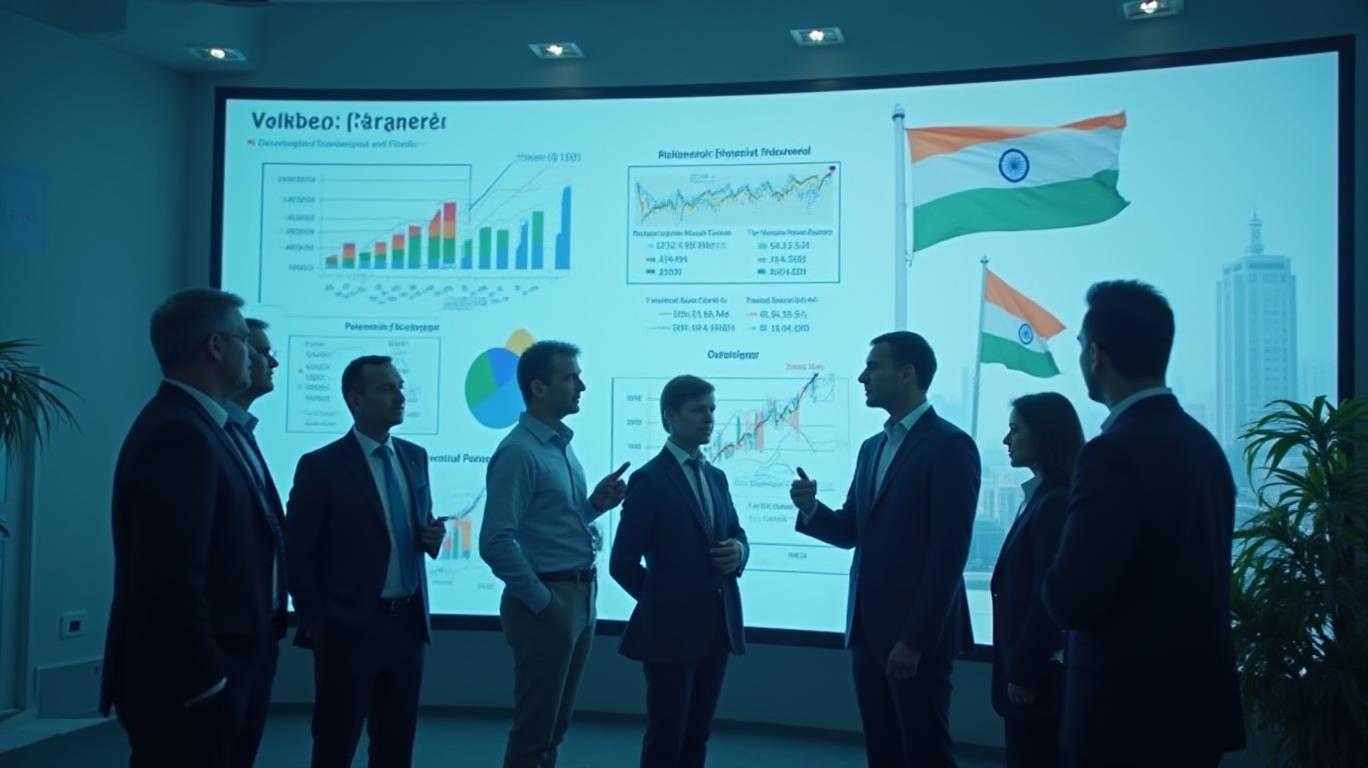
Volkswagen, the German automaker, has found itself in a legal battle with the Indian government over a tax demand of $1.4 billion. The Indian government has accused Volkswagen of evading taxes by misclassifying and mis-declaring imports of car parts, allowing it to pay a much lower duty of 5-15% instead of the applicable 30-35% for Completely Knocked Down (CKD) units. Volkswagen has responded by suing the Indian authorities to quash the demand, arguing that it has been paying taxes in line with government rules.
The tax dispute between Volkswagen and India has significant implications for the company's long-term investment plans in the country, particularly its $1.8 billion electric vehicle manufacturing project in Maharashtra. If Volkswagen is found guilty and has to pay the demanded taxes and penalties, it could face a significant financial burden, potentially straining its resources and affecting its ability to invest in new projects. The tax evasion allegations and subsequent legal battle could also harm Volkswagen's reputation in India, making it more difficult for the company to attract investors and partners for its projects.
Moreover, the tax demand could have broader implications for foreign direct investment (FDI) in India and the government's "Make in India" initiative. The "impossibly enormous" tax demand, as described by Volkswagen in its court challenge, could deter other foreign companies from investing in India. The company argues that the demand is contradictory to New Delhi's import taxation rules and places at risk its investments of $1.5 billion in India. This could send a negative signal to other potential investors, making them hesitant to commit large sums of money to the Indian market. The tax dispute with Volkswagen could also cast a shadow over the "Make in India" initiative, potentially hindering the growth of the program if foreign companies perceive India as an unfriendly investment destination.
The Indian government's approach to taxing imported vehicles and components is significantly different from other major markets, which can have significant consequences for international automakers operating in India. The higher import taxes on CKD units can increase production costs for international automakers, reducing their profitability in India. This can make it more challenging for them to compete with local manufacturers or other international players with more favorable tax situations. Automakers found to be evading taxes or misclassifying imports face significant legal and reputational risks, as seen in the case of Volkswagen. The tax dispute and the Indian government's approach to taxation can also negatively impact the foreign investment climate, potentially leading to retaliation from other countries and further straining global trade relations.
In conclusion, the tax demand on Volkswagen has the potential to negatively impact the company's long-term investment plans in India, particularly its electric vehicle manufacturing project in Maharashtra. The dispute also has broader implications for FDI in India and the government's "Make in India" initiative. The Indian government's approach to taxing imported vehicles and components can have significant consequences for international automakers operating in India, including higher costs, legal and reputational risks, and potential impacts on the foreign investment climate. As the legal battle between Volkswagen and the Indian government unfolds, it will be crucial for both parties to address these concerns and ensure a fair and predictable tax environment to maintain investor confidence and encourage further FDI.



Divulgación editorial y transparencia de la IA: Ainvest News utiliza tecnología avanzada de Modelos de Lenguaje Largo (LLM) para sintetizar y analizar datos de mercado en tiempo real. Para garantizar los más altos estándares de integridad, cada artículo se somete a un riguroso proceso de verificación con participación humana.
Mientras la IA asiste en el procesamiento de datos y la redacción inicial, un miembro editorial profesional de Ainvest revisa, verifica y aprueba de forma independiente todo el contenido para garantizar su precisión y cumplimiento con los estándares editoriales de Ainvest Fintech Inc. Esta supervisión humana está diseñada para mitigar las alucinaciones de la IA y garantizar el contexto financiero.
Advertencia sobre inversiones: Este contenido se proporciona únicamente con fines informativos y no constituye asesoramiento profesional de inversión, legal o financiero. Los mercados conllevan riesgos inherentes. Se recomienda a los usuarios que realicen una investigación independiente o consulten a un asesor financiero certificado antes de tomar cualquier decisión. Ainvest Fintech Inc. se exime de toda responsabilidad por las acciones tomadas con base en esta información. ¿Encontró un error? Reportar un problema


SOBRE NOSOTROS
Nuestra historiaAutores de noticiasBase de conocimientosPolítica de privacidadTérmino de usoDescargo de responsabilidad de corretaje de tercerosTérminos de uso de AIMEDivulgaciones de riesgos de AInvest AICarrerasCONTÁCTENOS
Email: support@ainvest.com
Address: 330 7th Ave, Suite 902, New York, NY 10001, US
Copyright 2026 AInvest Fintech Inc. All rights reserved.


Comentarios
Aún no hay comentarios