
Volkswagen's Global Delivery Declines: Navigating Geopolitical and Market Shifts in 2025
Volkswagen Group's 2025 global vehicle deliveries reflect a complex interplay of challenges and opportunities as the automaker navigates the transition to electric vehicles (EVs) amid shifting geopolitical and market dynamics. While the company reported a 1% annual increase in global deliveries, this modest growth masked significant regional divergences, including declines in China and North America, offset by robust EV expansion in Europe and strategic diversification into emerging markets according to CBT News. For investors, Volkswagen's ability to balance these headwinds with adaptive strategies offers critical insights into its long-term resilience.
Geopolitical Headwinds and Market Shifts
Volkswagen's struggles in North America underscore the profound impact of U.S. policy shifts. The Trump-era tariffs on imported vehicles, coupled with the reversal of federal EV tax incentives, created a perfect storm for the automaker. According to a report by , U.S. sales of Volkswagen's ID.4 EV plummeted by 60% in the fourth quarter of 2025, while overall U.S. sales dropped 16% annually. These tariffs disproportionately burdened foreign automakers, forcing Volkswagen to absorb rising costs without the flexibility to pass them on to price-sensitive consumers. Meanwhile, the U.S. government's pivot toward fossil fuel subsidies diverged sharply from global EV trends, complicating Volkswagen's ability to harmonize its product strategy across markets.
In China, Volkswagen faced dual pressures: a slowdown in traditional internal combustion engine (ICE) sales and intensifying competition from domestic EV leaders like BYD and NIO. Despite these challenges, the company leveraged its "In China, for China" strategy to develop cost-competitive EVs tailored to local demand. A €3 billion investment in a Hefei-based R&D center enabled Volkswagen to reduce EV development costs by up to 50%, accelerating the launch of models designed for Chinese consumers.
Strategic Resilience in Europe
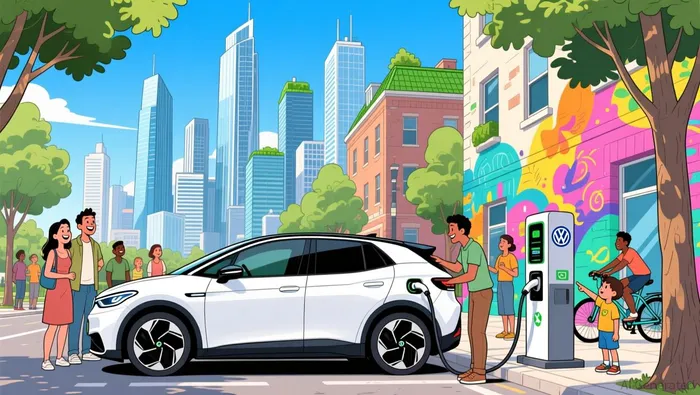
Europe emerged as a bright spot for Volkswagen in 2025, with the automaker capturing a 28% share of the continent's EV market-a 90% year-over-year increase. This success was driven by aggressive investments in battery technology and localized production. For instance, Volkswagen's partnership with CATL expanded beyond battery cell development to include innovations in recycling, vehicle-to-grid (V2G) integration, and carbon reduction initiatives. These advancements not only strengthened Volkswagen's supply chain resilience but also aligned with Europe's stringent emissions regulations.
However, profitability remained elusive. A quarterly loss of €1.1 billion in Q3 2025 highlighted the financial toll of restructuring costs and tariff-related expenses. To counter this, Volkswagen announced plans to launch affordable EV models in Europe, targeting price-sensitive segments while maintaining margins.
Regional Diversification: Asia, Africa, and Latin America
Volkswagen's 2025 strategy emphasized geographic diversification to mitigate risks in mature markets. In Asia, the company expanded its China-made EV exports to Southeast Asia, Central Asia, and the Middle East. Reuters reported that Volkswagen began exporting China-built vehicles to these regions, leveraging its domestic production capabilities to bypass higher manufacturing costs in Europe. This approach also allowed the automaker to compete with Chinese EV brands expanding globally, such as XPeng and NIO.
In Africa, Volkswagen pursued localized partnerships to establish a foothold. A strategic engagement with the Nigerian government in April 2025 revealed plans to set up assembly facilities and collaborate with local partners to produce vehicles tailored to African markets. This move mirrored Volkswagen's broader "Group Strategy – Mobility for Generations", which prioritizes regional integration and supply chain resilience.
Latin America presented both opportunities and challenges. While Volkswagen expanded its nearshoring efforts-shifting parts distribution to Malaysia to reduce reliance on Singapore-it also faced growing competition from Chinese automakers like BYD, which established a strong presence in Brazil and Uruguay according to National Interest. To counter this, Volkswagen deepened partnerships with Rivian and SAIC to co-develop next-generation EV technologies, ensuring its offerings remained competitive in a rapidly evolving landscape as reported by Volkswagen Group.
Geopolitical Adaptations and Supply Chain Resilience
Volkswagen's 2025 strategy also addressed supply chain vulnerabilities exacerbated by U.S.-China tensions. By diversifying battery production and raw material sourcing, the automaker reduced its exposure to geopolitical risks. For example, CATL's expansion into Latin America and Africa provided Volkswagen with alternative supply routes for critical minerals like lithium and cobalt. Additionally, Volkswagen's adoption of zonal architectures-such as the China Electrical Architecture (CEA) developed with XPeng-enabled faster, cost-effective production of software-defined vehicles as detailed in battery tech analysis.
Conclusion: A Path Forward for Investors
Volkswagen's 2025 performance illustrates both the challenges of transitioning to EVs and the potential for strategic resilience. While short-term headwinds in North America and China persist, the automaker's investments in regional diversification, localized partnerships, and supply chain innovation position it to capitalize on long-term growth opportunities. For investors, Volkswagen's ability to adapt to geopolitical shifts and maintain its leadership in Europe's EV market suggests a cautiously optimistic outlook. However, sustained success will depend on its capacity to balance cost pressures with innovation-a test of its "Mobility for Generations" vision in an increasingly fragmented global landscape.







Comentarios
Aún no hay comentarios