
Volkswagen's Currywurst Gambit: A Taste of Cross-Industry Disruption
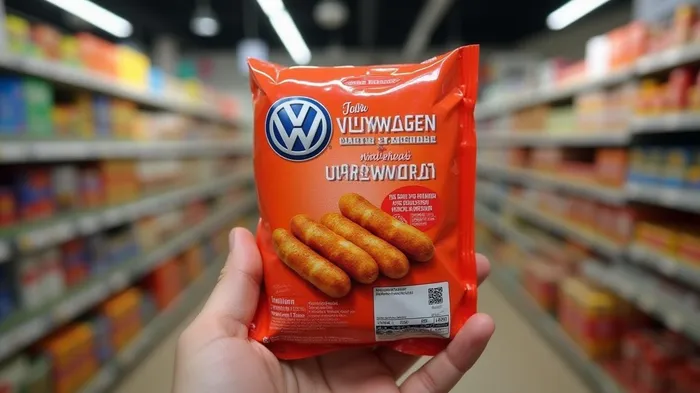
Volkswagen, the automotive titan, is branching into an unlikely arena: the ready meal market. Its flagship product—a microwaveable currywurst—will hit German supermarket shelves this June, marking a bold leap into food retail. This move is more than a quirky side project; it signals a strategic pivot toward cross-industry diversification at a time when traditional automakers face existential threats from EVs, regulation, and market saturation. For investors, the question is clear: Is this a shrewd hedge against automotive sector volatility, or a risky distraction from core operations?
The Strategic Rationale: Beyond the Assembly Line
Volkswagen's decision stems from a mix of opportunism and necessity. The currywurst, born in 1973 as a canteen staple, has become a cult phenomenon, outselling the company's cars in certain regions. With 8.55 million units sold in 2024—surpassing total vehicle sales in Europe—the product represents a rare growth lever in a stagnating automotive market. By commercializing this asset, Volkswagen aims to:
1. Diversify Revenue Streams: Automotive profits are under pressure due to EV transition costs and geopolitical instability. A successful food line could stabilize cash flows.
2. Leverage Brand Equity: The product's “Made by Volkswagen” label taps into Germany's engineering prestige, a stark contrast to competitors like Nestlé or UnileverUL--.
3. Expand into High-Growth Sectors: The global ready meal market is projected to hit , fueled by urbanization and convenience demand.
The Risks: Brand Dilution and Regulatory Minefields
Despite the allure, Volkswagen's culinary adventure carries significant risks:
- Brand Perception: Can a car company credibly sell food? Critics argue that associating Volkswagen with mass-market ready meals risks diluting its premium automotive identity.
- Regulatory Hurdles: Food safety standards are far stricter than automotive compliance. A recall or contamination scandal could damage the brand irreparably.
- Market Saturation: Competitors like Unilever and Nestlé dominate the ready meal space with entrenched distribution networks and R&D expertise.
- Operational Complexity: Managing food production—a perishable, high-turnover sector—requires skills far different from automotive manufacturing.
Why This Could Work: The Cult of Currywurst
Volkswagen isn't entering this market blind. The product's preexisting popularity—bolstered by a 2021 “save the currywurst” campaign that involved former Chancellor Gerhard Schröder—creates a built-in customer base. The ready meal's unique selling point—a sausage infused with curry and ketchup—eliminates preparation steps, making it a compelling value proposition. Initial sales in northern Germany, where the product is already iconic, could validate the model before scaling nationwide.
Cross-Industry Parallels: The Toyota of Ready Meals?
Volkswagen's move mirrors broader trends of industrial convergence:
- Toyota's Mobility Ecosystem: Like Toyota's investments in autonomous ride-hailing and robotics, Volkswagen is testing new revenue streams beyond combustion engines.
- Nestlé's Tech Partnerships: Nestlé's collaboration with AI-driven startups to optimize supply chains parallels Volkswagen's foray into food as a tech-enabled service (e.g., meal kits with digital recipes).
- The “Tech Driver” Play: Volkswagen's “regenerate+” sustainability strategy and software-driven mobility ecosystem now extend to food, positioning the firm as a holistic lifestyle provider.
Investment Implications: Betting on Convergence
For investors, Volkswagen's currywurst venture offers three actionable insights:
1. Buy Consumer Staples with Innovation Muscle: Companies like Nestlé or Unilever that can adapt to disruptors (or acquire them) will thrive.
2. Short Auto Laggards: Firms that cling to traditional manufacturing without diversifying face margin pressure as industries converge.
3. Go Long on Volkswagen (VOW.DE): If the ready meal line succeeds, it could catalyze a revaluation of the company's equity.
Final Verdict: A Taste of Things to Come
Volkswagen's foray into ready meals is more than a gimmick—it's a canary in the coal mine for industrial disruption. As EVs redefine mobility and tech reshapes consumer goods, companies that blend physical and digital ecosystems (like Volkswagen's automotive-software-food trifecta) will dominate. Investors ignoring cross-sector synergies risk missing the next wave of winners.
The question isn't whether Volkswagen belongs in the food business—it's who will follow next. And with a product that outsells its own cars, the answer might already be on the shelves.





Comentarios
Aún no hay comentarios