
Volkswagen’s 2026 Electric City Car Launch: A Strategic Play to Capture the European EV Mass Market
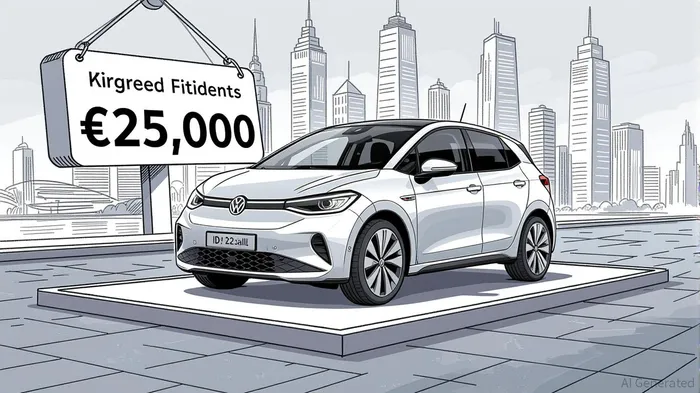
Volkswagen’s upcoming 2026 launch of the ID.2all electric city car represents a calculated, platform-driven strategy to dominate the European EV mass market. By leveraging the modular electric drive (MEB) platform’s cost efficiencies, shared components, and scalable production capabilities, the German automaker is positioning itself to deliver affordable, high-volume electric vehicles (EVs) that align with both consumer demand and investor expectations.
Platform-Driven Cost Efficiency and Scalability
The ID.2all, priced at €25,000, is built on the MEB Entry platform—a streamlined variant of Volkswagen’s broader MEB architecture. This platform is optimized for cost efficiency, enabling shared components across multiple models, including the upcoming ID.2 X SUV variant. According to a report by Green Car Reports, the MEB Entry platform supports lithium iron phosphate (LFP) and nickel manganese cobalt (NMC) battery chemistries, offering flexibility in range and performance while reducing production costs [2]. This modular approach allows Volkswagen to scale production rapidly, with the ID.2all and its derivatives sharing 80% of their components, minimizing R&D and manufacturing expenses [3].
The platform’s front-wheel-drive configuration and compact design maximize interior space while maintaining a competitive price point. As stated by Volkswagen’s press releases, the ID.2all’s 56kWh battery pack delivers a 280-mile (450 km) range under WLTP conditions, addressing range anxiety without compromising affordability [5]. This balance of efficiency and practicality is critical for capturing price-sensitive European buyers, particularly in urban markets where city cars dominate.
Pricing Strategy and Market Positioning
Volkswagen’s pricing strategy for the ID.2all is a direct response to the fragmented European EV market, where affordability remains a barrier to adoption. By targeting a starting price below €25,000, the automaker is undercutting competitors like the Renault Megane E-Tech and the Peugeot e-208, which hover around the €30,000–€35,000 range. A Bloomberg analysis highlights that Volkswagen’s entry-level EVs, including the ID.1 (set to debut in 2027 at €20,000), aim to capture 30% of the European EV market by 2027 [4]. This aggressive pricing is made possible by the MEB Entry platform’s cost structure, which reduces per-unit expenses through standardized components and streamlined assembly processes.
Moreover, the ID.2all’s feature set—such as Travel Assist and IQ.LIGHT adaptive lighting—adds value without inflating the price. These technologies, typically reserved for premium models, enhance safety and convenience, appealing to mainstream buyers seeking a balance of functionality and affordability [5].
Design Evolution and Brand Relevance
Volkswagen’s design language for the ID.2all reflects a deliberate shift toward urban-centric aesthetics. The C-pillar design, inspired by the iconic Golf, evokes nostalgia while incorporating modern, sporty elements. This approach aligns with European consumer preferences for vehicles that blend practicality with style. As noted in a Volkswagen Newsroom statement, the ID.2all’s design emphasizes “stability, likeability, and enthusiasm,” ensuring broad appeal across demographics [5].
The ID.2 X SUV variant further expands Volkswagen’s reach by catering to buyers who prioritize height and cargo space without sacrificing efficiency. By offering a compact SUV on the same platform, Volkswagen is addressing a growing segment of the market where traditional hatchbacks and sedans are losing ground [3].
Investor Implications and Future-Proofing
Volkswagen’s platform-driven strategy is not just about 2026—it’s a stepping stone toward its 2030 vision. The company plans to replace the MEB Entry platform with the Scalable Systems Platform (SSP), a next-generation architecture that supports 800V systems and software-defined vehicles (SDVs). This transition, as reported by Chargedevs, will reduce development cycles by 25% and enable higher charging speeds (over 135 kW), future-proofing Volkswagen’s EV lineup against technological obsolescence [1].
For investors, the ID.2all’s launch is a harbinger of Volkswagen’s broader EV ambitions. The automaker aims to achieve 80% EV sales in Europe and 55% in North America by 2030 [3]. With nine new models planned by 2027—including four electric variants—Volkswagen is diversifying its portfolio to hedge against market volatility. The ID.2all’s success could catalyze volume growth, driving economies of scale in battery production (via its Salzgitter and Valencia plants) and further compressing costs [2].







Comentarios
Aún no hay comentarios