
Volatility and Risks in Crypto Launchpad Tokens: Lessons from Binance Alpha's AB Token Plunge
The recent volatility of Binance Alpha's AB token offers a stark case study in the risks inherent to crypto launchpad tokens. After a 28% surge following its June 7, 2025, listing on Binance AlphaALPHA--, the token dipped 1.9% within 24 hours on June 19, raising questions about the sustainability of its rapid ascent, according to a CryptoTimes report. This episode underscores the dual-edged nature of decentralized finance (DeFi) projects: while strategic partnerships and airdrops can drive explosive growth, they also expose tokens to sharp corrections driven by profit-taking and broader market sentiment, as noted in a BTCC analysis.
The AB Token's Volatility: A Product of Market Dynamics and Project Fundamentals
AB's price trajectory reflects a mix of speculative fervor and underlying project developments. The token, rebranded from the Newton Project, leverages Binance's ecosystem to promote its cross-chain vision, AB Anywhere, and DeFi utility, according to Gate's explainer. Its June 7 listing was accompanied by a 9,882 AB airdrop for Binance users with Alpha points, amplifying community engagement, per CryptoTimes. However, the subsequent 1.9% drop on June 19-despite a 33% weekly gain-highlights the fragility of momentum-driven assets. Analysts attribute this to profit-taking after a 109% one-month rally and sensitivity to Bitcoin's broader market trends, in a Printhereum analysis.
The token's volatility is further compounded by its early-stage adoption. While AB DAO's governance model allows holders to vote on upgrades and economic parameters, the lack of proven use cases beyond DeFi and real-world asset integration leaves it vulnerable to waning investor interest (see Gate's coverage). This aligns with broader patterns in crypto launchpads, where tokens often experience exaggerated price swings due to concentrated liquidity and speculative trading, as discussed in a Gate analysis.
Security Audits and Governance: Mitigating Technical and Operational Risks
Beyond market forces, AB's ecosystem has taken steps to address technical and governance risks. A third-party audit by SlowMist, scheduled for September 2025, aims to bolster confidence in its cross-chain bridge system, according to a TradingView announcement. Prior to its Binance listing, AB Core and AB Connect underwent multiple internal and third-party audits, addressing vulnerabilities in smart contracts and asset management, as noted in the BTCC analysis. These efforts are critical, as DeFi protocols with robust audit histories tend to attract higher total value locked (TVL) and market capitalization, per a VeritasProtocol blog.
However, governance challenges persist. AB DAO's reliance on token-weighted voting exposes it to centralization risks, with large holders (whales) potentially dominating decisions, according to a Gate primer. To counter this, the project has adopted SubDAOs-specialized working groups focused on compliance and protocol upgrades-to decentralize decision-making (see the GatePORTAL-- primer). Yet, the absence of a publicly disclosed insurance fund or recovery protocol remains a gap in its risk mitigation strategy, as highlighted in a OneSafe post.
Investor Protection: The Role of Decentralized Insurance and Regulatory Frameworks
For AB investors, decentralized insurance protocols offer a layer of protection against smart contract failures and hacks. Platforms like Nexus Mutual and InsurAce provide coverage for DeFi protocols, including multi-chain support for EthereumETH-- and Binance Smart Chain, in a RhodiumVerse roundup. While AB has notNOT-- yet integrated such solutions, its focus on regulatory compliance-aligned with EU MiCA and U.S. SEC frameworks-suggests a cautious approach to investor safeguards, as discussed in a FasterCapital piece.
Regulatory scrutiny also looms large. The rebranding from Newton to AB reflects a strategic pivot toward compliance, emphasizing utility over speculative tokenomics (see Gate's explainer). However, the absence of mandatory insurance funds or transparent reserve management, as seen in the Abracadabra Money hack, highlights the need for stronger institutional safeguards, according to a CCN roundup.
Conclusion: Balancing Innovation and Caution in DeFi
The AB token's volatility encapsulates the opportunities and perils of crypto launchpad tokens. While its DeFi integration and cross-chain ambitions are promising, investors must weigh these against the risks of governance centralization, technical vulnerabilities, and market-driven corrections. As the sector evolves, projects like AB will need to prioritize transparency, robust security audits, and decentralized insurance mechanisms to build lasting trust. For now, the June 2025 episode serves as a cautionary tale: in DeFi, even the most hyped tokens are not immune to the forces of volatility.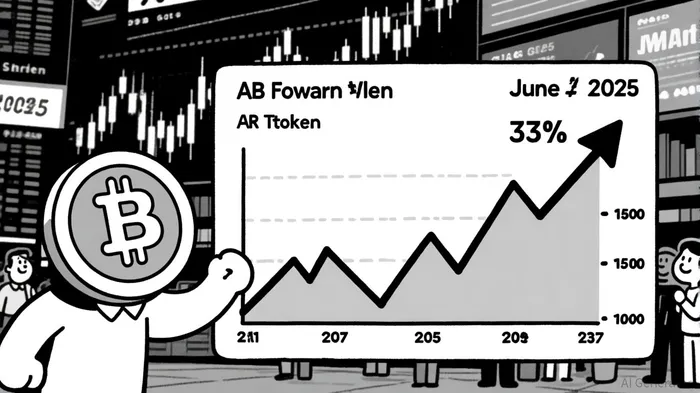






Comentarios
Aún no hay comentarios