
Volatility and Risk in Crypto: The Psychology of Bear Markets
The 2022 crypto bear market, often dubbed "Crypto Winter," offers a masterclass in the interplay between investor psychology and market volatility. As the total market cap plummeted by 64% year-over-year to $829 billion by January 1, 2023, the emotional toll on investors became as significant as the financial losses, according to CoinGecko's 2022 report. This article dissects how psychological biases and collective sentiment amplify risk in crypto markets, using 2022 as a case study.
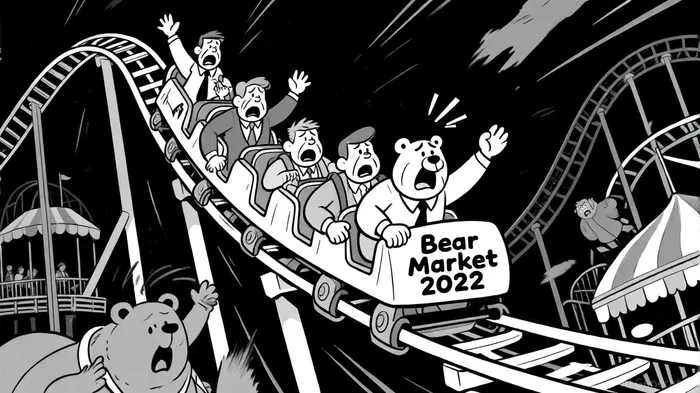
The Psychology of Fear and Loss Aversion
Bear markets trigger primal instincts. According to a Baird Trust analysis, investors in crypto markets exhibit "fixation on short-term losses" and a "primal urge to sell to avoid further pain" during downturns. This behavior is rooted in loss aversion-a cognitive bias where losses loom larger than gains. In 2022, the collapse of FTX in November exacerbated panic, with retail investors liquidating positions en masse despite long-term fundamentals remaining intact, as noted in the CoinGecko report.
The emotional pendulum swung further as stablecoins, once seen as safe havens, lost credibility post-TerraUSD's collapse. By Q4 2022, stablecoin outflows reached $12 billion, reflecting a breakdown in trust, according to the CoinGecko report. Such reactions highlight how fear can override rational analysis, turning even "safe" assets into pariahs.
Herd Mentality and Social Influence
Crypto markets are uniquely susceptible to herd behavior. The CoinGecko report notes that decisions are often driven by "market sentiment and social influence rather than fundamental analysis." During bear cycles, this manifests as a self-fulfilling prophecy: as more investors sell, prices drop further, triggering more selling. The 2022 bear market saw this dynamic play out repeatedly, with social media amplifying FOMO (fear of missing out) and FUD (fear, uncertainty, doubt).
For example, EthereumETH-- staking-a sector grounded in tangible utility-saw total staked ETH rise to 15.8 million by year-end, according to the CoinGecko report. Yet, even this growth couldn't offset the broader sell-off, as investors prioritized short-term liquidity over long-term value.
Overconfidence and the Illusion of Control
Paradoxically, bear markets also expose overconfidence. A peer-reviewed study highlights how traders "overestimate their skill" and underestimate risks. In 2022, this led to speculative bets on DeFi tokens and NFTs, which cratered alongside the broader market. The disconnect between perceived control and actual outcomes underscores crypto's inherent volatility.
Market Sentiment and Macroeconomic Feedback Loops
The 2022 bear market wasn't isolated from traditional finance. For three quarters, crypto and U.S. equities moved in tandem, amplifying losses as inflation and interest rate hikes battered risk assets, according to the CoinGecko report. However, the relationship reversed in Q4, with crypto underperforming stocks-a divergence that highlights crypto's unique psychological drivers.
Lessons for Investors
The 2022 downturn underscores the need for psychological resilience. As noted in the Baird Trust analysis, bear markets test not just portfolios but also mental fortitude. Strategies to mitigate emotional trading include:
- Education: Understanding behavioral biases to avoid impulsive decisions.
- Diversification: Balancing exposure to high-risk assets with stable, income-generating options.
- Long-Term Focus: Prioritizing fundamentals over short-term noise.
Conclusion
The 2022 bear market was a litmus test for crypto's maturity. While volatility remains inherent, the psychological factors driving it-fear, herd behavior, and overconfidence-are universal. For investors, the lesson is clear: managing risk in crypto requires not just financial planning but also emotional discipline. As the market evolves, those who master this duality will navigate future cycles with greater resilience.






Comentarios
Aún no hay comentarios