
Volatility Gauge Surges 4.5-Year High as Tariffs Spark Rate-Cut Bets
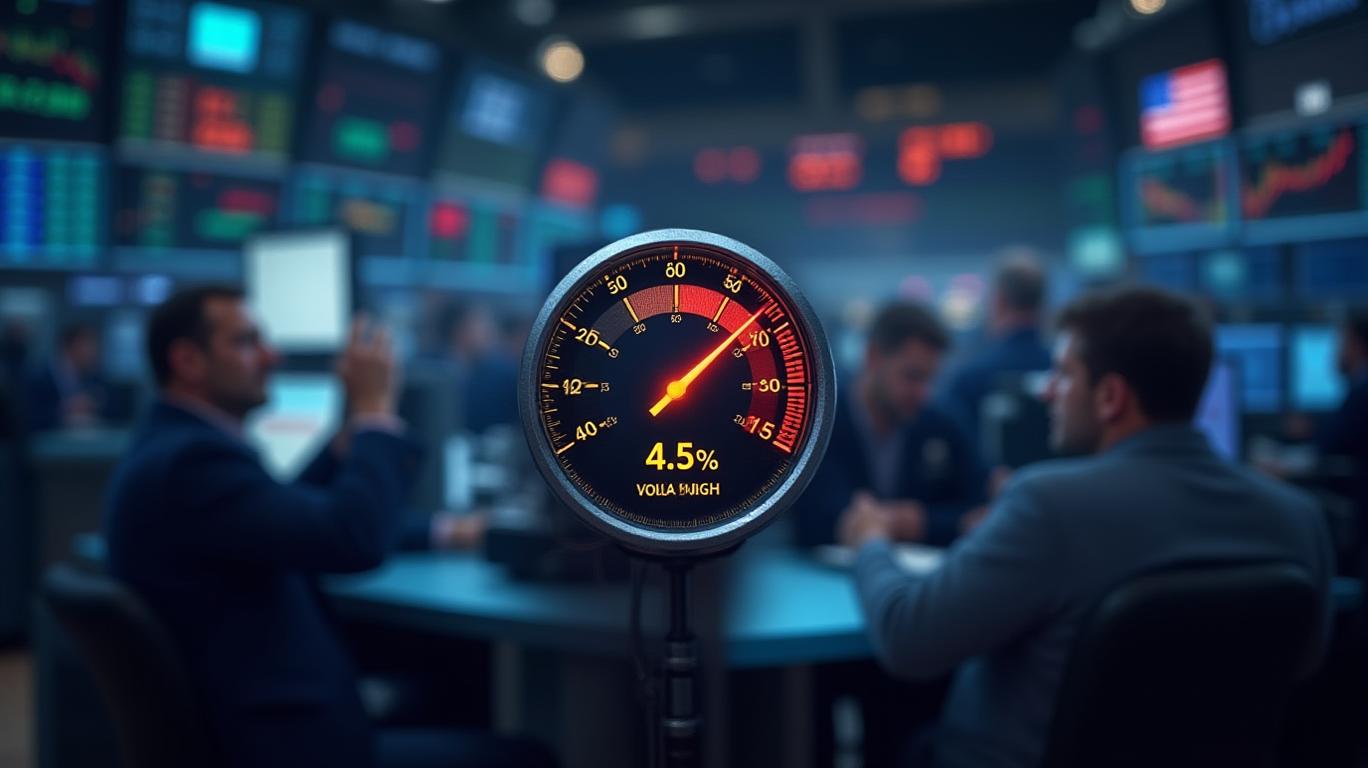
The Wall Street Volatility Gauge, a key indicator of market sentiment, has surged to its highest level in 4.5 years. This spike in volatility comes as traders significantly increase their bets on the Federal Reserve cutting interest rates. The recent imposition of sweeping tariffs by the U.S. President has intensified fears of a global trade war, leading to a sharp sell-off in the stock market. Tech stocks, small caps, banks, and other sectors have been particularly hard hit, with investors fleeing to safer assets.
The tariffs, which have been described as "worse than feared," are expected to stymie economic growth and lift inflation. According to analysts' forecasts, the U.S. GDP growth estimate has been lowered to 0.6% from 1.5% on a quarterly basis, while the forecast for year-end core PCE, the Fed's preferred inflation gauge, has been hiked to 4.7% from 3.5%. This economic slowdown has prompted traders to boost their bets on a full percentage point cut in interest rates this year, up from a 75 basis points reduction seen before the tariff announcement.
The heightened volatility and increased rate-cut bets reflect the market's growing concern over the economic impact of the tariffs. Traders are now anticipating a more dovish stance from the Federal Reserve, with expectations of multiple rate cuts in the coming months. The market's fear gauge, the CBOE Volatility Index, has touched a three-week high, indicating heightened uncertainty and risk aversion among investors.
The tariffs are also expected to have a significant impact on global markets, with Asian and European markets experiencing sharp declines following the announcement. The uncertainty surrounding the economic outlook has led to a flight to safety, with gold prices hitting a new record. The market's reaction underscores the potential for a global economic slowdown or even a recession, as the tariffs are poised to unsettle both domestic and international markets.
The increased downside risks to growth and a more front-loaded inflation shock are likely to allow the Federal Reserve to resume rate cuts sooner than previously expected. Traders are now betting on a full percentage point cut this year, reflecting their growing concern over the economic impact of the tariffs. The market's reaction to the tariffs highlights the potential for a prolonged period of volatility and uncertainty, as investors grapple with the economic fallout from the trade war.







Comentarios
Aún no hay comentarios