
ViTrox Corporation: Sustaining Shareholder Returns Amid Earnings Decline Through Strategic Resilience
Strategic Resilience: R&D and Market Expansion as Growth Levers
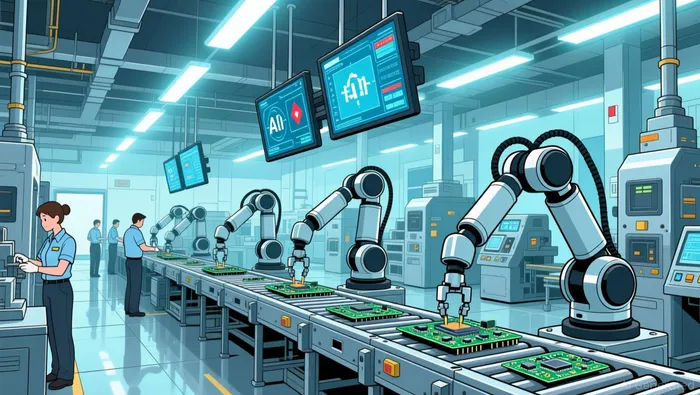
ViTrox's strategic focus on innovation and market diversification has emerged as a cornerstone of its resilience. In 2023, the company trimmed R&D spending to 7.8% of revenue (RM44.6 million) amid demand slowdowns, but this was a tactical adjustment rather than a retreat. By 2024, ViTrox had ramped up R&D investments to 10–12% of revenue, targeting advancements in vision inspection, artificial intelligence (AI), and robotics. These efforts align with high-growth sectors like Industry 4.0, automotive, and telecommunications, positioning the company to capitalize on long-term industry tailwinds.
Market expansion has further bolstered ViTrox's position. In Q3 2024, the company reported record revenue, driven by improved operational efficiency and a book-to-bill ratio of 1.2 times. This metric, which measures incoming orders relative to shipped products, signals sustained demand and effective capacity management. Such performance underscores ViTrox's ability to navigate macroeconomic headwinds through disciplined execution.
Shareholder Returns: Dividends as a Stabilizing Force
Despite declining earnings, ViTrox has maintained a consistent dividend policy. In 2023, the company distributed a final dividend of RM0.011 per share, and in 2024, it announced an interim dividend of RM0.005 per share. While these payouts are lower than historical levels, they reflect a commitment to returning value to shareholders during a period of strategic reinvestment. Analysts note that the dividend yield of 0.3% is modest but contributes to the stock's appeal in a low-yield environment.
However, the absence of explicit share repurchase data leaves a gap in understanding the full scope of ViTrox's capital allocation strategy. While buybacks could have offset earnings declines by reducing share counts, the lack of official announcements means their impact remains speculative.
Long-Term Value Creation: A Path Forward
ViTrox's strategic initiatives suggest a focus on future growth over short-term metrics. CEO Chu Jenn Weng has emphasized a gradual recovery in the semiconductor industry by mid-2024, a timeline that aligns with the company's R&D-driven roadmap. By investing in AI and robotics, ViTrox is not only addressing current market demands but also future-proofing its offerings against technological disruptions.
The company's ability to balance cost discipline with innovation-evidenced by its Q3 revenue surge-highlights a pragmatic approach to navigating cyclical downturns. This duality of resilience and reinvention may explain why investors continue to favor ViTrox despite its earnings challenges.
Conclusion
ViTrox Corporation's sustained shareholder returns in the face of declining earnings underscore the power of strategic foresight. By prioritizing R&D, expanding into high-growth markets, and maintaining dividend discipline, the company has created a buffer against short-term volatility. While the absence of buyback data introduces uncertainty, the broader narrative of long-term value creation remains intact. For investors, ViTrox's story is a reminder that earnings are not the sole metric of corporate health-strategic execution and innovation can be equally, if not more, impactful.







Comentarios
Aún no hay comentarios