
Vitalik Buterin Outlines Three Unresolved Challenges for Decentralized Stablecoins
Ethereum co-founder Vitalik Buterin has identified three unresolved structural challenges facing decentralized stablecoins. He emphasized the need for better alternatives to the U.S. dollar as a reference index. Buterin also pointed to oracleADA-- design and staking yield competition as critical issues requiring attention according to Buterin's analysis.
The Block reports that the stablecoin market has grown to nearly $300 billion, with TetherUSDT-- and CircleCRCL-- dominating the supply. Decentralized stablecoins, however, remain a small portion of this total. Buterin warned that long-term reliance on the dollar could expose stablecoins to risks like hyperinflation as he noted.
Decentralized stablecoins face a fundamental trade-off when it comes to oracle design. Buterin noted that without capture-resistant oracles, protocols must ensure the cost of an attack exceeds the value of the token itself. This often leads to high-yield models that extract value from users according to his assessment.
What Are the Three Structural Challenges?
Buterin outlined three core issues that decentralized stablecoins must overcome. First, he argued that the dollar is not an ideal long-term reference for stablecoins. A more resilient, independent index may be needed to avoid risks of debasement over a 20-year horizon as he explained.
Second, oracle design must be robust and decentralized. Buterin explained that the current model incentivizes protocols to extract high yields to defend against attacks, which hurts users. He criticized financialized governance for its lack of defense/offense asymmetry according to his analysis.
Third, the competition between staking yields and stablecoin returns creates instability. Buterin suggested reducing staking yields to hobbyist levels, creating non-slashable staking models, or integrating slashable staking with collateral use. These options, however, are not endorsements but explorations of possible solutions as he noted.
How Do These Challenges Affect Market Dynamics?
Decentralized stablecoins like RAI and DAIDAI-- have experimented with different models. Buterin himself shorted RAI in a trade that netted $92,000, highlighting the flaws in current designs. He argued that ETH-only stablecoins miss out on staking yields, which can undermine user incentives according to his analysis.
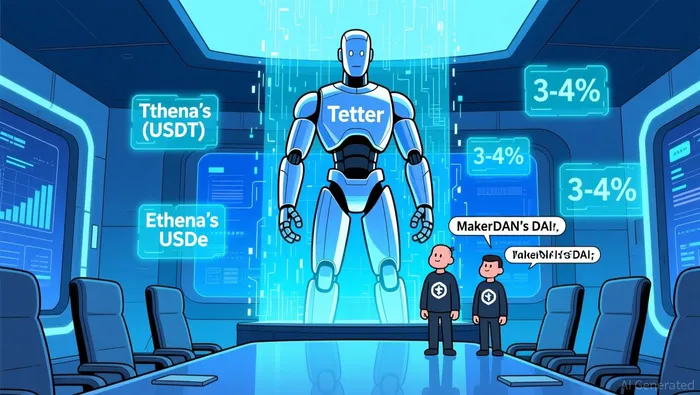
The broader stablecoin market is dominated by centralized issuers. Tether's USDTUSDT-- holds nearly 56% of the market, according to The Block. Decentralized alternatives like Ethena's USDeUSDe-- and MakerDAO's DAI hold 3–4%. New entrants are attracting capital, but centralized stablecoins remain dominant as reported.
What Are Analysts Watching Next?
Regulatory developments are shaping the future of stablecoins. The GENIUS Act has provided a U.S. framework for payment stablecoins, while a16z crypto has pushed for clarity on decentralized models. Buterin's comments align with the broader industry's focus on resilience and independence from centralized systems according to industry analysis.
Ethereum's technical roadmap also plays a role. Buterin highlighted PeerDAS and zkEVMs as breakthroughs addressing the blockchain trilemma. These upgrades aim to enhance decentralization, consensus, and throughput simultaneously as he stated.
Buterin's remarks reinforce the importance of true decentralization. He praised BitcoinBTC-- maximalists for resisting centralized trends like ICOs and custodial stablecoins. He credited them for preserving Bitcoin's sovereignty, despite their broader ideological missteps according to Cryptopolitan.
The path forward for decentralized stablecoins remains uncertain. Buterin's insights highlight the need for architectural innovation rather than incremental fixes. As the market evolves, resolving these three challenges will be key to building sustainable, decentralized financial systems as he concluded.





Comentarios
Aún no hay comentarios