
Why Vistra, AppLovin, and Oracle Are Facing Sudden Selling Pressure in a Volatile Market
Vistra: Analyst Optimism vs. Insider Selling
Vistra has emerged as a standout in the energy sector, with analysts consistently upgrading their price targets. , according to market reports. These upgrades reflect confidence in Vistra's transition to renewable energy and its robust cash flow generation. However, the stock has faced notable selling pressure, particularly from insiders. On November 14, 2025, EVP and President of VistraVST-- Retail, Scott A. Hudson, , . Over the past six months, , raising questions about internal confidence.
The disconnect between analyst optimism and insider activity highlights a classic market tension: short-term profit-taking by executives versus long-term strategic value. While Vistra's fundamentals remain intact-its renewable energy investments and debt reduction plans are well-positioned for regulatory tailwinds-the insider sales have amplified near-term volatility. Investors must weigh whether these transactions reflect personal financial planning or a subtle signal of caution.
AppLovin: Earnings Outperformance and Market Overreaction
AppLovin's Q3 2025 results were a masterclass in performance, . , signaling management's belief in undervaluation. Despite these positives, according to market data.
The selloff appears to stem from a combination of profit-taking and broader market rotation. AppLovin's director, , , . While such sales are not uncommon, they coincided with a broader pullback in high-growth tech stocks. Analysts, however, remain bullish, according to market analysis. The key question is whether the market is overcorrecting to short-term factors or if AppLovin's high valuation (trading at 30x forward earnings) has become vulnerable to macroeconomic headwinds.
Oracle: Strong Earnings and Structural Growth vs. Sector Rotation
Oracle's Q3 2025 earnings report was a testament to its cloud transformation. , according to financial reports. , underscoring its commitment to scaling data centers efficiently according to investor statements. Despite these fundamentals, according to market data.
The decline likely reflects a broader shift in investor sentiment toward smaller-cap AI plays and away from large-cap tech stocks. Oracle's recent dip followed a report on TikTok's profitability, which briefly rattled cloud infrastructure investors according to market analysis. However, Oracle's long-term trajectory remains intact: its AI-driven cloud demand and strategic partnerships (e.g., according to financial reports. The selloff may present a buying opportunity for investors focused on Oracle's structural advantages in enterprise software and cloud computing.
Conclusion: Navigating Short-Term Noise
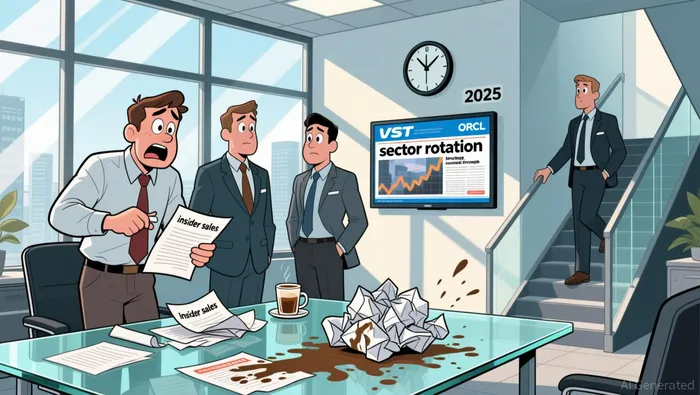
The selling pressure on Vistra, AppLovin, and Oracle underscores the challenges of navigating a volatile market. For Vistra, insider sales have created short-term uncertainty despite analyst upgrades. AppLovin's earnings outperformance is being overshadowed by profit-taking and sector rotation. Oracle's strong fundamentals are being tested by broader market dynamics rather than company-specific issues.
Investors should focus on the long-term: Vistra's energy transition, AppLovin's margin resilience, and Oracle's cloud dominance all suggest these companies are well-positioned for 2026. The current selloffs may be opportunities to buy into undervalued growth, provided macroeconomic risks remain contained. As always, the key is to separate noise from signal in a market prone to overreaction.







Comentarios
Aún no hay comentarios