
Vistra's $1.9B Natural Gas Acquisition: A Strategic Bet on Grid Reliability and Shareholder Value
Amid the rapid evolution of the global energy landscape, Vistra Corp.VST-- has positioned itself as a pivotal player in balancing the transition to renewables with the enduring need for grid reliability. Its recent $1.9 billion acquisition of seven natural gas generation facilities from Lotus Infrastructure Partners exemplifies this strategy—marrying disciplined capital allocation with a forward-looking vision to capitalize on natural gas’s critical role in an increasingly flexible, decarbonizing grid.
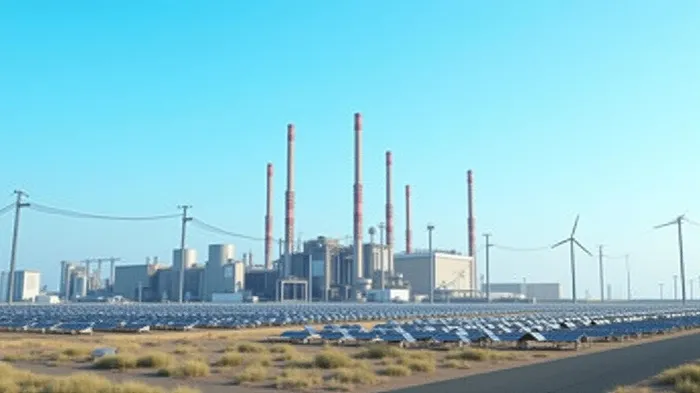
The Valuation: A Disciplined Approach to Growth
The acquisition’s 7x 2026 EBITDA multiple immediately stands out as a mark of financial prudence. At a time when peer transactions typically command 10–12x multiples, this reflects Vistra’s ability to negotiate aggressively in a consolidating sector. The $743/kW price tag—applied to 2,557 MW of capacity—translates to a projected $271 million in 2026 Adjusted EBITDA for the acquired assets. This multiple is a deliberate nod to the company’s long-term leverage target of <3x, which remains intact post-acquisition.
The financing structure further underscores discipline: 50% of the consideration is funded via an assumed term loan from Lotus, with the remainder coming from Vistra’s robust cash reserves. This avoids equity dilution and keeps the company’s balance sheet nimble, even as it expands its generation fleet.
Accretion Drivers: Cash Flow at the Core
The deal is structured to deliver immediate accretion to Ongoing Operations Adjusted Free Cash Flow before Growth (AFCFbG) in the first year post-closing. This is no small feat. Vistra’s Q1 2025 results already showcased a 53% year-over-year jump in adjusted EBITDA to $1.24 billion, a foundation that positions the acquired assets to contribute quickly to cash flow.
The accretion stems from two pillars:
1. Low-Hanging Synergies: While the 7x multiple excludes synergies, the assets’ integration into Vistra’s existing operations—leveraging its expertise from prior acquisitions like Dynegy and Energy Harbor—could unlock operational efficiencies.
2. Geographic Diversification: The facilities span key load centers, including PJM, New England, New York, and California. This reduces regional risk and aligns with rising power demand in data-rich markets, where grid flexibility is paramount.
Grid Flexibility in a Renewables-Dominated World
Vistra’s bet on natural gas is not a relic of the past but a strategic play for the future. As renewables like wind and solar grow, dispatchable power remains indispensable for grid stability. Natural gas plants, particularly combined-cycle units, provide the agility to balance intermittent renewable generation and meet peak demand.
The acquired assets—five combined-cycle gas turbines (CCGTs) and two combustion turbines—serve this dual purpose. CCGTs, with their superior fuel efficiency, are ideal for baseload and mid-merit generation, while combustion turbines offer rapid response for peaking needs. This mix positions Vistra to capitalize on mid-teens levered returns, a metric management emphasizes as central to its growth thesis.
Shareholder Returns: Growth Without Sacrificing Dividends
Vistra’s commitment to shareholders remains unshaken. Even as it invests in growth, it maintains $300 million in annual dividends and $1 billion+ in annual share repurchases. The acquisition’s financing structure—reliant on debt and cash rather than equity—ensures these payouts remain feasible.
This balance is critical. Investors in utilities and energy infrastructure demand both growth and income. Vistra’s ability to deliver both through disciplined capital allocation—<3x leverage, accretive acquisitions, and prioritized returns—is a rare combination in today’s market.
The Risks: Managed, Not Ignored
No deal is without risks. Regulatory approvals from the Federal Energy Regulatory Commission (FERC) and the Department of Justice could delay closing, which is targeted for late 2025 or early 2026. Integration challenges and economic shifts, such as a prolonged gas price spike, could also pressure margins.
Yet management’s confidence is grounded in its track record. Past acquisitions have been smoothly integrated, and the current gas price environment—moderate compared to 2022 peaks—reduces near-term volatility risks.
Conclusion: A Resilient Play for Energy Investors
Vistra’s acquisition is more than a transaction; it’s a statement of leadership. By securing natural gas assets at a 7x multiple, maintaining leverage discipline, and ensuring shareholder returns, the company is solidifying its role as a resilient, growth-oriented energy provider.
For investors seeking exposure to a grid that increasingly demands reliability and flexibility, Vistra’s combination of strategic foresight and financial rigor makes it a compelling choice. This is not just an investment in a company—it’s an investment in the infrastructure underpinning the energy transition itself.
The time to act is now. Vistra’s disciplined approach ensures that growth and value creation are not mutually exclusive, positioning it as a standout opportunity in an evolving energy landscape.





Comentarios
Aún no hay comentarios