
Vishay Intertechnology's Strategic Expansion in Inductor Portfolio and Manufacturing Capacity: A Pathway to Market Leadership and Investor Returns
Vishay Intertechnology has embarked on an aggressive expansion of its inductor and frequency control device (FCD) portfolio, releasing over 2,000 new SKUs across nearly 100 series by October 2025. This initiative, announced in September 2024, underscores the company's commitment to addressing evolving customer demands in industrial, telecom, and consumer markets. The expanded portfolio includes specialized products such as wireless charging inductors, common-mode chokes, and high-current ferrite impedance beads, all designed to enhance noise suppression, broaden voltage ranges, and accommodate compact PCB footprints, as detailed in Vishay's inductor portfolio expansion. According to a GlobeNewswire release, the market response has been robust, with strong adoption rates and distribution uptake validating the company's focus on design flexibility.
Manufacturing Capacity: A Global Footprint to Sustain Growth
To support this product proliferation, Vishay has strategically expanded its manufacturing footprint across Asia, Mexico, and the Dominican Republic. For instance, flagship IHLP® power inductors are now produced at the La Laguna plant in Gómez Palacio, Durango, Mexico, while other facilities in Asia handle high-volume production demands. These investments are critical to meeting surging demand in AI-driven power applications, smart grid infrastructure, and automotive electrification-sectors where Vishay's products are increasingly integral, as noted in that press release. The company anticipates exceeding 3,000 new SKUs by the end of 2025, further solidifying its position as a one-stop supplier for diverse electronic design needs, according to the GlobeNewswire release.
Financial Performance: Growth Amid Margin Pressures
While Vishay's expansion efforts are gaining traction, its financial performance remains a mixed picture. Q2 2025 revenue reached $762.3 million, reflecting a 6.6% sequential increase and 2.8% year-over-year growth, driven largely by 12% sequential expansion in Asia, as shown in the Q2 2025 slides. However, profitability challenges persist. Gross margins in Q2 2025 stood at 19.5%, below the 22.0% recorded in Q2 2024, with the MOSFET segment reporting a sharp decline to 6.3% from 8.2% in Q1 2025. These pressures are attributed to manufacturing inefficiencies and the ongoing integration of the Newport wafer fab expansion, as detailed in those slides.
Despite these headwinds, Vishay's market share in the IT infrastructure industry has edged upward, reaching 19.76% in Q2 2025, up from 18.74% in Q1; that growth is partly fueled by the company's emphasis on custom solutions, which accounted for 49% of total revenue in Q2 2025, according to the same slides. Analysts note that Vishay's strategic focus on high-growth megatrends-such as e-mobility and renewable energy-positions it to capitalize on long-term industry tailwinds, even as near-term margin constraints persist, a point highlighted in a SWOT analysis.
Strategic Vision and Long-Term Implications
Vishay's leadership has outlined an ambitious roadmap under its "Vishay 3.0" initiative, targeting gross margins of 31–33% and operating margins of 19–21% by 2028, goals presented in the Q2 2025 slides. Achieving these goals will require continued cost optimization, operational efficiency gains, and disciplined investment in high-margin product lines. The company's expansion into EVs and renewable energy, coupled with its expanded inductor portfolio, aligns with global trends that could drive sustained revenue growth. For investors, the key question is whether Vishay can translate its manufacturing and product advantages into durable market leadership while navigating margin pressures.
Risks and Opportunities
The primary risks to Vishay's strategy include intensifying competition in the inductor market, supply chain disruptions, and the potential for prolonged margin compression. However, the company's diversified product portfolio, global manufacturing presence, and focus on niche applications (e.g., AI power systems) provide a buffer against these risks. Additionally, Vishay's recent share repurchases and dividend returns-$105.1 million in 2024-signal confidence in its long-term value proposition, as noted in the company's inductor portfolio expansion press release.
For investors, the critical takeaway is that Vishay's expansion represents a calculated bet on long-term market leadership. While near-term profitability remains a concern, the company's ability to innovate, scale production, and align with high-growth sectors could drive meaningful shareholder returns over the next three to five years. As Vishay continues to roll out its 3,000+ SKU roadmap and refine its cost structure, the balance sheet and strategic agility will be key indicators to monitor.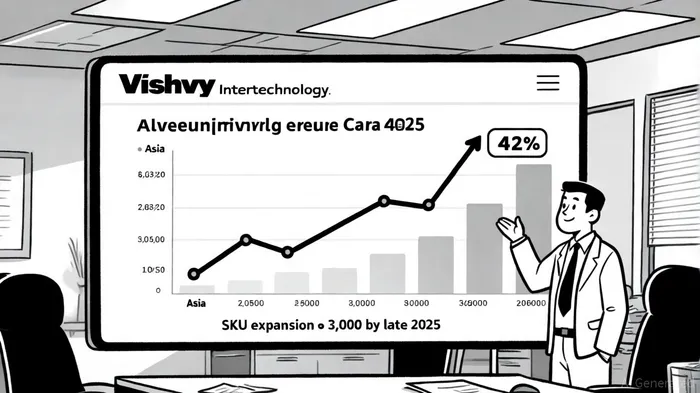







Comentarios
Aún no hay comentarios