
Vishay's CHA Resistors: Pioneering High-Frequency Solutions in a $57.2 Billion Passive Components Market
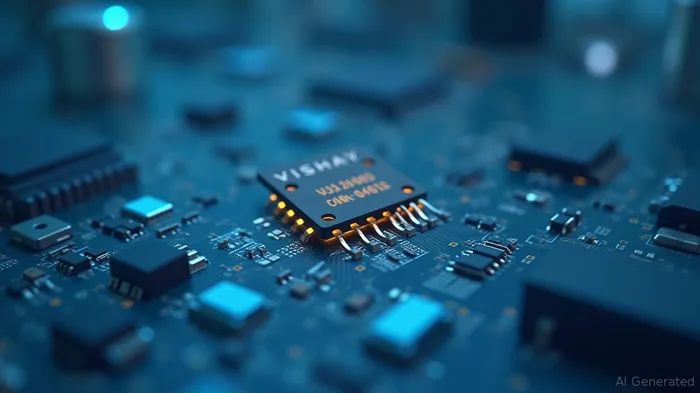
The global passive components market is on a clear trajectory, projected to grow from $39.86 billion in 2024 to $57.2 billion by 2033, driven by electrification, 5G/6G infrastructure, and advanced automotive systems. At the heart of this expansion lies Vishay Intertechnology's CHA Series 0402 resistors—a product line that combines cutting-edge performance with strategic design tools, positioning the company as a critical supplier in sectors demanding precision and reliability.
Technical Excellence Meets Market Demand
The CHA Series resistors are engineered for high-frequency applications up to 70 GHz, making them indispensable in systems requiring ultra-fast signal processing. Their AEC-Q200 compliance ensures robustness in automotive environments, where temperature extremes and vibration are routine. With a resistance range of 10–500 Ω and a temperature coefficient as tight as ±50 ppm/°C (on request), these resistors maintain stability across operating conditions. A standout feature is their low internal reactance, which keeps impedance/resistance (Z/R) ratios flat up to 70 GHz—critical for minimizing signal distortion in high-speed circuits.
Design Tools Accelerate Adoption
Vishay's success hinges not just on hardware but on enabling its customers. The company provides S-parameter data for electronic simulation and 3D models compatible with tools like Ansys® HFSS™ and Modelithics®, reducing design cycles and costs. These tools are particularly valuable in sectors like automotive ADAS, where engineers need to rapidly validate LIDAR, radar, and connectivity systems. The resistors' RoHS compliance and halogen-free design also align with stringent environmental regulations, easing adoption in regions like the EU.
Strategic Markets and Growth Catalysts
Automotive ADAS:
The automotive sector is the fastest-growing segment of the passive components market, projected to reach $5.6 billion by 2033. CHA resistors are integral to ADAS systems, where they support LIDAR and 4D radar by stabilizing high-frequency signals under extreme conditions. With global EV sales surging to 14 million in 2023—a 40% annual increase—Vishay's role in battery management and power electronics systems is expanding.5G/6G Infrastructure:
As 5G networks expand and 6G research accelerates, demand for passive components capable of handling high-frequency signals is surging. CHA resistors' 70 GHz capability aligns with next-gen base stations and satellite communication systems. For example, their use in low-earth-orbit (LEO) satellites ensures stable data transmission, a key priority for companies like SpaceX's Starlink.Aerospace and Defense:
The CHA Series' temperature and vibration tolerance make them ideal for aerospace applications, including drone navigation systems and military telemetry. Their adoption in these sectors underscores Vishay's ability to serve high-margin, niche markets with long replacement cycles.
Competitive Advantages and Market Positioning
Vishay faces competition from industry giants like TDK and Murata, but its focus on specialty components and automotive-grade certifications creates differentiation. Unlike broader competitors, Vishay's CHA resistors are tailored for ultra-high-frequency applications, a niche where few rivals can match its performance. Additionally, its 20-week lead time for production—shorter than many peers—suggests strong demand and efficient supply chain management.
Investment Thesis: A Long-Term Play on Tech Infrastructure
Investors should view Vishay as a leveraged play on three secular trends:
1. Electrification: EVs and hybrid vehicles require twice as many passive components as traditional cars.
2. 5G/6G Expansion: The U.S. alone plans to invest $1.2 trillion in infrastructure by 2030, including broadband and smart cities.
3. Defense Spending: Global military budgets hit $2.3 trillion in 2023, with advanced electronics a priority.
While Vishay's stock has underperformed peers like TDK over the past year (down 12% vs. TDK's 8% gain), its focus on high-margin, mission-critical components—such as CHA resistors—positions it to outpace the market's 3.9% CAGR. Analysts project Vishay's automotive revenue to grow 12% annually through 2030, driven by ADAS and EV adoption.
Risks and Considerations
- Supply Chain Volatility: Metal prices (e.g., palladium, nickel) could pressure margins.
- Competition: Rivals may replicate Vishay's designs or undercut pricing.
- Geopolitical Risks: Trade tensions or sanctions could disrupt global supply chains.
Conclusion: A Strategic Holding for Growth Investors
Vishay's CHA Series resistors are more than a product—they are a testament to the company's ability to innovate in a fragmented market. With a $57.2 billion passive components market growing at nearly 4% annually, and Vishay capturing high-value niches, the stock offers asymmetric upside. Investors with a 3–5 year horizon should consider adding VSH to portfolios focused on tech infrastructure and electrification trends, particularly as global spending on 5G, EVs, and aerospace continues to accelerate.
Vishay's CHA resistors exemplify how small components can drive massive technological progress—and significant shareholder returns.





Comentarios
Aún no hay comentarios