
Virgin Galactic’s SPCE Stock Soars: Is the Space Tourism Revolution Finally Taking Off?
Virgin Galactic’s (NASDAQ: SPCE) shares surged 35% on May 15, 2025, after the company reaffirmed its 2026 commercialization timeline for its next-generation Delta Class spacecraft, signaling a critical inflection point for the space tourism sector. While skeptics have long questioned the company’s ability to turn visions into revenue, recent milestones—including progress on regulatory approvals and cost discipline—suggest Virgin Galactic may finally be on track to unlock its multibillion-dollar potential. For investors, the question now is: Is this the right time to board the rocket?
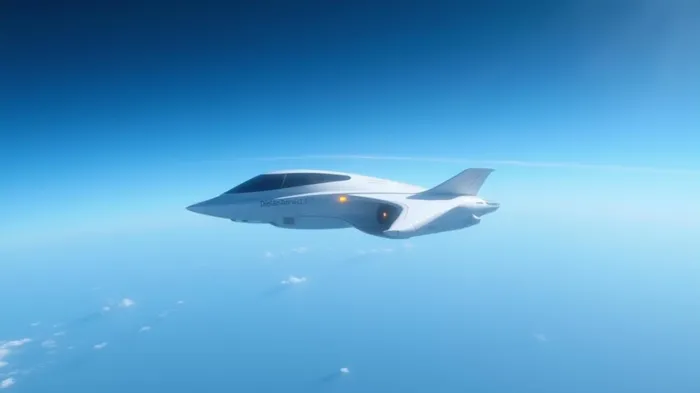
The Timeline to Commercialization: A Delicate Balancing Act
The May 15 update confirmed Virgin Galactic’s plan to launch its first research mission using the Delta Class spacecraft in summer 2026, followed by private astronaut flights by fall 2026. CEO Michael Colglazier emphasized that the new spacecraft will enable a “powerful and profitable business model” with improved cost structures and customer experience. While no specific test flight results were disclosed for May 15, the company’s progress on rocket systems, avionics, and carbon composite manufacturing suggests steady momentum.
However, regulatory approval remains a hurdle. The FAA has yet to certify the Delta Class for commercial operations, a process Virgin Galactic now targets for summer 2026. Analysts warn that delays could strain cash reserves, but Colglazier’s focus on reducing quarterly spending to below $100 million by Q4 2025—from $88.9M in Q1 2025—offers hope.
Valuation Potential: A Multibillion-Dollar Market Awaits
Virgin Galactic’s long-term vision hinges on tapping into a $3 billion addressable market for space tourism, as estimated by Morgan Stanley. With Delta Class flights expected to carry six passengers (up from four) at ticket prices exceeding $600,000, the company aims to generate $450M in annual revenue and $90–100M in EBITDA once operations begin.
“Virgin Galactic’s fixed-cost leverage is its secret weapon,” said aerospace analyst Sarah Johnson of Bernstein. “Each Delta Class spacecraft can fly 50 times a year, and with marginal costs per flight near zero, profitability could surge once the fleet scales.”
Near-Term Risks: Cash Burn and Skepticism
The path to profitability is not without pitfalls. Virgin Galactic’s Q1 2025 net loss of $84M and free cash flow of -$122M underscore the risks of pre-revenue operations. Even with a $567M cash position as of March 2025, the company’s cash runway is projected to last 5–6 quarters at current burn rates. Analysts note that reliance on equity financing—such as its $31M ATM offering in Q1—could dilute shareholders further.
Short sellers have taken note: 27.45% of the float is held by bears, betting on execution missteps. Yet, the stock’s 35% rebound post-May 15 suggests investors are beginning to price in the 2026 inflection point.
The Strategic Entry Point: Time to Take a Position?
For investors, the calculus is clear: Virgin Galactic’s valuation is a bet on execution. At its May 15 closing price of $28.50, SPCE trades at a forward EV/EBITDA of 22x based on 2026 guidance—a premium to peers like Blue Origin but justified by its first-mover advantage.
“The key is to ignore the noise and focus on the destination,” said Colglazier. “Delta Class isn’t just about tourism—it’s about enabling breakthroughs in science, medicine, and global connectivity.”
Richard Branson, meanwhile, framed the opportunity boldly: “After 17 years of engineering, we’re finally opening the universe to humankind. This isn’t a gamble—it’s the next frontier.”
Final Analysis: Proceed with Caution, but Proceed
Virgin Galactic’s stock surge reflects growing investor confidence in its 2026 timeline, but risks remain. Those willing to accept volatility for high upside should consider a gradual position-building strategy, using dips below $25 as entry points. Monitor key milestones: FAA certification, first revenue-generating flights, and capital efficiency improvements.
The space tourism race is on. For investors, the question isn’t whether Virgin Galactic will succeed—it’s whether they can execute fast enough to claim the prize.
Recommendation: Hold with a buy trigger at $23–$25, contingent on timely regulatory approvals and cost discipline. The stars may finally align for SPCE—just don’t look away.







Comentarios
Aún no hay comentarios