
VIQ Solutions' Strategic Shift: Implications of TSXV Listing and Voluntary Delisting from TSX
The recent decision by VIQ Solutions Inc. (TSX: VQS) to delist from the Toronto Stock Exchange (TSX) and transition to the TSX Venture Exchange (TSXV) marks a pivotal moment in its corporate strategy. This move, effective October 20, 2025, reflects a calculated effort to optimize capital structure while aligning with investor interests in a cost-conscious and growth-oriented environment. By shifting to the TSXV, VIQ aims to reduce compliance burdens, enhance financing flexibility, and better match its market capitalization with the expectations of a venture-focused exchange.
Capital Structure Optimization: Cost Efficiency and Flexibility
VIQ's decision to abandon the TSX, a senior exchange with stringent listing requirements, underscores its prioritization of cost efficiency. The company previously estimated annual expenses of approximately $1.3 million for maintaining a dual listing on Nasdaq and TSX, a burden it deemed unsustainable, as noted in its TSXV listing announcement. Transitioning to the TSXV, which caters to smaller-cap companies with lower compliance costs, allows VIQ to redirect resources toward operational improvements and AI-driven innovation.
The TSXV also offers greater flexibility for private placements and equity financing, critical for a company seeking to scale its SaaS offerings. For instance, VIQ's recent deployment of its NetScribe® platform across nine U.S. judicial districts-a $1.85 million contract-demonstrates the scalability of its AI-powered transcription services, as detailed in the company's earnings call transcript. Such growth initiatives require agile capital-raising mechanisms, which the TSXV is better positioned to facilitate compared to the TSX's more rigid frameworks.
Investor Alignment: Strategic Clarity and Long-Term Value
Management has emphasized that the delisting aligns with investor interests by streamlining operations and reducing overheads. As stated in its strategic review announcement, the move was evaluated by a special board committee in early 2025, which concluded that maintaining public company status was the optimal path to maximizing shareholder value. This strategic clarity is reinforced by VIQ's financial performance: despite a 10% year-over-year revenue decline in Q2 2025, the company achieved a 24% increase in adjusted EBITDA to $1 million and expanded gross margins to 48%, as reported in the earnings call transcript.
The decision also mitigates regulatory risks. VIQ had previously faced delisting threats on Nasdaq due to its failure to meet minimum bid price requirements, a vulnerability the TSXV's less stringent criteria alleviate (the listing announcement outlined these pressures). By stabilizing its listing status, VIQ reduces uncertainty for shareholders while retaining its "VQS" ticker symbol, ensuring continuity in brand recognition according to the listing announcement.
Financial Resilience and Operational Momentum
VIQ's Q2 2025 results highlight its ability to generate cash flow despite revenue headwinds. The company reported $1.73 million in operating cash flow and $1.70 million in free cash flow, driven by automation gains and disciplined cost management, according to StockAnalysis statistics. These figures, coupled with a 50% gross margin in the first half of 2025, underscore the effectiveness of its AI-first strategy in driving margin expansion, as noted in the earnings call transcript.
However, challenges remain. VIQ's net loss of CAD 10.1 million over the past 12 months and a market cap of CAD 10.26 million suggest ongoing financial pressures, based on StockAnalysis data. The TSXV listing could enhance access to growth capital, but investors must weigh this against potential liquidity constraints compared to the TSX. Management's confidence in achieving free cash flow positivity in 2025 hinges on sustaining gross margin improvements and scaling its SaaS model, a point emphasized in the earnings call transcript.
Conclusion: A Calculated Bet on Future Growth
VIQ Solutions' strategic shift to the TSXV is a pragmatic response to evolving market dynamics and internal operational demands. By reducing compliance costs and enhancing financing flexibility, the company positions itself to accelerate AI-driven innovation and capitalize on its SaaS momentum. While the move carries risks, including reduced liquidity, management's emphasis on disciplined execution and shareholder alignment provides a compelling rationale for the transition. 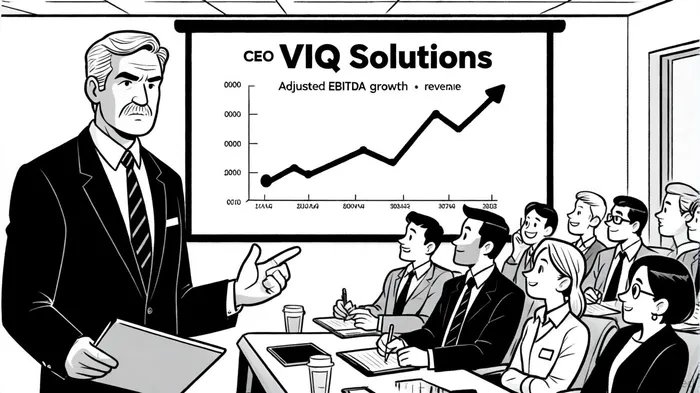







Comentarios
Aún no hay comentarios