
Vince Holding Corp. (VNCE) Q2 Earnings Outperformance: Unpacking Sustainable Growth Catalysts
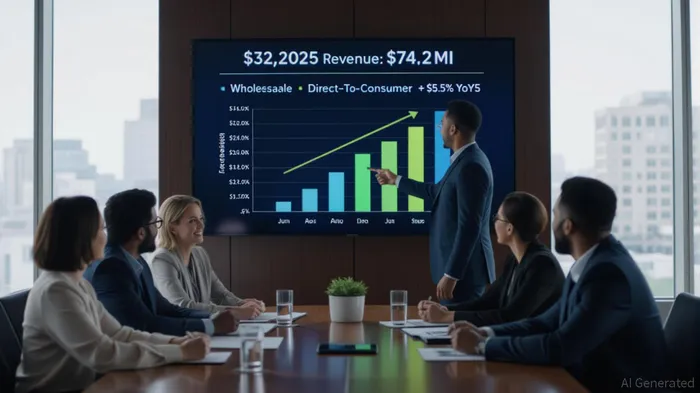
Vince Holding Corp. (VNCE) delivered a stunning Q2 2025 earnings report, defying expectations with a 6,600% surge in non-GAAP earnings per share (EPS) to $0.38, far outpacing the Zacks Consensus Estimate of a $0.08 loss [2]. While revenue dipped 1.3% year-over-year to $73.2 million, the company's strategic pivot toward profitability and cost discipline has positioned it to capitalize on long-term growth opportunities. This analysis examines the drivers behind the outperformance and evaluates whether the momentum is sustainable.
Earnings Surge: A Tale of Cost Discipline and DTC Resilience
The most striking metric in Vince's Q2 report was its EPS performance. The 6,600% year-over-year jump—from $0.05 to $0.38—reflects aggressive cost management and improved operational efficiency. Adjusted EBITDA rose to $6.7 million from $2.7 million in Q2 2024 [2], signaling stronger profitability despite a challenging retail environment.
The direct-to-consumer (DTC) segment emerged as a key growth engine, with sales rising 5.5% year-over-year and returning to profitability [2]. This shift underscores Vince's ability to adapt to evolving consumer preferences, leveraging e-commerce and owned retail channels to maintain margins. In contrast, the wholesale segment declined 5.1%, primarily due to timing shifts in fall shipments and lingering tariff uncertainties [2]. While this drag on revenue is concerning, the DTC rebound suggests the company is prioritizing higher-margin, customer-direct relationships—a trend likely to persist.
Revenue Challenges and Strategic Trade-offs
Vince's total revenue of $73.2 million fell short of the prior year's $74.2 million, a 1.3% decline that highlights the fragility of its wholesale business. However, the company's decision to forgo lower-margin wholesale contracts in favor of DTC growth appears to be paying off. As stated by a report from MitTrade, “The shift reflects a strategic realignment to prioritize profitability over top-line growth in the short term” [2].
This approach aligns with broader industry trends, where brands are increasingly favoring DTC models to retain control over pricing, customer data, and brand equity. While the wholesale decline is a near-term headwind, the long-term benefits of a stronger DTC foundation could outweigh the risks, particularly as VinceVNCE-- refines its product mix and digital engagement strategies.
Analyst Sentiment and Price Targets: A Vote of Confidence
Post-earnings, analysts have signaled optimism about Vince's trajectory. Price targets range from $2.50 to $4.00, with an average of $3.25—implying a 119.59% upside from its current price of $1.48 [1]. The “Outperform” consensus rating, with a score of 2.0 out of 5, further validates investor confidence in the company's ability to sustain its momentum [1].
This bullish sentiment is partly driven by Vince's guidance for Q3 2025, which anticipates flat to 3% net sales growth and adjusted EBITDA margins of 2–5% [2]. While these figures are modest, they suggest a focus on margin expansion over aggressive revenue growth—a prudent strategy in a market where many retailers are struggling with inventory overhang and pricing pressures.
Sustainable Growth: What Lies Ahead?
Despite the encouraging signs, Vince faces structural challenges. The wholesale segment's vulnerability to global supply chain disruptions and shifting retailer demand remains a risk. However, the company's emphasis on DTC, coupled with its improved EBITDA margins, provides a buffer against these headwinds.
To sustain growth, Vince must continue investing in digital transformation, product innovation, and brand differentiation. While no new strategic initiatives were disclosed post-earnings, the company's existing playbook—prioritizing profitability, optimizing cost structures, and deepening DTC engagement—offers a clear path forward.
Conclusion
Vince Holding Corp.'s Q2 earnings outperformance is a testament to its operational agility and strategic clarity. By pivoting toward DTC, tightening cost controls, and delivering robust EBITDA growth, the company has demonstrated resilience in a volatile market. While near-term revenue declines and wholesale uncertainties persist, the long-term trajectory appears promising—particularly given analyst optimism and a strong balance sheet. For investors, the key question is whether Vince can maintain its focus on profitability without sacrificing brand momentum. Based on current trends, the answer leans toward yes.





Comentarios
Aún no hay comentarios