
Vietnam's Manufacturing Renaissance: Navigating Post-Trump Trade Shifts and Investment Opportunities
The U.S.-China trade war, which began in 2018, has fundamentally reshaped global supply chains, propelling Vietnam into the spotlight as a critical trade alternative. With U.S. tariffs on Chinese goods spiking to 46% and a growing demand for "China Plus One" manufacturing hubs, Vietnam has emerged as a strategic player in sectors ranging from electronics to logistics. This article explores the opportunities and risks in Vietnam's manufacturing, technology, and logistics sectors, offering actionable insights for investors.
Manufacturing: A Cost-Effective Powerhouse
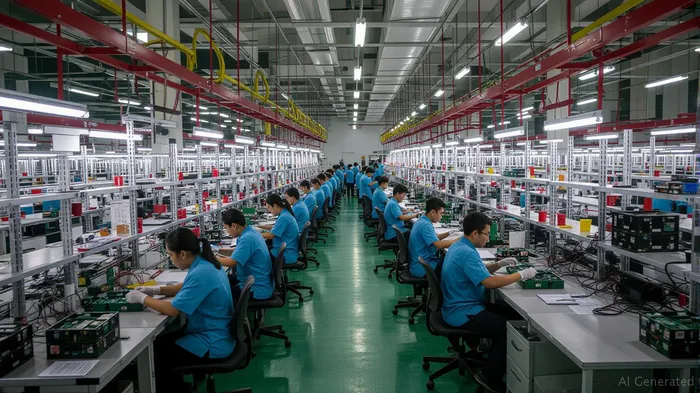
Vietnam's manufacturing sector has boomed, driven by its 30% lower labor costs compared to China and its strategic location in Southeast Asia. Key sectors like textiles, footwear861165--, and machinery have seen explosive growth:
- Textiles & Footwear: Vietnam now supplies 50% of Nike's footwear, up from 30% in 2018, and accounts for 21% of U.S. footwear imports.
- Electronics: Samsung's $14 billion investment in Hanoi and LG's expansion in Bac Ninh have positioned Vietnam as a global hub for smartphone assembly, contributing $72.6 billion in electronics exports in 2024.
Investment Opportunity:
Invest in Vietnamese industrial real estate via REITs like VNR, which manages logistics parks and factories. Alternatively, consider foreign-owned manufacturers like PouYuen (textiles) or FPT Corporation (electronics), which benefit directly from U.S.-Vietnam trade flows.
Technology: From Assembly to Innovation
While Vietnam's tech sector began as an assembly base for giants like AppleAAPL-- and IntelINTC--, it is now diversifying into high-margin segments:
- Semiconductors: Vietnam's $500 million semiconductor park in Ho Chi Minh City, backed by Taiwan's TSMCTSM--, aims to reduce reliance on Chinese imports.
- EV Manufacturing: VinFast's electric SUVs, exported to the U.S., highlight Vietnam's push into advanced manufacturing.
However, the U.S. tariffs on Vietnamese goods (set at 20–40% in 2025) threaten this progress. Sectors like semiconductors—which depend on U.S. equipment—could see costs rise by 15–20%.
Investment Caution:
Avoid overexposure to sectors tied to U.S. tariffs. Instead, focus on China-Vietnam joint ventures (e.g., Flextronics), which benefit from Vietnam's labor costs and China's supply chains.
Logistics: The Backbone of Trade Diversification
Vietnam's logistics sector has expanded to handle a 400% surge in container traffic since 2018. Key developments include:
- Port Infrastructure: The Lach Huyen port in Haiphong now handles 3 million TEUs annually, rivaling Chinese ports.
- Cross-Border Networks: Firms like Dimerco and G7 Logistics are building warehousing and customs compliance systems to manage rerouted Chinese goods.
Investment Play:
Back logistics firms like Vietnam Logistics JSC (VGL) or Pan Ocean, which are critical to Vietnam's export engine. These stocks could outperform if trade volumes rebound post-tariff negotiations.
Risks and Mitigation Strategies
- Tariff Volatility: The 2025 U.S. tariffs could reduce Vietnam's GDP growth by 1.4–2.0%. Investors should monitor negotiations for tariff exemptions.
- Chinese Dependency: Vietnam imports $15 billion in machinery annually from China, creating supply chain risks.
- Labor Costs: Rising wages (up 6% in 2024) may erode margins in low-cost sectors.
Mitigation: Diversify into sectors with high value-add, such as semiconductors or EV batteries, which command better pricing power.
Conclusion: Vietnam's Path to Sustained Growth
Vietnam's rise as a trade alternative is undeniable, but its success hinges on resolving tariff disputes and reducing reliance on Chinese inputs. For investors, the sweet spot lies in logistics infrastructure, high-tech manufacturing, and China-Vietnam collaboration firms.
Final Advice:
- Buy: Vietnam Logistics JSC (VGL), VinFast (pending IPO), and Vietnam ETFs (e.g., VNM).
- Avoid: Tariff-exposed sectors like footwear until trade policies stabilize.
Vietnam's journey from assembly line to innovation hub offers a compelling narrative for long-term investors—but tread carefully as geopolitical winds shift.
Data sources: U.S. Census Bureau, Vietnam Ministry of Industry and Trade, World Bank.







Comentarios
Aún no hay comentarios