
Vietnam's Crypto Regulatory Shift: Reshaping Bitcoin's Demand and Southeast Asia's Digital Asset Ecosystem
Vietnam's 2025 regulatory overhaul of its crypto market marks a pivotal moment in Southeast Asia's digital asset landscape. By banning fiat-backed tokens and mandating local-currency transactions, the country is recalibrating the role of BitcoinBTC-- and other cryptocurrencies in its economy. This analysis explores how these measures could reshape Bitcoin's utility, demand dynamics, and the broader implications for regional digital asset infrastructure players.
The Regulatory Framework: A New Paradigm for Vietnam's Crypto Market
Vietnam's five-year crypto pilot program, signed into law by Deputy Prime Minister Ho Duc Phoc, imposes strict controls on crypto transactions. All activities—from issuance to trading and payments—must now occur in Vietnamese dong (VND), effectively sidelining stablecoins and fiat-backed tokens[1]. The Law on Digital Technology Industry, passed in June 2025 and effective January 1, 2026, further categorizes digital assets into “virtual assets” and “cryptoassets,” distinguishing them from traditional financial instruments[3]. This legal clarity positions crypto assets as property under civil law while imposing stringent capital requirements (10 trillion VND, or $379 million) for crypto asset service providers (CASPs) and cybersecurity/AML protocols[1].
The government's focus on real-asset-backed tokens—excluding fiat-backed alternatives—signals a strategic pivot toward asset-backed innovation. This approach aligns with global trends, such as China's recent crackdown on stablecoins, but Vietnam's emphasis on local-currency compliance introduces unique dynamics for Bitcoin's role in the region[2].
Bitcoin's Demand Dynamics: Store of Value vs. Medium of Exchange
The ban on fiat-backed tokens could paradoxically boost Bitcoin's demand as a store of value. With stablecoins (e.g., USDT, USDC) restricted, Vietnamese investors may turn to Bitcoin as a hedge against inflation or a medium for cross-border value transfer. According to a report by Coinfomania, Vietnam already ranks among the top 10 global crypto markets, with over 17 million citizens owning digital assets[2]. The absence of stablecoins could accelerate Bitcoin adoption as a “hard asset” in a market where cash and traditional banking infrastructure remain underdeveloped.
However, the local-currency mandate complicates Bitcoin's utility as a medium of exchange. All transactions must occur in VND, meaning Bitcoin's role in everyday commerce is contingent on robust on-ramps and off-ramps. This creates opportunities for local exchanges to dominate the market, but it also limits Bitcoin's peer-to-peer functionality. As stated by the National Assembly, the government is developing a controlled trading platform and sandbox framework to manage digital asset activities[4]. These measures could either streamline adoption or stifle organic growth, depending on regulatory execution.
Investment Implications for Regional Infrastructure Players
Vietnam's regulatory shift presents both challenges and opportunities for digital asset infrastructure.
Exchange Platforms: Local exchanges compliant with VND-only mandates are likely to gain dominance. The 10 trillion VND capital requirement for CASPs[1] could deter smaller players, consolidating the market around a few large, well-capitalized entities. This aligns with trends in Brazil and India, where regulatory clarity has spurred institutional-grade exchange growth.
AML and Cybersecurity Providers: The emphasis on compliance with international AML standards[2] will drive demand for cybersecurity and compliance-as-a-service firms. Vietnamese CASPs will need to partner with global or regional providers to meet these requirements, creating a tailwind for companies specializing in blockchain analytics and regulatory tech.
Real-Asset-Backed Tokenization: While Bitcoin remains unbacked by physical assets, the government's push for real-asset-backed tokens could spur innovation in tokenized real estate, commodities, or infrastructure. This could indirectly benefit Bitcoin by creating a more mature digital asset ecosystem, though it may also divert capital from speculative crypto assets.
Long-Term Outlook: A Balancing Act
Vietnam's approach reflects a broader Southeast Asian trend of balancing innovation with control. By banning fiat-backed tokens and enforcing local-currency compliance, the government aims to mitigate financial crime while fostering a regulated environment for digital asset growth. However, the success of this strategy hinges on execution. If the pilot program's sandbox framework proves too restrictive, it could deter entrepreneurs and investors, stifling the very innovation it seeks to promote.
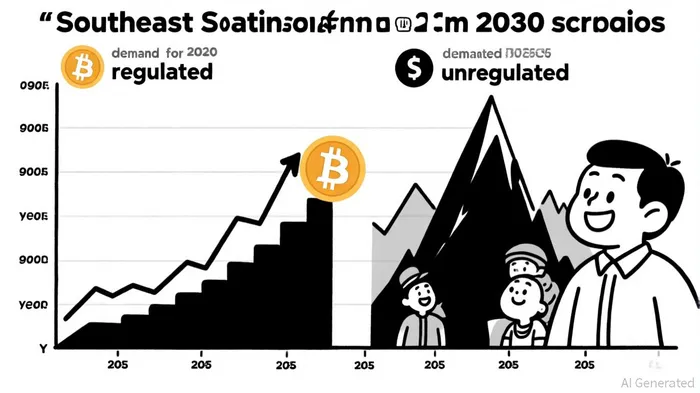
For Bitcoin, the regulatory environment in Vietnam could serve as a bellwether for Southeast Asia. If the country's market thrives under these rules, other nations may follow suit, reshaping Bitcoin's role from a speculative asset to a regulated, utility-driven one. Conversely, if the restrictions hinder adoption, Bitcoin's appeal may wane in favor of alternative use cases or jurisdictions.
Conclusion
Vietnam's crypto regulatory framework is a double-edged sword. While it risks stifling organic growth through strict mandates, it also creates a fertile ground for institutional-grade infrastructure and long-term stability. For Bitcoin, the path forward depends on its ability to adapt to a VND-centric ecosystem and coexist with real-asset-backed tokens. Investors should monitor the pilot program's outcomes and the government's sandbox framework, as these will determine whether Vietnam becomes a crypto hub or a cautionary tale.






Comentarios
Aún no hay comentarios