
Victoria's Secret's Revival: Navigating Retail Disruption Through Inclusivity and Digital Innovation
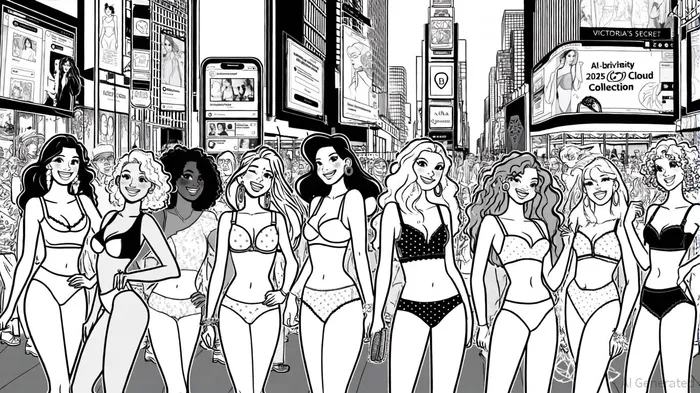
The retail and consumer goods sectors are undergoing seismic shifts driven by technological innovation, sustainability demands, and evolving consumer expectations. In this landscape, Victoria's SecretVSCO-- & Co. has embarked on a bold repositioning strategy to reestablish itself as a leader in intimate apparel and lifestyle products. By aligning with broader industry trends-such as AI-driven personalization, inclusivity, and digital-first engagement-the brand is navigating a path to revival amid fierce competition and macroeconomic headwinds.
Retail Transformation: The New Industry Playbook
The retail sector is being reshaped by three key forces: automation, sustainability, and digital intimacy. According to a report by Bain & Company, AI is now central to core retail processes, from dynamic pricing to inventory optimization, commoditizing capabilities that once defined competitive advantages. Simultaneously, consumer packaged goods (CPG) companies are redefining value through ethical production and real-time engagement, as highlighted by PwC's analysis of the sector. For instance, brands that integrate sustainability-such as vegan materials or fair-trade certifications-are seeing stronger consumer loyalty.
Victoria's Secret's revival strategy mirrors these trends. The company has shifted from its historically sexualized branding to one centered on inclusivity and empowerment, featuring real women like Iskra Lawrence and Sophie Tweed-Simmons in its campaigns. This aligns with a broader industry pivot toward authenticity, as seen in competitors like Aerie's body-positive campaigns. Additionally, the brand's acquisition of Adore Me-a tech-native, DTC lingerie brand-has accelerated its digital transformation, enabling AI-powered personalization and seamless omnichannel experiences.
Financial Resilience Amid Industry Volatility
Despite macroeconomic pressures, Victoria's Secret has shown resilience compared to peers. In Q4 2024, the company reported a 5% increase in total comparable sales, with net sales of $2.106 billion. While Q1 2025 saw a 0.44% year-on-year revenue dip, it outperformed competitors like American Eagle Outfitters and Abercrombie & Fitch, which collectively declined by 5.78% in the same period. The brand's net margin of 0.22% also exceeded industry averages, underscoring its cost discipline amid tariff challenges.
However, profitability remains a concern. The North American intimates market, a core segment for Victoria's Secret, continues to face margin compression, with Q1 2025 results reflecting a contraction in gross profit. To address this, the company has shifted toward partner-operated stores, reducing direct operational costs while expanding its global footprint. This model mirrors industry-wide trends of leveraging partnerships to mitigate supply chain risks and localize operations.
Strategic Priorities: From Brand to Execution
Victoria's Secret's 2023-2025 strategic plan, dubbed "Path to Potential," focuses on three pillars: strengthening the core business, igniting growth, and transforming the foundation. Key initiatives include:
1. Recommitting to PINK: Rebranding PINK as a distinct, youth-focused line with a casual aesthetic to differentiate from the core brand.
2. Expanding Product Portfolios: Diversifying beyond lingerie into beauty, sport, and swim categories to reduce reliance on a single product line.
3. Digital-First Engagement: Leveraging social media and product-driven entertainment, such as the 2025 documentary-style Fashion Show, to foster emotional connections.
These efforts have yielded tangible results. The Love Cloud Collection, for example, emphasized inclusivity with extended sizing and diverse model representation, resonating with Gen Z and millennial consumers. Meanwhile, the integration of Adore Me has enhanced Victoria's Secret's digital capabilities, enabling real-time data analytics and personalized recommendations.
Investment Outlook: Caution and Opportunity
Analyst sentiment on Victoria's Secret remains mixed. As of Q1 2025, 17 analysts surveyed offered ratings ranging from bullish to bearish, with an average 12-month price target of $25.12 for VSCOVSCO-- stock-a 27.98% decline from prior estimates. While some, like Jefferies' Corey Tarlowe, have lowered price targets to $35.00 from $42.00, others, such as JP Morgan's Matthew Boss, have raised theirs to $22.00 from $17.00. This divergence reflects uncertainty around the brand's ability to sustain its revival amid ongoing margin pressures and competitive threats.
Historical data from earnings releases since 2022 offers further nuance. A backtest of 106 earnings-day windows reveals an average cumulative return of +0.35% over 30 days, underperforming the S&P 500 by ~0.17 percentage points. Notably, the stock often experiences a sharp decline in the first week post-earnings (-1.9% at day 8), with positive returns only emerging after day 16. This suggests that while long-term alignment with industry trends may offer value, short-term volatility and delayed upside pose risks for investors.
Conclusion: A Work in Progress
Victoria's Secret's revival is neither a guaranteed success nor a doomed experiment. The brand's embrace of inclusivity, digital engagement, and strategic acquisitions aligns with industry-wide shifts toward personalization and ethical consumption. However, its financial performance-marked by margin pressures and mixed analyst sentiment-highlights the challenges of repositioning a legacy brand in a rapidly evolving market. For investors, the key will be monitoring how effectively Victoria's Secret balances short-term profitability with long-term cultural relevance.







Comentarios
Aún no hay comentarios