
Vesting NFTs: A Strategic Investment Vehicle in the Evolving NFT Landscape
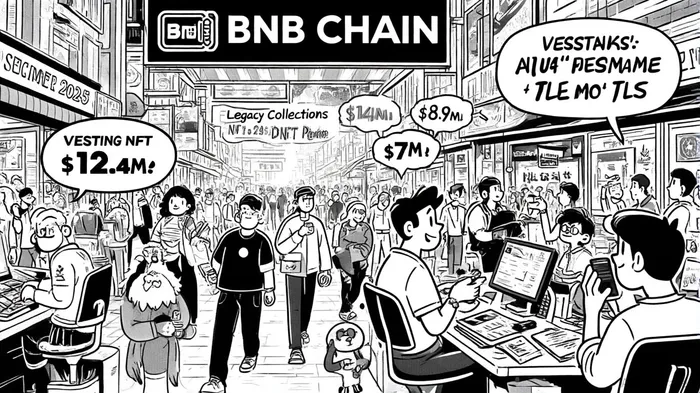
In 2025, the NFT market has undergone a profound transformation, shifting from speculative hype to a focus on utility-driven value propositions. At the forefront of this evolution are Vesting NFTs, a niche category that has surged to dominance on platforms like CryptoSlam. According to a report by Cointelegraph, Vesting NFTs generated over $12.4 million in daily sales on the BNB Chain in September 2025, outperforming legacy collections like CryptoPunks and Pudgy PenguinsPENGU-- [1]. This surge notNOT-- only reflects growing demand for liquidity solutions in token lockups but also signals a broader redefinition of what constitutes a “valuable” NFT in a crypto-native portfolio.
The Utility-Driven Paradigm Shift
Traditional NFTs, particularly profile picture (PFP) collections, have struggled with declining floor prices and waning investor interest. For instance, CryptoPunks, once selling for millions, now trade at a fraction of their 2021 peak, with their floor price dropping by over 90% [2]. In contrast, Vesting NFTs offer a structured, time-bound utility: they allow users to wrap vested tokens into tradable NFT vouchers, enabling liquidity without violating vesting agreements [1]. This innovation addresses a critical pain point in crypto—unlocking value from locked tokens—while mitigating the volatility inherent in speculative NFT markets.
The success of Vesting NFTs is further amplified by their ecosystem. Operated by UNCX Network, a decentralized service provider, the platform has leveraged the BNBBNB-- Chain's low fees and high throughput to attract a diverse user base [1]. As a result, the BNB Chain's daily NFT sales reached $14 million, nearly double Ethereum's $7 million, underscoring the chain's growing appeal for utility-focused projects [2].
Risk-Return Profiles: Vesting NFTs vs. Traditional NFTs
From an investment perspective, Vesting NFTs present a more predictable risk-return profile compared to traditional NFTs. A 2025 analysis by Funderex highlights that utility-driven NFTs—those tied to real-world assets (RWAs), governance rights, or revenue sharing—offer intrinsic value beyond speculative trading [3]. For example, Courtyard, an RWA tokenization platform, ranked tenth on CryptoSlam's 24-hour sales chart with $500,000 in volume, as users redeem physical collectibles linked to their NFTs [1]. Similarly, DMarket, an interoperable gaming NFT platform, has seen sustained demand due to its integration with cross-chain ecosystems [1].
Traditional NFTs, by contrast, remain vulnerable to market saturation and legal uncertainties. Projects like the Australian Open's Artball program have seen NFTs lose up to 90% of their initial value, illustrating the fragility of speculative models [3]. Vesting NFTs, with their time-based unlock mechanisms, reduce exposure to such volatility by aligning value delivery with user utility.
Strategic Implications for Crypto-Native Portfolios
For investors, Vesting NFTs represent a strategic addition to crypto-native portfolios. Their utility—whether in liquidity provision, governance, or RWA tokenization—creates a diversified risk profile that complements traditional crypto assets. Moreover, the rise of eco-friendly blockchains and green NFTs has further enhanced their appeal, as sustainability becomes a key criterion for institutional investors [3].
However, challenges remain. The nascent nature of Vesting NFTs means regulatory frameworks are still evolving, and market adoption could face headwinds if broader crypto sentiment shifts. Nonetheless, the current data suggests a clear trend: investors are prioritizing NFTs that deliver tangible, time-bound value over those reliant on speculative hype.
Conclusion
Vesting NFTs have emerged as a cornerstone of the 2025 NFT landscape, driven by their ability to solve real-world problems in token liquidity and governance. With daily sales volumes outpacing legacy collections and a growing ecosystem of utility-driven projects, they offer a compelling case for inclusion in crypto-native portfolios. As the market continues to mature, the distinction between speculative and utility-driven NFTs will become increasingly critical for investors seeking long-term value.






Comentarios
Aún no hay comentarios