
Vertex, Inc. (VERX): Overvalued Metrics and Bearish Signals Point to a Pending Correction
Vertex, Inc. (NASDAQ: VERX), a provider of tax technology solutions, has become a focal point for investors debating whether its valuation aligns with fundamentals. Despite recent earnings beats and strategic acquisitions, a closer examination of its price-to-sales (P/S) ratio, deteriorating short interest trends, and unmet growth expectations suggests the stock is primed for a correction.
1. P/S Ratio: Overvalued Relative to Industry, Under Peer Pressure
Vertex's current P/S ratio of 8.0x (based on trailing twelve months revenue) places it at a premium to its broader software industry peers. While its ratio is modestly lower than some direct competitors—such as Clearwater AnalyticsCWAN-- (CWAN) at 11.7x and Q2 HoldingsQTWO-- (QTWO) at 7.7x—the key comparison lies in the U.S. software sector, where the average P/S ratio is just 5.5x. This stark disparity is highlighted by Vertex's premium over companies like RingCentralRNG-- (RNG) at 1.0x and XperiXPER-- (XPER) at 0.7x.
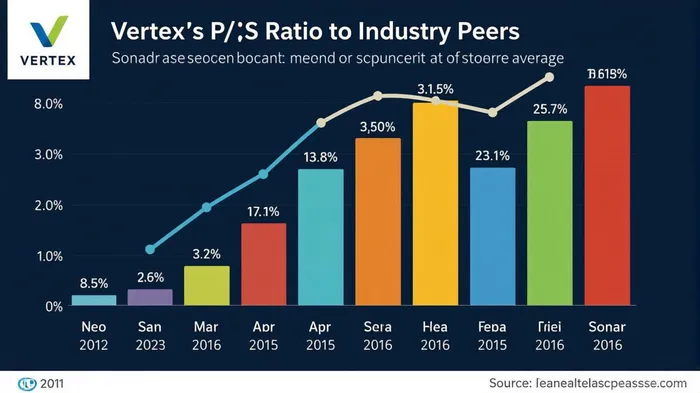
The disconnect is further emphasized by Vertex's fair P/S ratio of 5.7x, calculated via discounted cash flow (DCF) models that factor in growth, margins, and risk. At current levels, the stock trades 38% above its fair value, suggesting overvaluation. Analysts' 12-month price target of $47.28—37% higher than its July 2025 price of $34.48—reflects optimistic assumptions, but the consensus lacks statistical confidence due to divergent estimates.
2. Short Interest: Bearish Sentiment Resurging
Short interest data reveals growing skepticism among contrarian investors. While Vertex's short interest dipped to a low of 4.88 million shares in April 2025, it has rebounded to 5.63 million shares by mid-June—a 15% increase in two months. This surge coincides with a rise in the days to cover ratio (a measure of short selling pressure) to 4.59 days, up from 2.37 days in mid-2024.
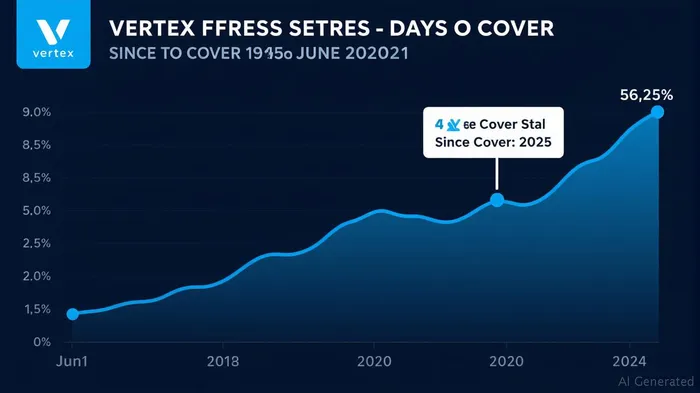
Historically, short interest peaked at 6.99 million shares in September 2024, driven by concerns about valuation and execution risks. Though it retreated temporarily, the recent rebound suggests bears are re-engaging. Notably, Vertex's stock fell 15.7% on Q4 2024 earnings day despite beating estimates—a signal that investors are increasingly wary of sustaining momentum.
3. Growth Expectations: Moderation Amid Mixed Signals
Vertex has delivered consistent revenue growth—17.9% year-over-year ARR growth in Q1 2025 and 16.5% full-year 2024 revenue growth—but organic growth (excluding acquisitions) lags. Excluding contributions from Systax and ecosio, organic ARR grew only 15.1%, while cloud revenue's 29% growth, though strong, aligns with prior guidance.
The Net Revenue Retention Rate (NRR) has also softened, dropping to 109% in Q1 2025 from 112% in Q1 2024. While Vertex's Gross Revenue Retention Rate (GRR) remains steady at 95%, its inability to expand NRR signals margin pressure or customer hesitation.
Analysts have already tempered expectations: 2025 EPS estimates were lowered from $0.18 to $0.14 post-Q1 results, despite revenue slightly exceeding forecasts. This divergence underscores skepticism about Vertex's ability to sustain high margins or accelerate organic growth.
Investment Thesis: Caution Ahead
Vertex's valuation, short interest trends, and growth moderation collectively paint a cautionary picture. Key risks include:
- Overvaluation: Trading at 38% above its DCF-derived fair value, a reversion to mean could trigger a 20–30% decline.
- Execution Pressure: Relying on acquisitions (e.g., ecosio) to boost metrics risks diluting margins and profitability.
- Market Sentiment: The stock's 15.7% drop on positive Q4 2024 results signals investor reluctance to reward even modest beats.
Recommendation: Investors should avoid initiating long positions at current levels. Short sellers, however, may find opportunity in the disconnect between valuation and fundamentals. A target price of $28–$30—closer to its DCF-derived fair value—could materialize if the stock corrects to industry multiples.
Conclusion
Vertex's recent successes in cloud migration and AI-driven solutions are undeniable, but its valuation and technical indicators suggest complacency. Until growth accelerates organically or short interest retreats, the path of least resistance for VERXVERX-- appears downward.





Comentarios
Aún no hay comentarios