
Vermaat's Acquisition by Compass: A Catalyst for Private Equity-Driven Consolidation in the European Premium Catering Sector
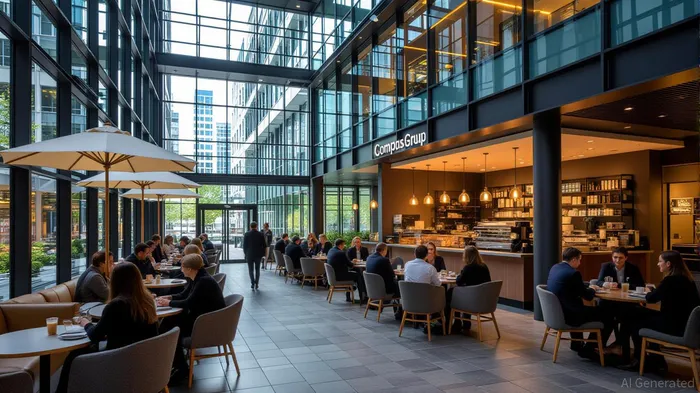
The acquisition of Vermaat Groep BV by CompassCOMP-- Group for €1.5 billion ($1.8 billion) marks a pivotal moment in the European premium outsourced catering sector. This deal, which represents a full exit for Bridgepoint Group from its 2019 investment in Vermaat, underscores a broader trend of private equity-driven consolidation in a fragmented, high-growth industry. With the European outsourced catering market valued at €30 billion and projected to grow at 5–7% annually, the strategic alignment between Vermaat's operational agility and Compass's global scale offers a compelling case study for investors.
Private Equity's Role in Fueling Sector Consolidation
Vermaat's journey from a Dutch coffee chain to a pan-European catering powerhouse exemplifies the transformative power of private equity. Acquired by Partners Group in 2015 and later by Bridgepoint in 2019, Vermaat leveraged its capital base to execute aggressive international expansion. Its acquisitions of Serenest (France) and L&D (Germany) expanded its footprint into high-margin markets, while its Stach brand became a cultural touchstone in the Netherlands. Bridgepoint's exit via Compass reflects a strategic shift by private equity firms to monetize gains in a sector where demand for premium, sustainable, and tech-enabled catering services is surging.
For Compass Group, the acquisition of Vermaat—alongside recent deals like CH&CO (UK) and 4Service (Norway)—is part of a €1.7 billion European M&A spree. These moves align with Compass's North American playbook, where it built dominance through 18 acquisitions between 1994 and 2017. The company's 15% global market share and 23% share of the European contract catering sector position it as a consolidator in a fragmented industry where smaller players struggle to match its operational efficiency and brand reach.
Strategic Rationale and Market Dynamics
The European premium cateringPC-- market is driven by three key forces:
1. Demand for Health and Sustainability: Compass's recent launch of a plant-forward menu, adopted by 52% of its corporate and healthcare clients, aligns with consumer preferences for nutrition-focused, low-impact meals.
2. Digital Transformation: The integration of AI-driven menu planning and unmanned “Open Cafés” in office environments is redefining convenience and cost efficiency.
3. Sector Diversification: Growth in corporate, healthcare, and education sectors—where Compass has a 96% contract renewal rate—highlights the stickiness of premium catering services.
Compass's acquisition of Vermaat adds 2,000+ locations and 20,000 employees to its portfolio, enhancing its ability to offer tailored solutions across sectors. For instance, Vermaat's Stach brand complements Compass's focus on urban coffee culture, while its frozen meal manufacturing capabilities (via Hofmanns) address cost pressures in smaller business segments.
Implications for Investors
The Vermaat deal signals a maturing phase in the European catering sector, where private equity-backed consolidation is accelerating. For investors, this presents two key opportunities:
1. Direct Exposure to Consolidators: Compass Group (LSE: CMPCMP--.L), with a 10.6% revenue growth to $42.2 billion in FY2023 and a 16.4% operating profit increase, demonstrates strong capital allocation discipline. Its recent $750 million share buyback program and net debt-to-EBITDA ratio of 1.3x suggest a balanced approach to growth and returns.
2. Private Equity Vehicles: Firms like Bridgepoint and Partners Group, which have exited Vermaat, highlight the role of private equity in fueling sector innovation. Investors in private equity funds with catering sector exposure may benefit from similar exit dynamics in the future.
Risks and Challenges
While the outlook is optimistic, investors must consider:
- Geopolitical and Economic Volatility: Compass's exit from markets like Chile and Brazil reflects the need to balance growth with profitability.
- Regulatory Scrutiny: The sector's reliance on labor and food sourcing practices could attract ESG-related oversight.
- Competition from Niche Players: Sodexo and AramarkARMK--, with their own digital and sustainability initiatives, could challenge Compass's market leadership.
Conclusion: A Win-Win for Consolidators and Consumers
The acquisition of Vermaat by Compass is emblematic of a sector where private equity capital catalyzes growth, and strategic consolidation creates value for both investors and end-users. As the European premium catering market evolves, companies that combine scale, innovation, and ESG alignment—like Compass—will likely outperform. For investors, this deal reinforces the thesis that fragmented, high-growth industries are fertile ground for private equity-driven transformation, with Compass poised to capitalize on the next phase of the sector's evolution.





Comentarios
Aún no hay comentarios