
Verizon's Rural Connectivity Gambit: A Blueprint for Long-Term Infrastructure-Driven Growth
In an era where digital infrastructure is as critical as physical roads, Verizon's recent foray into rural and isolated markets—epitomized by its transformative project on Smith Island—has redefined the calculus of long-term infrastructure investment. By deploying high-speed internet and 5G to one of America's most secluded communities, VerizonVZ-- has not only addressed a pressing social need but also demonstrated a scalable model for monetizing underserved U.S. markets. This analysis explores how Verizon's strategic blend of technological innovation, public-private partnerships, and financial discipline positions it to capitalize on the $1.5 trillion rural broadband opportunity projected by 2030.
Smith Island: A Case Study in Rural Resilience
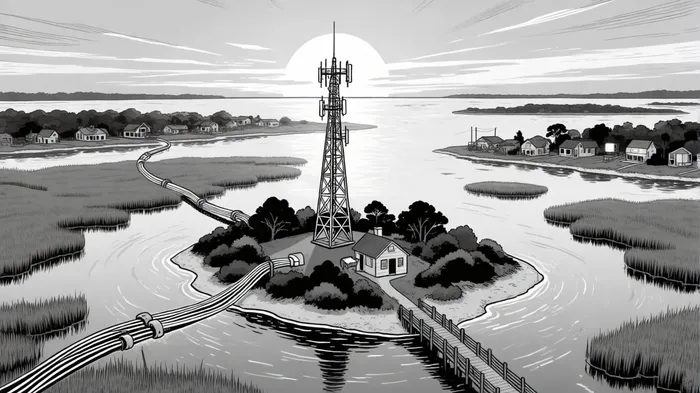
Smith Island, a low-lying Maryland community of fewer than 200 residents, became a proving ground for Verizon's rural expansion strategy in 2024. Funded by a $2.3 million grant from the State of Maryland using federal Coronavirus Capital Projects Fund dollars, the project delivered 100 Mbps/20 Mbps fixed wireless access (FWA) and 5G mobile service to the island for the first time. Engineers overcame logistical hurdles by transmitting signals from the mainland and laying underground fiber through challenging coastal terrain. The results were transformative: telehealth adoption surged, students gained access to online learning, and local businesses expanded their digital footprints. Crucially, the project underscored the viability of FWA as a cost-effective solution for geographically dispersed populations—a lesson with national implications.
Scaling the Smith Island Model: Verizon's Rural Playbook
Verizon's broader 2025 strategy leverages the Smith Island blueprint to accelerate rural broadband deployment. The company plans to double its FWA subscriber base to 8–9 million by 2028 while expanding fiber passings to 35–40 million households. This ambition is underpinned by strategic acquisitions, including Frontier Communications, which added 9–10 million fiber passings and a platform to build 1 million new connections annually. Additionally, Verizon's purchase of 850 MHz spectrum from UScellular and its aggressive rural carrier acquisitions (e.g., in Kentucky, Iowa, and Montana) have bolstered its ability to deliver low-latency, long-range connectivity.
The company's financials reinforce this momentum. With a 2025 ROI of 13.11% and projected annual free cash flow of $17.5–$18.5 billion, Verizon is well-positioned to fund capital expenditures exceeding $20 billion by 2026. These investments align with federal initiatives like the BEAD and USDA ReConnect programs, which aim to connect 100% of U.S. households to high-speed broadband by 2030.
Competitive Dynamics and Market Positioning
While Verizon's rural strategy is robust, it faces stiff competition. T-Mobile, for instance, leads in rural 5G coverage, leveraging its 600 MHz spectrum and Sprint acquisition to achieve an 89.4% 5G availability score in these markets. AT&T, meanwhile, has fortified its position through FirstNet, a public safety network now serving 29,000 agencies. However, Verizon's hybrid approach—combining FWA, fiber, and strategic spectrum purchases—offers a unique edge. Its recent focus on affordability (e.g., the $20/month Verizon Forward program) also addresses a key barrier to adoption in low-income rural areas.
The Investment Thesis: Infrastructure as a Growth Engine
Verizon's rural expansion is not merely a social initiative but a strategic investment in future revenue streams. By 2028, the company aims to reach 90 million households with FWA, a market segment projected to grow at 15% annually. The economic returns are equally compelling: studies show that rural communities with robust broadband access, such as Beltrami County, Minnesota, see a 20% increase in entrepreneurial activity and a 15% rise in property values. For Verizon, these gains translate into sticky, high-margin services that lock in customers for years.
Critically, the Smith Island model is replicable. With 30% of U.S. households still lacking access to 100 Mbps broadband, Verizon's ability to deploy FWA and fiber at scale—while securing public funding—creates a virtuous cycle of infrastructure development and revenue generation.
Conclusion: A Win-Win for Investors and Communities
Verizon's rural connectivity push represents a rare alignment of societal impact and financial returns. By addressing the “last-mile” challenge through innovative engineering and strategic partnerships, the company is not only bridging the digital divide but also unlocking a $1.5 trillion market opportunity. For investors, the combination of strong ROI, federal support, and scalable infrastructure makes Verizon's rural expansion a compelling long-term bet. As the 2030 broadband deadline looms, the company's ability to execute on its vision will likely determine its dominance in the next decade of U.S. telecommunications.





Comentarios
Aún no hay comentarios