
Verizon's Repeating Problematic Past: Recurring Strategic Missteps and Their Implications for Long-Term Shareholder Value
Verizon Communications (NYSE: VZ) has long been a bellwether in the U.S. telecommunications sector, yet its history is marred by a pattern of strategic missteps that have consistently undermined long-term shareholder value. From misleading marketing campaigns to overpromising on technological advancements, the company's repeated errors reveal a systemic failure to align ambition with execution-a trend that has left investors wary despite its dominant market position.
A Legacy of Missteps: From Marketing to 5G Overpromises
Verizon's strategic challenges are not new. In the mid-2010s, the company faced legal scrutiny for deceptive marketing practices, including offering free iPhones in exchange for multi-year service contracts. These tactics, while initially boosting short-term subscriber growth, eroded consumer trust and led to regulatory backlash, according to Business Model Analyst. Fast forward to the 2020s, and similar issues persist. According to Business Model Analyst, VerizonVZ-- has been criticized for overstating the readiness of its 5G network, misleading customers about coverage and performance. Such missteps not only damage brand credibility but also risk customer churn in a hyper-competitive market dominated by rivals like T-Mobile and AT&T, according to Paragon Intel.
The financial toll of these misjudgments is evident. Verizon's operating income has declined sharply, dropping from $7,473 million in Q3 2023 to $5,926 million in Q3 2024, as operational costs from infrastructure investments-particularly 5G and fiber expansion-outpaced revenue growth, according to a CSIMarket report. Meanwhile, wireless equipment revenue, a critical revenue stream, fell by $470 million year-over-year, signaling potential market saturation or shifting consumer preferences, according to a Yahoo Finance SWOT analysis.
Overreliance on the U.S. Market and Financial Discipline
Another recurring issue is Verizon's geographic overreliance. Despite its global ambitions, the company generates nearly all its revenue from the U.S. market, limiting growth opportunities in international markets where competitors like AT&T and T-Mobile have made more aggressive inroads, Business Model Analyst notes. This domestic focus has also led to inflated capital expenditures, with infrastructure costs squeezing profit margins and reducing financial flexibility, the Yahoo Finance SWOT analysis suggests.
The company's recent acquisition of Frontier Communications-a $10 billion bet on expanding broadband access-exemplifies this pattern. While the deal aimed to bolster Verizon's fiber network, critics argue it has exacerbated debt levels and strained free cash flow, Paragon Intel contends. Data from Yahoo Finance shows that Verizon's debt decreased by $10.6 billion year-over-year in 2024, yet its 12-month dividend payout ratio remains at 114.27%, raising concerns about its ability to balance shareholder returns with reinvestment in growth initiatives, the CSIMarket report adds.
Shareholder Value: A Mixed Picture
Verizon's stock performance underscores the tension between its strategic challenges and operational resilience. Long-term shareholders have endured a 30% decline in share price over the past five years, with the P/E ratio languishing at 9.74-well below industry averages, according to a Yahoo Finance report. Yet, recent quarters have shown glimmers of hope: Q4 2024 revenue rose 1.7% year-over-year, driven by a 40% sequential increase in equipment sales and a 26% subscriber growth boost from FIOS, the Yahoo Finance SWOT analysis noted. Analysts project a modest 2% to 2.8% revenue growth in 2025, with some forecasting an 18% upside in share price, Paragon Intel argues.
However, these gains are tempered by skepticism. A report by Paragon Intel highlights CEO Hans Vestberg's struggles to translate technological vision into commercial success, citing weaknesses in customer experience and financial discipline. The company's rejection of shareholder proposals on climate lobbying and lead-sheathed cables at its 2025 annual meeting further underscores a disconnect with investor priorities, the CSIMarket report observes.
Conclusion: A Path Forward?
Verizon's history of strategic missteps-from deceptive marketing to overambitious 5G promises-reveals a company grappling with its own legacy. While recent infrastructure investments and subscriber growth offer short-term optimism, the recurring nature of these issues suggests a deeper organizational challenge. For long-term shareholder value to materialize, Verizon must address its operational inefficiencies, diversify its revenue streams, and rebuild trust with both customers and investors. Until then, the ghosts of its problematic past will continue to haunt its future.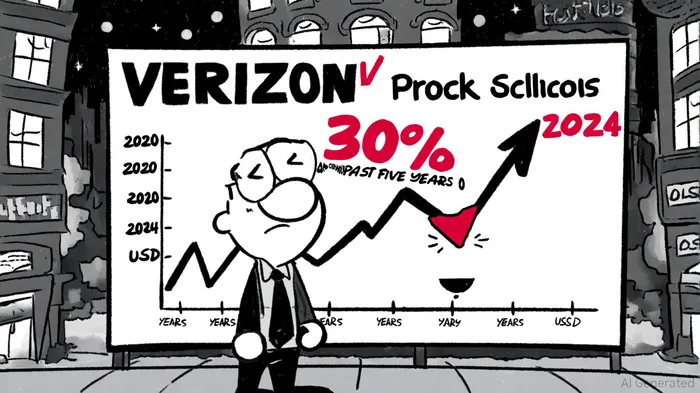







Comentarios
Aún no hay comentarios