
VeriSilicon Microelectronics: A Semiconductor Success Story Amid China's Strategic Tech Push
In the third quarter of 2025, VeriSilicon Microelectronics (SHA:688521) emerged as a standout performer in China's semiconductor sector, reporting a staggering 78.8% year-over-year revenue surge to 1.28 billion yuan ($39.33 million), according to a Reuters report. This marked a dramatic turnaround from its Q2 2025 revenue of 584.13 million yuan and positioned the company as a key beneficiary of China's broader push to dominate the global semiconductor value chain. For investors, the question is no longer whether VeriSilicon can grow-but how sustainably it can capitalize on its strategic positioning in a rapidly evolving industry.
Strategic R&D and Market Expansion Fuel Growth
VeriSilicon's Q3 2025 success is underpinned by aggressive R&D investments and geographic diversification. The company has established a new R&D center in Vietnam, leveraging lower costs and skilled labor to accelerate innovation in low-power chip design and AI computing, per a Yicai Global report. Simultaneously, it has expanded into emerging markets like India and Turkey, where demand for smart wearables and automotive electronics is surging. These moves align with China's Made in China 2025 initiative, which prioritizes localized production and reduces reliance on foreign technology.
The company's focus on specialized AI chips has proven particularly lucrative. A Substack analysis reported that VeriSilicon's Q3 revenue spike coincided with a 120% quarter-over-quarter increase, driven by intensified demand for its AI solutions in cloud computing and edge devices. This aligns with broader industry trends: China's semiconductor market is projected to reach $217.55 billion in 2025, with AI and 5G applications accounting for over 86% of revenue, as noted by Yicai Global.
Stock Performance: A Volatility-Defying Rally
VeriSilicon's stock has mirrored its operational momentum. As of August 28, 2025, its share price hit $21.38, with a 52-week range of $19.99 to $24.41 (TechInsights). Year-to-date, the stock surged 303%, vastly outperforming the CES CN Semiconductor Index's 65.2% gain (Substack analysis). This rally reflects investor confidence in the company's ability to navigate trade barriers and U.S. export controls, which have stifled China's access to advanced EUV lithography tools.
Despite a beta of 0.53-indicating lower volatility than the market average-VeriSilicon's stock has not been without risks. The company reported a net loss of -CNY 635.92 million over the past 12 months and a negative return on equity of -21.13%, according to StockAnalysis statistics. However, its Q3 2025 performance suggests a potential inflection point, with revenue growth outpacing losses and a market cap of $11.2 billion signaling optimism about future cash flow.
China's Semiconductor Narrative: Opportunities and Challenges
VeriSilicon's trajectory is inextricably linked to China's semiconductor ambitions. While the country accounts for 34% of global semiconductor sales, trade restrictions and talent shortages threaten its long-term competitiveness, a point highlighted by Yicai Global. Yet, VeriSilicon's IP-driven model-focusing on design and fabless manufacturing-positions it to thrive in this environment. Its partnerships with domestic foundries and its 13.30% year-over-year revenue growth in H1 2025 underscore its adaptability (TechInsights).
The company's expansion into automotive and AI sectors also aligns with China's push to dominate next-generation technologies. For instance, its low-power chips are increasingly adopted in smart wearables, a market expected to grow at 15% CAGR through 2030. Meanwhile, its AI chips cater to a domestic market hungry for alternatives to foreign tech, particularly in data centers and autonomous vehicles.
Conclusion: A High-Stakes Bet on China's Tech Future
VeriSilicon's Q3 2025 results and stock rally make it a compelling case study in China's semiconductor renaissance. While the company faces headwinds-including a recent 12-month net loss-its strategic R&D investments, geographic diversification, and alignment with national tech policies position it to capitalize on long-term growth. For investors, the key risks lie in global trade dynamics and execution challenges, but the rewards could be substantial if VeriSilicon continues to outperform in AI and automotive electronics.
As China's semiconductor industry navigates structural shifts, VeriSilicon's ability to innovate and scale will determine whether its Q3 success is a fleeting spike or the start of a sustained ascent.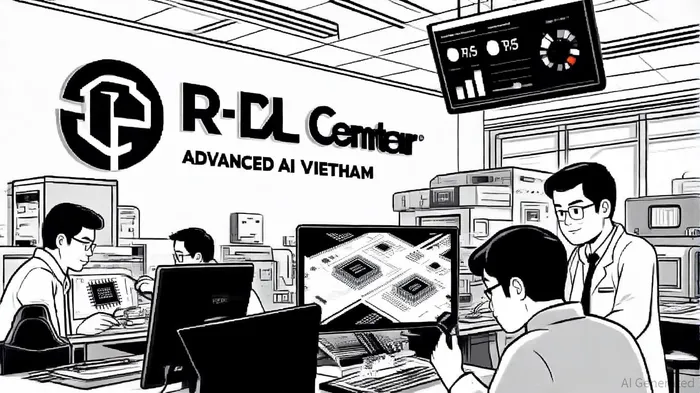







Comentarios
Aún no hay comentarios