
Vera Bradley's Q2 FY2026 Performance and Strategic Momentum: Assessing Operational Recovery and Margin Expansion Potential Post-Pandemic
The post-pandemic retail environment remains a minefield of challenges, with margin compression, shifting consumer preferences, and macroeconomic headwinds testing even the most resilient companies. For Vera BradleyVRA-- (VRA), a brand synonymous with American heritage and lifestyle products, the path to recovery has been marked by strategic recalibration. While direct Q2 FY2026 data remains elusive, the company's broader operational and strategic moves—coupled with industry-wide trends—offer a compelling lens to assess its potential for margin expansion and operational recovery.
Operational Streamlining and Cost Efficiency
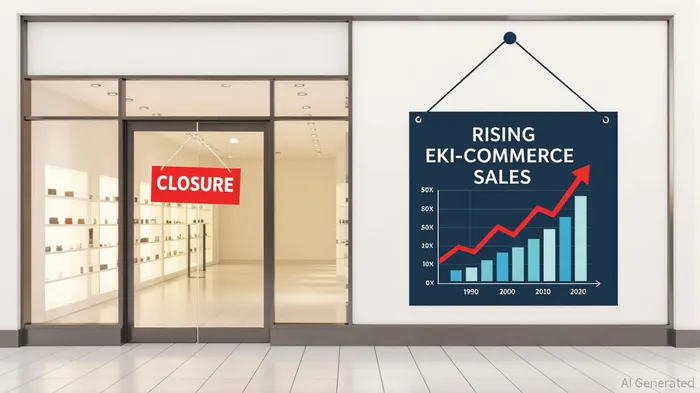
Vera Bradley's decision to close 10 unprofitable full-line stores in 2024 underscores its commitment to optimizing its retail footprint[1]. This move aligns with a broader industry shift toward digital-first strategies, as consumers increasingly favor online shopping for convenience and accessibility[1]. By reducing its physical presence, Vera Bradley has likely curtailed fixed costs and redirected resources toward higher-margin channels. Complementing this, the company's year-over-year inventory reduction of 3%[1] signals improved supply chain discipline, a critical factor in mitigating carrying costs and excess stock risks. These steps reflect a pragmatic approach to cost efficiency, a prerequisite for margin expansion in a low-growth retail environment.
However, the company's margin pressures persist. Increased clearance penetration—often a byproduct of inventory rationalization—can erode gross margins[1]. Additionally, the shift to e-commerce has introduced higher outbound freight costs, a challenge shared by many retailers navigating the logistics of last-mile delivery[1]. While these headwinds are significant, Vera Bradley's focus on inventory management and store optimization suggests a willingness to trade short-term pain for long-term structural improvements.
Strategic Reimagination and Brand Revitalization
Beyond cost-cutting, Vera Bradley has prioritized brand revitalization. Management has emphasized “product reimagination” and targeted marketing campaigns aimed at younger demographics[1]. This strategy mirrors broader industry trends, where legacy brands are leveraging heritage while innovating to attract Gen Z and millennial consumers. For instance, the company's renewed emphasis on heritage product lines could tap into nostalgia-driven demand, a tactic that has proven effective for brands like Kate Spade and Michael Kors.
Moreover, Vera Bradley's expansion into new wholesale partnerships[1] hints at a diversification of revenue streams. Wholesale channels often provide higher margins compared to direct-to-consumer retail, particularly when managed with strategic pricing and brand positioning. This approach aligns with Deloitte's 2025 Consumer Products Industry Outlook, which highlights the importance of portfolio diversification and demand-generation strategies in navigating post-pandemic volatility[2].
Industry Context: A Retail Sector in Transition
The retail sector's post-pandemic trajectory has been anything but smooth. From 2023 to 2025, traditional brick-and-mortar retailers have grappled with declining sales and store closures, while e-commerce growth has slowed to a more modest 10% annually[1]. Despite this, global e-commerce sales hit $6.3 trillion in 2024[1], underscoring the sector's enduring relevance. Yet profitability remains elusive, with many online retailers struggling to balance customer acquisition costs against thin margins.
Vera Bradley's strategic pivot toward digital and unified commerce—integrating online and in-store experiences—positions it to capitalize on this hybrid model[1]. Unified commerce, as highlighted by industry analysts, is no longer a luxury but a necessity for survival[2]. By investing in AI-driven personalization and data analytics[1], Vera Bradley could enhance customer retention and cross-selling, two critical drivers of margin expansion.
Risks and Uncertainties
The company's suspension of FY2026 financial guidance[2] due to leadership changes and macroeconomic uncertainties introduces a layer of caution. Leadership transitions can disrupt strategic continuity, and a volatile macroeconomic environment—marked by inflation, interest rates, and geopolitical tensions—adds complexity to forecasting. However, this recalibration also provides management with flexibility to adapt to evolving conditions, a trait that could prove valuable in a sector defined by rapid change.
Conclusion: A Work in Progress
Vera Bradley's operational recovery and margin expansion potential hinge on its ability to balance cost discipline with strategic innovation. The closure of underperforming stores, inventory optimization, and focus on digital channels reflect a clear-eyed approach to post-pandemic challenges. Yet, the company must navigate persistent margin pressures and macroeconomic headwinds while executing its brand revitalization and wholesale expansion.
For investors, the key question is whether these strategic shifts will translate into sustainable profitability. While Q2 FY2026 data is unavailable, the broader trajectory suggests a company in transition—one that is neither complacent nor reckless, but rather recalibrating for a future where agility and differentiation are paramount.





Comentarios
Aún no hay comentarios