
Veolia Environnement’s Q1 2025 Results: Sustainable Growth Amid Headwinds
Veolia Environnement delivered a robust set of Q1 2025 results, showcasing resilience across its water, waste, and energy divisions despite macroeconomic headwinds. The company’s organic revenue growth of +3.9% to €11.5 billion, coupled with margin expansion and strategic acquisitions, underscores its ability to navigate inflation, energy price volatility, and geopolitical risks. Here’s a deep dive into the numbers and their implications for investors.
Revenue: Diversification Fuels Growth
Veolia’s global footprint is its strongest asset. While France struggled—-3.8% organic growth in Waste France due to lower landfill volumes—the Rest of the World segment surged with +5.0% organic growth, led by standout performances:
- Latin America: +12.5% driven by Brazil and Colombia.
- Iberia: +9.4% from water tariff hikes and energy contracts.
- North America: +3.1%, fueled by hazardous waste price increases and regulated water tariffs.
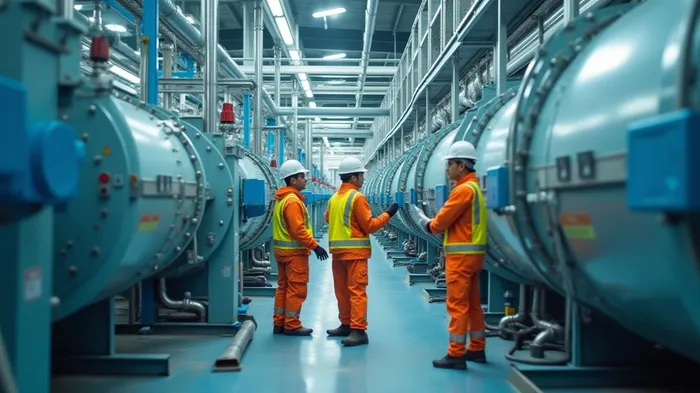
The Water segment grew +2.4% organically, with tariff increases in North America and Europe. Meanwhile, Waste expanded +3.7%, supported by strong hazardous waste activity (+5.6% in Europe and North America). The Energy division saw a -1.9% organic decline overall, though excluding energy prices, growth was +5.3%, highlighting progress in bioenergies and flexibility solutions.
Profit Margins and Financial Health: Efficiency and Synergies Pay Off
Veolia’s operational efficiency and synergy gains from its Suez integration are paying dividends. EBITDA rose to €1.7 billion (+5.5% organically), with margins improving by 60 basis points, driven by:
- €92 million in operational efficiency savings (42% retained in EBITDA).
- €25 million from Suez synergies, pushing cumulative savings to €460 million.
The company’s net financial debt fell to €18.85 billion, reducing its leverage ratio to 2.75x—a 13 basis-point improvement from 2024. This signals disciplined capital allocation, especially after acquiring CDPQ’s 30% stake in its Water Technologies & Solutions division for €1.5 billion. This move secures full ownership, enabling faster execution of its GreenUp strategic plan, which targets €90 million annual synergies by 2027.
Strategic Momentum: Contracts and Innovation
Veolia’s Q1 saw major contract wins aligned with its $5.8 billion GreenUp investment plan, including:
- A $550 million U.S. WaterTech project for semiconductor ultra-pure water systems.
- A San Francisco wastewater biogas reinjection project using patented technology.
- Offshore oil/gas sulfur removal contracts in Brazil and UAE, showcasing its expertise in hazardous waste.
These deals highlight Veolia’s shift toward high-margin, "booster" activities, which CEO Estelle Brachlianoff emphasized as critical to achieving the 10% CAGR net income target by 2027.
Risks and Challenges
Despite strong execution, headwinds persist:
- Energy prices: Dragged down EBITDA by €253 million.
- Currency volatility: Depreciation in Argentina and Hungary hurt results.
- Sluggish industrial activity: Weighed on regions like Germany and Italy.
However, the company’s macro immunity—with only 15% of revenue exposed to GDP-sensitive sectors—and 70% of revenue indexed to inflation mitigate these risks.
Investor Considerations
Veolia’s 4.32% dividend yield and five-year dividend growth streak make it appealing for income investors. Its P/E ratio of 19.11 suggests moderate valuation, especially given its growth trajectory. While shares dipped 2.06% pre-market on Q1 results—likely due to broader market jitters—the fundamentals remain strong.
Conclusion: A Leader in Sustainable Infrastructure
Veolia’s Q1 results affirm its position as a global leader in environmental services, leveraging its diversified revenue streams and operational discipline. With €350 million in annual efficiency targets, €5.3 billion in GreenUp investments by 2027, and a confirmed 5-6% EBITDA growth target for 2025, the company is well-positioned to capitalize on long-term trends in decarbonization and circular economies.
While risks like energy prices and geopolitical instability linger, Veolia’s 90% municipal contract renewal rate, $1.5 billion stake buyback, and proven synergy execution reduce downside exposure. For investors seeking exposure to a resilient, ESG-aligned business with strong cash flows and dividend support, Veolia remains a compelling choice.
In a world increasingly focused on sustainability, Veolia’s Q1 results are more than just numbers—they’re a blueprint for how companies can thrive by solving the planet’s most pressing environmental challenges.







Comentarios
Aún no hay comentarios