
Venture Global LNG: A Buy at These Levels as Near-Term Catalysts Outweigh Long-Term Risks
The LNG market is at a pivotal juncture, and Venture Global LNG (NASDAQ: VGAS) stands uniquely positioned to capitalize on its operational agility and strategic advantages. Despite lingering concerns about a potential 2027 oversupply and regulatory hurdles, the company’s modular construction model, robust LNG price spreads, and a pipeline of imminent catalysts make it a compelling buy at current levels. Here’s why investors should act now.
Modular Construction: A Strategic Edge in a Volatile Market
Venture Global’s mid-scale, modular liquefaction design is its crown jewel. Unlike traditional megaprojects, its phased approach allows rapid scaling while mitigating execution risk. In Q1 2025, Plaquemines Phase 1’s 18 trains operated at 140% of nameplate capacity, demonstrating unmatched flexibility. This model enables the company to ramp up production swiftly to meet surging demand—critical in a market where price spreads are widening again.
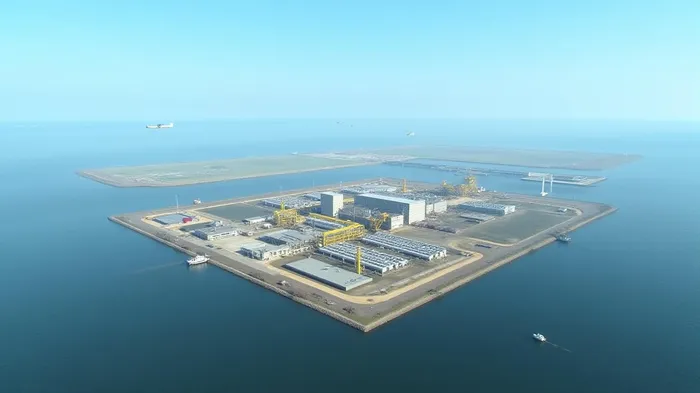
The modular design also accelerates capital efficiency. With 18 of 20 CP2 liquefaction trains already procured or stockpiled, Venture GlobalVG-- is ahead of the curve in mitigating risks tied to U.S.-imposed tariffs. This forward thinking reduces potential cost overruns, a stark contrast to peers still wrestling with delays and financing gaps.
LNG Price Spreads: A Tailwind for Margins
Current LNG price dynamics favor U.S. exporters. European TTF prices ($13.46/MMBtu) and Asian JKM ($12.89/MMBtu) remain ~$9–10/MMBtu above Henry Hub’s $3.68/MMBtu, creating a vast arbitrage opportunity. These spreads, driven by tight European storage levels and Asia’s demand resilience, are sustainable through 2025.
Venture Global’s Q1 results reflect this advantage: 105% YoY revenue growth to $2.89B and 94% EBITDA expansion to $1.35B. Even with reduced 2025 guidance ($6.4–6.8B EBITDA vs. prior $6.8–7.4B), the company’s margins remain industry-leading, and the stock’s 52-week low ($9.91) presents a mispricing.
Near-Term Catalysts: CP2 and Earnings Deliver Clarity
The market is overlooking two imminent catalysts that could revalue Venture Global’s stock:
- CP2 Regulatory Finality:
- DOE Non-FTA approval (March 2025) and FERC’s May 9 FSEIS clear the path for CP2’s final approval. With a $3B credit facility secured, construction will ramp up, unlocking 20 million tons/year capacity by 2026.
Q2 Earnings: Proving Sustained Growth:
- Q1’s record 234 TBtu exports (up 93% QoQ) set the stage for Q2 results. With Plaquemines on track for 222–239 cargos in 2025, the company will demonstrate its ability to scale while managing costs—a key investor concern.
Addressing Long-Term Risks: Oversupply and Tariffs
The bear case hinges on 2027 LNG oversupply and U.S.-EU tariffs. While valid, these risks are overblown:
- Oversupply Concerns:
Global LNG demand is set to grow by ~3% annually through 2030, even accounting for new supply. Venture Global’s modular design allows it to pause or repurpose capacity if needed, unlike fixed-cost rivals.
Tariff Mitigation:
- Pre-purchased modules and contracts with tariff-exempt buyers (e.g., EMEA) limit exposure to $210–350M in potential tariffs, reducing the impact to manageable levels.
Wall Street’s Mixed Sentiment: A Buying Opportunity
Despite stellar operational metrics, VGAS trades at ~5.3x 2025E EBITDA, far below peers. This disconnect reflects short-term fears about regulatory delays and 2027 risks. However, with CP2’s imminence and Q2 earnings set to affirm its execution, the stock is primed for a rebound.
Conclusion: Act Now—Catalysts Are Imminent, Risks Are Manageable
Venture Global’s combination of operational excellence, strategic foresight, and imminent catalysts creates a high-reward, low-risk entry point. While risks like 2027 oversupply and tariffs linger, they are outweighed by the company’s ability to scale profitably and its current valuation. With CP2’s final approval and Q2 results around the corner, now is the time to buy VGAS before the market catches up.
This is not financial advice. Consult your advisor before making investment decisions.





Comentarios
Aún no hay comentarios