
Venice Token (VVV) Reduces Emissions to Strengthen Scarcity and Staking Utility
Venice Token (VVV) permanently reduced annual emissions by 25%, lowering supply to 6 million tokens to reduce inflation and increase scarcity according to reports. Staking VVV tokens grants access to AI tools, including minting DIEM tokens for private API access, enhancing the token’s real-world utility as detailed. A staking initiative introduced by Erik Voorhees allows users to stake 100 VVV tokens for a free Pro account, potentially yielding profits if token prices rise according to market analysis.
Venice Token (VVV) has taken a strategic step to reduce its annual emissions by 25%, effective from 10 February 2026, reducing the supply from 8 million to 6 million tokens according to the company. This move aims to create a more favorable supply-demand balance and counter inflationary pressures that have historically impacted price performance. The reduction is intended to align the token’s economics with demand, supporting long-term value for holders in the AI-native crypto space as reported.
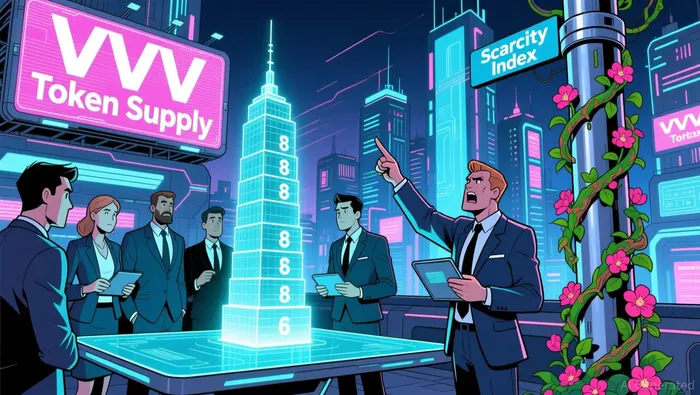
Staking VVV tokens now allows users to mint DIEM tokens, which provide access to private API tools for uncensored AI applications according to platform documentation. This integration adds tangible utility to the token, differentiating VVV from other crypto assets and creating a closed-loop system where demand for compute resources locks capital in the ecosystem as demonstrated. Furthermore, the launch of DIEM in August 2025 has led to triple-digit monthly gains, reflecting strong interest in Venice’s platform according to analysis.
Erik Voorhees highlighted the benefits of staking 100 VVV tokens to gain a Venice Pro Account as noted. Users who stake their tokens can access advanced features without upfront costs, effectively gaining a free account if the token’s price remains stable. If prices increase, users may profit from the appreciation of the staked VVV tokens. This initiative enhances the token’s utility and aligns it with user value, reinforcing VVV’s role in the AI-native crypto ecosystem according to investor reports.
Why is this move significant for investors?
The reduction in emissions is a structural change that aims to strengthen VVV’s scarcity, historically supporting better price performance according to market data. By curbing structural sell pressure from validators, liquidity programs, and incentives, Venice aims to create a more sustainable investment environment. This strategy aligns with broader trends in crypto, where tokens with controlled supply and real-world utility are gaining traction as observed.
Moreover, the integration of GLM 4.7 as the default model in Venice’s web app has improved performance and productivity, making the platform competitive for advanced AI applications according to analysis. This enhancement adds further value to the token, as users can access cutting-edge AI capabilities through staking or direct purchase of VVV tokens as reported.
What are the potential risks or limitations of this strategy?
One risk is declining network usage, which could undermine the benefits of reduced emissions and staking incentives according to platform updates. If demand for AI tools stagnates or adoption of the Pro account remains low, the value proposition of VVV could be diluted. Additionally, price instability poses a challenge, as the token’s value must remain attractive to encourage staking and continued investment according to market research.
Investors should also consider broader market conditions and potential regulatory shifts in the AI-native crypto space, which could affect token performance and adoption as noted. Despite these risks, the emission reduction and utility enhancements aim to position VVV as a competitive asset with strong fundamentals according to investor analysis.
What role does staking play in the token’s ecosystem?
Staking is central to Venice’s strategy for enhancing token utility and demand according to market voices. By allowing users to stake VVV tokens for access to AI tools, the platform incentivizes long-term token retention and participation in the ecosystem as detailed. This mechanism also supports network security and aligns token economics with practical use cases, reducing speculative trading pressure according to technical reports.
The introduction of the Venice Pro Account further exemplifies how staking can deliver tangible benefits to users as highlighted. This model not only rewards stakers with premium features but also reinforces the token’s value by linking it to real-world applications according to investment analysis.
As AI-native crypto assets continue to evolve, the combination of reduced emissions, real-world utility, and staking incentives positions VVV as a compelling investment for those focused on long-term value creation according to market reports.







Comentarios
Aún no hay comentarios