
Venice's Billion-Dollar Weddings: A Blueprint for Luxury Hospitality Investment in 2025 and Beyond
The June 2025 wedding of Jeff Bezos and Lauren Sánchez in Venice, estimated to cost over $55 million, was more than a spectacle—it was a stress test for the city's infrastructure and a catalyst for rethinking luxury tourism. While protests erupted over overtourism and wealth disparities, the event also revealed a golden opportunity: Venice's unique blend of history, exclusivity, and resilience positions it as a global hub for ultra-high-net-worth (UHNW) events. For investors, this means a chance to capitalize on demand for climate-resilient hospitality, premium logistics, and sustainable luxury services—provided they navigate the city's challenges strategically.
Infrastructure Strain as a Catalyst for Innovation
The Bezos wedding strained Venice's capacity, with 30 reserved water taxis, road closures, and protests over environmental harm. Yet, it also exposed a paradox: Venice's fragility makes it both a tourist magnet and a logistical nightmare. To attract future UHNW events, the city must modernize its infrastructure without sacrificing its cultural soul.
Opportunity 1: Climate-Resilient Luxury Hospitality
Venice's 2025 surge in UHNW demand has spotlighted the need for properties that blend heritage with sustainability. The Lido di Venezia, a quieter beachfront area, is emerging as a prime location for eco-conscious investors. Here, hotels like Meliá Venezia Lido—a restored 1920s property with 60 rooms—demonstrate how adaptive reuse can satisfy luxury travelers while addressing climate risks. These projects benefit from Italy's Superbonus tax incentive, which offers up to 110% deductions for green upgrades like solar panels and geothermal heating.
Investment Play:
- Meliá Hotels International (MUX): The parent company of Meliá Venezia Lido, MUXMUX-- is expanding its portfolio in climate-sensitive locations, aligning with UHNW demand for secluded, sustainable retreats.
- VanEck Green Infrastructure ETF (RNEW): Tracks companies developing low-carbon infrastructure, including water transport and energy-efficient buildings critical to Venice's future.
Water Transport: The Next Frontier for Luxury Logistics
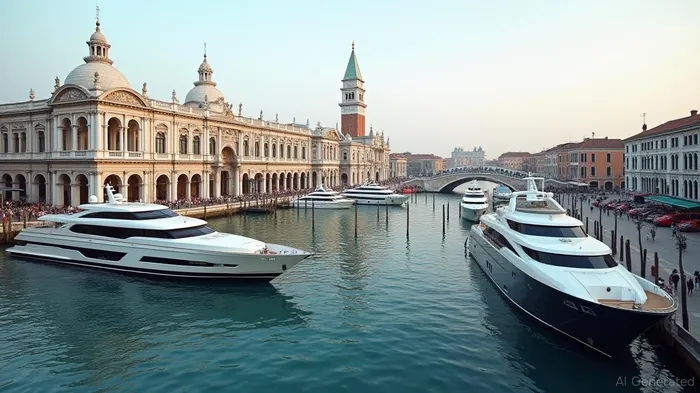
Venice's water taxis and superyacht infrastructure are central to its appeal, but their carbon footprint and capacity limits pose risks. The Bezos event, which used 30 water taxis at $400/hour, highlights demand for high-end logistics that balance exclusivity and sustainability.
Opportunity 2: Eco-Designed Water Transport
Companies like AquaPraça—a 2025 Biennale project developing floating cultural plazas—show the potential of adaptive infrastructure. Investors should look for firms integrating electric propulsion and carbon-neutral materials into vessels. Meanwhile, Venice Water Taxi Consortium, which managed the Bezos event's transport, could scale its services if it adopts greener fleets.
Catering and Sustainability: The Local Advantage
The Bezos wedding sourced 80% of its provisions from Venetian vendors, from Rosa Salva's traditional pastries to Laguna B's hand-blown Murano glass. This localization strategy not only reduces carbon footprints but also builds goodwill with residents.
Opportunity 3: High-End Catering Partnerships
Venetian firms like Quattro Passi (helmed by Michelin-starred chef Fabrizio Mellino) and Munaretto Flowers prove that local expertise can meet UHNW standards. Investors should back caterers with strong local supplier networks and certification in sustainability practices (e.g., B Corp status).
The Sustainability Imperative: Risks and Rewards
Venice's survival hinges on balancing tourism revenue with environmental preservation. The MOSE flood barrier system, though controversial, remains critical for flood protection, while Corila, the lagoon research consortium funded by Bezos, exemplifies private-sector environmental stewardship.
Investment Caution:
- Regulatory Risks: Italy's crackdown on short-term rentals (with fines up to €100,000) favors long-term, sustainable investments over speculative real estate plays.
- Geopolitical Uncertainty: Venice's reliance on UHNW tourism makes it vulnerable to global economic shifts; investors should diversify with ETFs like iShares MSCI Europe SRI UCITS (IEUR), which screens for ESG compliance.
Final Take: Venice's Golden Thread
The Bezos wedding underscores a clear trend: UHNW clients will pay premium prices for experiences that blend exclusivity with authenticity—and sustainability. For investors, the path forward is threefold:
1. Focus on Lido di Venezia for climate-resilient properties.
2. Back water transport firms transitioning to low-carbon solutions.
3. Support caterers and artisans with local sourcing and ESG credentials.
Venice's future as a luxury destination depends on its ability to turn event-driven demand into long-term value. Those who invest in its adaptive infrastructure—and its soul—will reap the rewards.







Comentarios
Aún no hay comentarios