
Venezuela's Oil Sector: Strategic Opportunity or Political Quagmire?
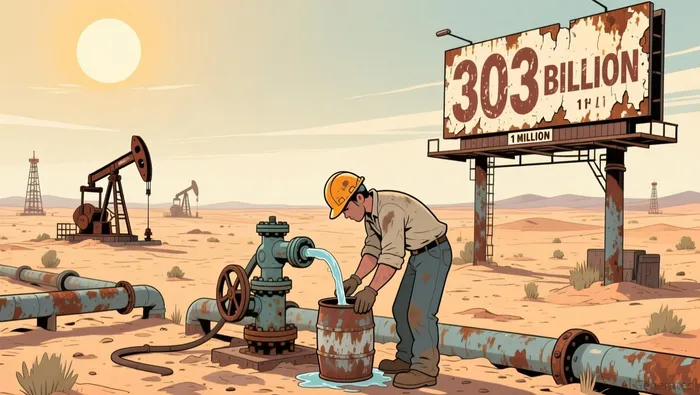
Venezuela's oil sector has long been a paradox: a nation sitting atop the world's largest proven oil reserves- 303 billion barrels, or 17% of global reserves-yet producing less than 1 million barrels per day, a fraction of its historical output of 3.5 million barrels in the late 1990s. This stark contrast between potential and performance has made the country a focal point for investors and policymakers alike. However, the geopolitical upheaval of 2025, including the U.S.-led removal of President Nicolás Maduro and the subsequent redirection of Venezuela's oil exports, has intensified the debate over whether the sector represents a strategic opportunity or a high-risk quagmire.
Geopolitical Shifts and the U.S.-China Oil Rivalry
The U.S. intervention in Venezuela has rewritten the rules of the game. By capturing Maduro and asserting control over crude exports, the Trump administration has positioned itself as the de facto gatekeeper of Venezuela's oil resources. This move has disrupted China's long-standing dominance in the region, where Beijing had secured over 3% of its crude imports from Venezuela. Chinese state-owned firms, including CNPC and Sinopec, had previously operated through opaque joint ventures like Sinovensa, but U.S. sanctions and the redirection of oil revenues to "authorized channels" have effectively sidelined their role.
For U.S. energy companies, the shift is a potential windfall. ChevronCVX--, ConocoPhillipsCOP--, and Exxon MobilXOM-- are reportedly in talks with the Trump administration to invest in Venezuela's oil infrastructure, with estimates suggesting $100 billion in capital could be required to restore production to 2.5 million barrels per day over the next decade. However, the path to recovery is fraught with challenges. Infrastructure decay, a lack of skilled labor, and the need for political stability remain critical hurdles.
Capital Allocation and the Road to Recovery
The Trump administration's vision for Venezuela's oil sector hinges on attracting foreign investment to rebuild a system that has deteriorated over two decades. According to Wood Mackenzie, reviving production to 1.5 million barrels per day within two years would require $50–60 billion in investment, with a further $40–50 billion needed to reach 2.5 million barrels by the late 2030s. This timeline aligns with broader global energy transitions, where demand for heavy crude-a primary export of Venezuela-remains uncertain amid the rise of renewables.
Investors are cautiously optimistic. Altana Wealth, a private equity firm, has projected a 30% return for those willing to bet on Venezuela's oil revival post-Maduro. Yet, such optimism is tempered by the reality of Venezuela's fiscal history. The country's $10–12 billion debt to China, now frozen under U.S. sanctions, raises questions about its ability to service obligations or attract new partners.
Geopolitical Risks: A Volatile Landscape
The primary risk for investors lies in Venezuela's geopolitical volatility. The U.S. intervention has not only destabilized existing partnerships but also heightened tensions with China and Russia, both of which view Latin America as a strategic battleground. For instance, China's $1 billion Concord Resources initiative to develop Venezuelan oilfields, now faces existential uncertainty. Additionally, the U.S. has signaled its intent to impose "resource nationalism" policies, which could deter foreign investment by limiting access to Venezuela's reserves.
Infrastructure decay further compounds these risks. Venezuela's oil fields, once among the most productive in the world, now require $100 billion in capital expenditures to modernize aging facilities and pipelines. Even if U.S. firms commit to this investment, the timeline for returns is long-18 months to a decade-making the sector incompatible with short-term capital strategies.
Market Implications and Global Energy Dynamics
The geopolitical realignment in Venezuela has limited immediate effects on global oil markets. While prices initially spiked following the U.S. intervention, they stabilized as analysts noted an oversupplied market. However, the long-term implications are significant. If Venezuela's production recovers to 2.5 million barrels per day, it could add 1.5 million barrels to global supply, exerting downward pressure on prices and challenging OPEC's pricing power.
For U.S. refiners, particularly Gulf Coast operators, increased access to discounted Venezuelan heavy crude could improve margins. Conversely, Canadian heavy oil producers may face heightened competition, illustrating the sector's ripple effects.
Strategic Opportunity or Political Quagmire?
Venezuela's oil sector embodies the classic tension between high-reward potential and geopolitical risk. The country's vast reserves and the U.S.-backed infrastructure plans offer a tantalizing opportunity for investors willing to navigate a complex landscape. However, the interplay of U.S.-China rivalry, infrastructure decay, and political instability creates a high-stakes environment where even the most robust capital allocations could falter.
For now, the sector remains a speculative bet. Investors must weigh the allure of 30% returns against the likelihood of prolonged volatility and the possibility of asset nationalization or operational disruptions. As one analyst from Morgan Stanley noted, "Venezuela's oil revival is a marathon, not a sprint-and the starting line is still under construction."





Comentarios
Aún no hay comentarios