
The U.S.-Venezuela Oil Blockade and Its Impact on Global Energy Markets and Sanctions-Evading Tanker Fleets
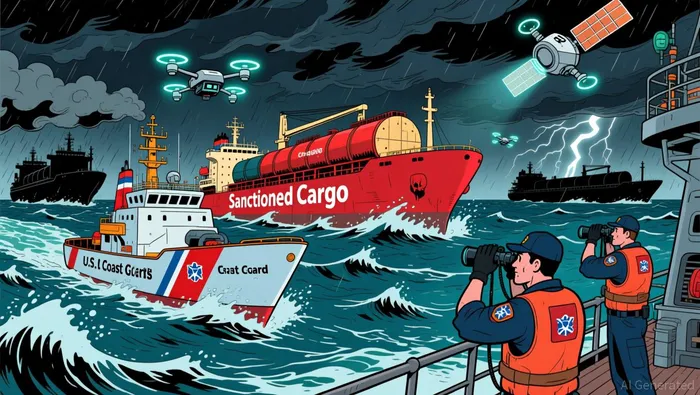
The U.S. escalation of sanctions against Venezuela's oil sector in 2025 has intensified into a full-scale maritime blockade, reshaping global energy dynamics and exposing vulnerabilities in sanctions evasion networks. Under the Trump administration, the U.S. Treasury Department expanded penalties to include Maduro's inner circle, including nephews Efrain Antonio Campo Flores and Franqui Francisco Flores de Freitas, while targeting six shipping companies for facilitating oil exports through deceptive practices. Concurrently, the U.S. Coast Guard's seizure of tankers like the Centuries-carrying sanctioned crude-has disrupted Venezuela's ability to export oil, a lifeline for its cash-strapped regime. This aggressive enforcement, framed as a campaign to "cut off funding to Maduro's regime", has not only deepened Venezuela's economic crisis but also signaled a strategic shift in U.S. energy policy toward maritime dominance and sanctions enforcement.
Global Energy Markets: Resilience and Strategic Risks
While Venezuela's oil exports account for a small fraction of global supply, the U.S. blockade has introduced new layers of complexity for energy markets. Analysts note that the market has largely absorbed the disruption, with OPEC+ supply increases and pre-existing volatility mitigating direct price shocks. However, the broader implications extend beyond Venezuela. The U.S. actions have raised the "strategic risk premium" for oil trade involving sanctioned countries, increasing operational costs for shadow fleets and deterring traders from participating in illicit movements. This shift has inadvertently created opportunities for Iran, whose shadow tankers may now access expanded transportation capacity as Venezuela's fleet is sidelined.
For the U.S. Gulf Coast, the loss of Venezuela's heavy crude-a critical feedstock for refineries-has sparked concerns about long-term infrastructure viability. According to a report by , refiners are now scrambling to source alternatives like Canadian oil sands or Mexican Maya blend, signaling a broader diversification trend. This transition, however, is not without challenges. Venezuela's heavy crude is uniquely suited to certain refining processes, and its absence could strain global diesel supply chains, a commodity already under pressure from industrial demand.
Strategic Energy Security and Diversification Strategies
The U.S. blockade underscores the fragility of energy security in a world increasingly reliant on politically unstable regions. Venezuela's pivot to China, which now imports 76% of its oil output, exemplifies a broader trend of diversification away from U.S.-dominated trade routes. For global consumers like India and China, this crisis highlights the necessity of further diversifying energy portfolios to avoid over-reliance on any single geopolitical region.
Emerging opportunities in alternative oil markets are already materializing. The redirection of shadow tankers away from Venezuela has accelerated the adoption of non-traditional crude sources, including Colombian heavy crude and African oil. These shifts align with the "Donroe" Doctrine-a modern interpretation of the Monroe Doctrine emphasizing U.S. dominance in the Western Hemisphere and the exclusion of foreign influence. For investors, this represents a window to capitalize on underappreciated energy assets in regions less susceptible to U.S. sanctions.
Technological Innovations in Sanctions Evasion and Enforcement
The cat-and-mouse game between sanctions evaders and enforcers has entered a new phase. Adversaries are leveraging advanced technologies like GPS spoofing and ship-to-ship (STS) transfers to obscure the movement of sanctioned oil. In response, the U.S. and its allies are deploying AI-driven maritime analytics and satellite surveillance to track illicit activities. Secondary sanctions against intermediaries-such as flag registries and port operators-have further expanded enforcement reach, creating a "total ecosystem" of accountability.
Despite these measures, evasion tactics continue to evolve. False flagging and AIS gaps remain prevalent, forcing compliance tools to integrate behavioral insights and real-time monitoring. For investors, this technological arms race highlights the growing importance of cybersecurity and data analytics in energy security.
Energy Transition and Geopolitical Hedging
The Venezuela crisis also accelerates the energy transition. As refiners seek alternatives to heavy crude, investments in refining technologies for lighter oils and renewable energy sources gain traction. The disruption in Venezuela's oil exports could catalyze a shift toward Canadian oil sands or synthetic crude, which, while carbon-intensive, offer geopolitical stability.
For investors, the crisis underscores the value of hedging against geopolitical risk. Historically, real assets like gold have served as a buffer during energy shocks, while strategic petroleum reserves become increasingly critical for regions dependent on heavy crude.
Conclusion
The U.S.-Venezuela oil blockade is more than a geopolitical confrontation-it is a catalyst for redefining global energy security. While the immediate impact on oil prices remains muted, the long-term implications for sanctions enforcement, diversification strategies, and technological innovation are profound. Investors who recognize these shifts can position themselves to capitalize on emerging opportunities in alternative oil markets and energy transition technologies. As the world grapples with the fallout of this blockade, the lesson is clear: energy security in the 21st century demands agility, diversification, and a keen understanding of the interplay between geopolitics and technology.







Comentarios
Aún no hay comentarios