
Venezuela's Hidden Bitcoin Reserves and Their Implications for Global Crypto Markets
The geopolitical landscape of 2025 has been reshaped by a singular, enigmatic development: the revelation of Venezuela's alleged BitcoinBTC-- "shadow reserve." While official records list the country's holdings at a mere 240 Bitcoin according to reports, independent analyses suggest Venezuela may possess a staggering 600,000–660,000 BTC, valued at $60–67 billion at current prices according to market analysis. This discrepancy, rooted in a decade-long strategy to circumvent U.S. sanctions and diversify its asset base, has profound implications for global crypto markets, geopolitical risk management, and the evolving role of Bitcoin as a strategic reserve asset.
The Genesis of Venezuela's Shadow Reserve
Venezuela's accumulation of Bitcoin began in 2018, driven by a dual imperative: to protect its wealth from fiat depreciation and to bypass U.S. sanctions that restricted access to traditional banking systems according to financial analysis. The regime reportedly converted gold sales from the Orinoco Mining Arc into Bitcoin and leveraged oil exports settled in TetherUSDT-- (USDT) to obscure the flow of capital according to blockchain data. These tactics mirrored broader global trends, where sanctioned nations increasingly turned to stablecoins and cryptocurrencies to maintain economic sovereignty according to industry research. By 2025, Venezuela's alleged reserves had grown to rival institutional holdings like MicroStrategy's, positioning it as a de facto crypto superpower according to market reports.
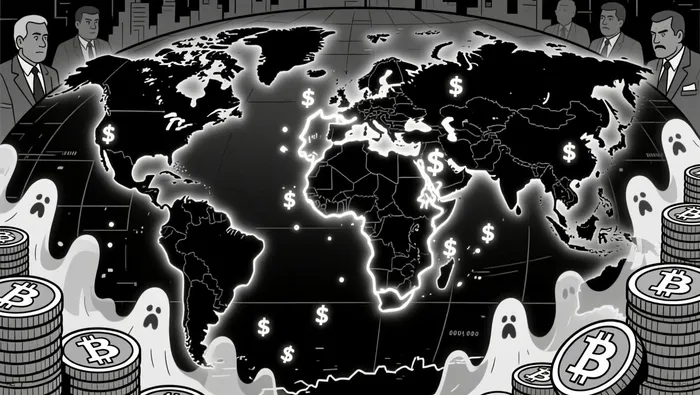
The scale of this accumulation is staggering. At 600,000 BTC, Venezuela's holdings would represent approximately 2–3% of Bitcoin's total supply according to crypto analysts. If confirmed, this would make it one of the largest state-held reserves outside central banks, surpassing even the U.S. Federal Reserve's gold reserves in notional value according to financial experts. However, the lack of blockchain transparency and independent verification has left the market in a state of limbo. As Whale Hunt's analysis notes, while on-chain data remains silent, the circumstantial evidence-gold swaps, oil settlements, and domestic asset seizures-paints a compelling case according to research findings.
Geopolitical Risk and the U.S. Factor
The geopolitical ramifications of Venezuela's reserves crystallized in January 2026, when U.S. forces captured President Nicolás Maduro. This event reignited speculation about the fate of Venezuela's Bitcoin, with analysts debating whether the assets would be frozen, auctioned, or integrated into a U.S. strategic reserve according to market analysis. Such scenarios carry distinct market implications. A legal freeze, for instance, would mechanically remove a significant portion of Bitcoin from circulation, tightening liquidity and potentially reinforcing bullish sentiment according to trading insights. Conversely, forced liquidation could trigger a short-term price correction, though the long-term impact would depend on how the assets are distributed according to market rumors.
The U.S. intervention also highlights the growing role of cryptocurrencies in geopolitical risk management. Venezuela's use of Bitcoin to evade sanctions mirrors Russia's adoption of stablecoins and no-KYC exchanges to sustain trade amid Western pressure according to policy analysis. These cases underscore a broader trend: state actors leveraging decentralized finance to insulate their economies from traditional financial systems. For investors, this signals a paradigm shift in how geopolitical risk is priced into markets. Unlike oil or gold, Bitcoin's volatility is now intertwined with real-time geopolitical events, creating a 24/7 risk environment according to market commentary.
Strategic Asset Diversification and Global Implications
Venezuela's case has accelerated global interest in crypto as a strategic reserve asset. Institutional adoption, once confined to speculative bets, is now driven by macroeconomic pragmatism. For example, tokenized commodities and stablecoins have attracted over $11.5 billion in assets under management (AUM) in 2025, reflecting a broader diversification away from fiat currencies according to industry reports. Venezuela's reserves, if legitimized, could further validate Bitcoin's role in this transition. A U.S. freeze of the assets, for instance, would effectively create a "seized sovereign reserve," reinforcing Bitcoin's appeal as a censorship-resistant store of value according to market analysis.
The geopolitical event also exposed vulnerabilities in traditional markets. When U.S. forces captured Maduro, global oil markets remained relatively stable, but crypto markets surged 1.58% within 24 hours according to trading data. This divergence highlights Bitcoin's emerging role as a safe-haven asset, particularly in scenarios where fiat currencies and commodities fail to hedge against geopolitical shocks according to market research. For institutional investors, the lesson is clear: diversification now requires exposure to crypto, not just gold or treasuries.
The Road Ahead
The uncertainty surrounding Venezuela's reserves underscores the need for clearer regulatory frameworks. While the U.S. GENIUS Act and EU's MiCA regulation have begun to standardize stablecoin compliance according to regulatory updates, the lack of transparency in state-held crypto assets remains a wildcard. If Venezuela's reserves are confirmed, they could force a reevaluation of global liquidity models, with Bitcoin's supply dynamics becoming a critical factor in macroeconomic forecasting according to market analysis.
For now, the market remains in a holding pattern. The absence of blockchain verification means speculation will persist, but the underlying trends-geopolitical risk, asset diversification, and crypto adoption-are irreversible. As one analyst noted, "Venezuela's Bitcoin is not just a national asset; it's a geopolitical tool that could reshape the future of finance" according to research findings. Whether this reshaping leads to a new era of crypto-driven geopolitics or a return to traditional paradigms will depend on how U.S. authorities-and the global market-choose to handle the largest crypto reserve in history.






Comentarios
Aún no hay comentarios