
Venezuela's Hidden Bitcoin Reserve: A Geopolitical Catalyst for BTC and Crypto Markets?
The geopolitical landscape of 2025 has been irrevocably altered by the U.S. military operation in Venezuela, culminating in the capture of President Nicolás Maduro in January 2026. At the heart of this upheaval lies a staggering revelation: Venezuela's alleged accumulation of 600,000 to 660,000 BitcoinBTC-- over nearly a decade, valued at $60–$67 billion. This hidden reserve, built through gold sales, oil settlements in TetherUSDT-- (USDT), and the nationalization of domestic mining operations, has transformed the country into a critical player in the global crypto arena. For investors, the implications are profound-this is not merely a story of digital assets but a strategic chess move in the U.S.-China rivalry, with Bitcoin at the center of a new era of geopolitical risk and reward.
A Decade of Accumulation: How Venezuela Built a Digital Fortress
Venezuela's Bitcoin strategy was born out of necessity. As traditional financial sanctions crippled its economy, the regime under Maduro pivoted to digital assets as a lifeline. According to a report by , the country leveraged its oil exports-settled in USDT-to convert fiat into Bitcoin, while also seizing domestic mining operations to bolster its reserves. This dual approach created a de facto "digital gold standard," shielding state wealth from Western banking systems. The result? A reserve so vast it now rivals the world's largest sovereign crypto holdings.
This accumulation mirrors the tactics of resource-rich nations seeking to diversify their economic sovereignty. By converting oil revenues into Bitcoin, Venezuela effectively created a hedge against dollar volatility and sanctions. The strategy's success underscores a broader trend: digital assets are no longer speculative tools but strategic reserves for nations navigating geopolitical turbulence.
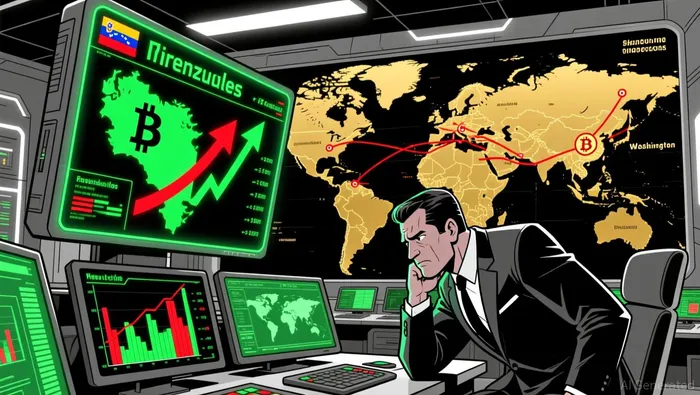
Geopolitical Chess: U.S. Intervention and the New Cold War
The U.S. military operation in Venezuela was not merely about regime change-it was a calculated move to secure access to the country's oil, critical minerals, and Bitcoin reserves. As stated by , analysts argue that Washington's actions signal a willingness to act decisively against regimes aligned with China, particularly in regions rich in strategic resources. Venezuela's proven oil reserves and rare earth deposits make it a linchpin in the U.S.-China competition, and its Bitcoin hoard adds a digital dimension to this rivalry.
The capture of Maduro has already triggered a shift in market sentiment. Bitcoin surged past $90,000 in the aftermath, with Yahoo Finance attributing the rally to heightened geopolitical uncertainty and speculation over the U.S. freezing Venezuela's Bitcoin assets. This price action reflects a growing consensus: Bitcoin's value is increasingly tied to its role as a geopolitical asset, not just a store of value.
Market Dynamics: Freezing, Liquidity, and the Long Game
The fate of Venezuela's Bitcoin reserve will shape the crypto market for years. If the U.S. freezes the assets under its control, it could reduce liquidity and tighten supply dynamics, akin to the 2024 German sale of 50,000 BTC, which caused a 15–20% market correction. However, the practicality of managing such a vast reserve remains uncertain. Intelligence reports highlight unresolved questions about private key access and potential fragmentation among insiders, complicating any immediate liquidation.
For investors, the key variables are timing and transparency. A gradual integration of Venezuela's Bitcoin into a U.S. strategic reserve could stabilize prices by institutionalizing demand. Conversely, abrupt auctions or regulatory freezes might trigger volatility. Either way, the mere existence of this reserve has already elevated Bitcoin's status as a geopolitical hedge, attracting institutional capital seeking exposure to state-backed digital assets.
The Bull Case: Geopolitical Risk as a Tailwind
The Venezuela saga reinforces Bitcoin's role as a geopolitical catalyst. As nations weaponize digital assets to circumvent sanctions and assert economic sovereignty, Bitcoin's utility as a borderless, censorship-resistant store of value becomes irreplaceable. For investors, this translates to a bullish thesis: geopolitical risk is no longer a drag on crypto markets-it is a driver.
The U.S. intervention has set a precedent. If Washington can secure Venezuela's Bitcoin and integrate it into its strategic reserves, it may incentivize other nations to follow suit, accelerating Bitcoin's adoption as a sovereign asset. This scenario would mirror the 20th-century gold standard, but with a digital twist.
Conclusion: A New Era of Digital Geopolitics
Venezuela's Bitcoin reserve is more than a geopolitical footnote-it is a harbinger of a new era. As the U.S. and China vie for dominance in energy, minerals, and digital assets, Bitcoin has emerged as a critical battleground. For investors, the lesson is clear: geopolitical risk is now a tailwind for Bitcoin. The question is not whether this reserve will influence markets, but how quickly the world will adapt to a reality where digital assets dictate the rules of global power.






Comentarios
Aún no hay comentarios