
Venezuela's Alleged $60 Billion Bitcoin Reserve: Geopolitical Opportunity or Market Mirage?
The enigma of Venezuela's purported $60 billion BitcoinBTC-- reserve has ignited a firestorm of speculation, skepticism, and geopolitical intrigue. As the world grapples with the intersection of digital assets and state power, the question of whether this "shadow reserve" is a strategic treasure or a mirage looms large. This analysis examines the conflicting evidence, legal and market risks, and the broader implications for investors navigating the volatile nexus of cryptocurrency and geopolitics.
The Data Divide: Conflicting Estimates and Sources
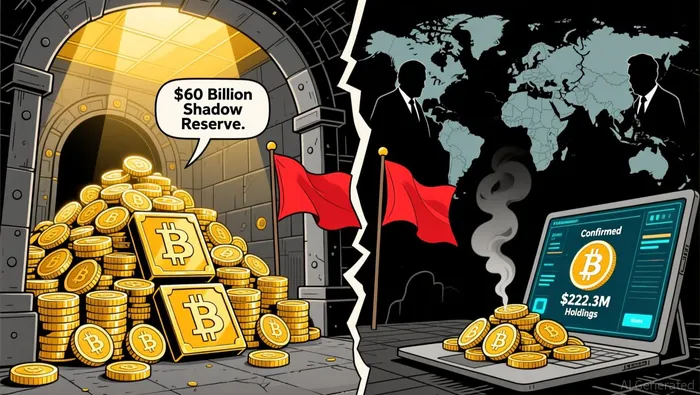
The narrative surrounding Venezuela's Bitcoin holdings is split between two starkly different realities. On one hand, intelligence-linked outlets like Project Brazen and Whale Hunting allege that Venezuela has amassed a "shadow reserve" of up to 600,000 BTC, valued at $60 billion, through covert means such as gold swaps, oil settlements in TetherUSDT-- (USDT), and the seizure of local mining equipment according to reports. These claims are bolstered by Venezuela's history of using cryptocurrencies to circumvent U.S. sanctions and hyperinflation as experts note.
Conversely, blockchain analytics platforms like Bitcointreasuries.net report confirmed holdings of just 240 BTC ($22.3 million), placing Venezuela ninth among government Bitcoin reserves according to data. Experts such as Mauricio di Bartolomeo of Ledn and Aurelie Barthere of Nansen have dismissed the $60 billion figure as speculative, citing Venezuela's lack of transparency and a history of corruption as analysis shows. The absence of verifiable on-chain data-such as identifiable wallet addresses or transaction patterns-further muddies the waters according to industry reports.
Geopolitical Chess: U.S. Strategies and Legal Challenges
The potential seizure of Venezuela's Bitcoin reserve has become a focal point of U.S. geopolitical strategy. Reports suggest that the Trump administration is considering military intervention to depose Nicolás Maduro and assume control of the country's oil and crypto assets according to reports. Arthur Hayes, co-founder of BitMEX, has speculated that such a move could drive Bitcoin prices toward $200,000 by March 2026, citing the removal of a massive supply shock from the market as market analysis indicates.
However, legal hurdles abound. Unlike traditional assets, Bitcoin requires access to private keys for control, which may be dispersed among regime loyalists or intermediaries like Maduro's associate Alex Saab Morán according to experts. The U.S. Treasury would also face competing claims from creditors and legal entities with vested interests in Venezuela's frozen assets, mirroring protracted disputes over physical property as legal observers note. International law further complicates matters, as sovereign state assets are typically protected unless directly linked to illicit activities according to legal analysis.
Market Implications: Volatility and Price Predictions
The market impact of a U.S. seizure hinges on how the assets are handled. If the Bitcoin is frozen in legal limbo, it could reduce circulating supply and drive prices higher, akin to the U.S. Strategic Bitcoin Reserve model according to forfeiture guidelines. Conversely, a forced sell-off-similar to Germany's 2024 Bitcoin liquidation-could destabilize markets, creating a bearish cascade as market analysis shows.
Historical precedents offer mixed signals. The U.S. Department of Justice's seizure of 119,000 BTC from the 2016 Bitfinex hack (now valued at $7.3 billion) demonstrated the government's capacity to manage large crypto holdings according to records. Yet, the decentralized nature of Bitcoin means even a $60 billion reserve could be fragmented across thousands of wallets, making full seizure improbable as experts observe.
The Mirage Factor: Skepticism and Risks
Despite the allure of a geopolitical windfall, several red flags persist. Venezuela's track record of financial mismanagement and corruption raises doubts about the feasibility of a $60 billion reserve according to analysis. Additionally, the decentralized and clandestine nature of Bitcoin transactions makes verification nearly impossible as experts note. For investors, the risk of overestimating Venezuela's holdings while underestimating legal and geopolitical complexities is significant.
Conclusion: Opportunity or Mirage?
Venezuela's alleged Bitcoin reserve epitomizes the dual-edged sword of crypto-sovereignty. While the potential for a $60 billion asset seizure could reshape global Bitcoin markets, the lack of verifiable data and legal ambiguities render this scenario a high-risk proposition. Investors must weigh the geopolitical allure against the practical challenges of asset control, market volatility, and the ever-present shadow of uncertainty. In the end, the true value of Venezuela's Bitcoin-whether $22 million or $60 billion-may lie not in its price tag but in the power it symbolizes in an era where digital assets are redefining the rules of global finance.






Comentarios
Aún no hay comentarios