
Venezuela's Alleged $60 Billion Bitcoin Reserve: Feasibility, Skepticism, and Market Implications
The claim that Venezuela secretly holds a $60 billion BitcoinBTC-- reserve has ignited a firestorm of speculation, blending geopolitical intrigue with crypto market volatility. At the heart of this narrative lies a paradox: a nation crippled by hyperinflation and U.S. sanctions is alleged to have amassed one of the largest Bitcoin hoards in history. This article examines the feasibility of the claim, its alignment with Venezuela's crypto history, and the potential ramifications for global Bitcoin markets.
Historical Context: Sanctions, Crypto, and Survival
Venezuela's flirtation with cryptocurrency began as a desperate response to economic collapse and financial isolation. By 2017, U.S. sanctions had severed the country's access to SWIFT and traditional banking systems, forcing it to pivot to digital alternatives. The state-backed Petro (PTR), launched in 2018, was an early but failed attempt to create a sovereign digital asset. By 2024, PDVSA, the state oil company, began demanding oil transactions in Tether (USDT), a stablecoin, to bypass U.S. oversight. This shift mirrored strategies adopted by Iran and Russia, both of which have used crypto to circumvent sanctions.
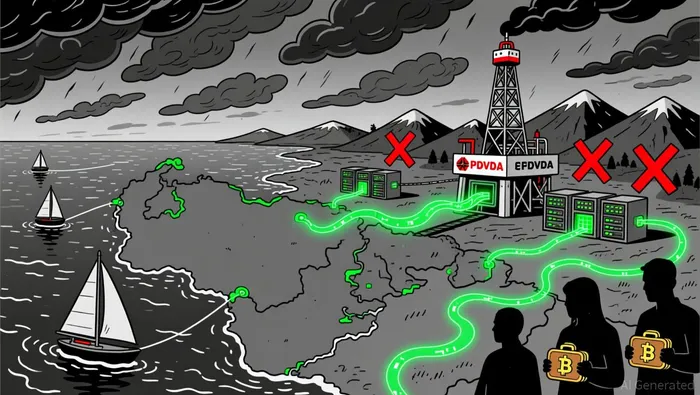
The alleged Bitcoin accumulation-estimated at 600,000 BTC ($56–67 billion)-is said to stem from a combination of gold swaps, oil-for-crypto deals, and seizures of domestic mining operations. Alex Saab, a key Maduro ally, is rumored to have controlled the infrastructure for these transactions. However, verified blockchain data reveals only 240 BTC (worth ~$15 million) in identifiable state wallets, creating a stark discrepancy.
Feasibility of the Claim: Technical and Political Realities
The technical feasibility of hiding such a vast reserve hinges on advanced methods like chain-hopping, custodial services, and distributed private keys. Dr. Elena Torres, a blockchain forensic analyst, notes that while obscuring large crypto holdings is technically possible, proving or disproving the $60 billion claim would require access to global exchanges and legal authority to subpoena records. Venezuela's oil exports and mining operations could plausibly generate off-the-books Bitcoin, but the lack of on-chain evidence raises skepticism.
Critics like Mauricio di Bartolemo question the credibility of the gold swap and mining seizure narratives, arguing that the sources lack verifiability. Meanwhile, geopolitical tensions-exacerbated by Maduro's 2025 arrest-have intensified scrutiny of Venezuela's crypto activities. The U.S. investigation into these claims could set a precedent for how digital assets are treated under international law.
Market Implications: Institutional Interest and Geopolitical Risk
If confirmed, Venezuela's Bitcoin reserve would position it as one of the largest institutional holders globally, rivaling sovereign wealth funds and crypto treasuries. This could reshape Bitcoin's role as a geopolitical asset, reinforcing its appeal as a hedge against traditional financial instability. Analysts suggest that a U.S. seizure of the reserves might create a strategic Bitcoin reserve at no cost to taxpayers, aligning with pro-crypto policy trends. Conversely, a market influx of 600,000 BTC could temporarily depress prices, though long-term bullish sentiment might prevail if Bitcoin is rebranded as a sanctioned-era safe haven.
The uncertainty surrounding the claim has already influenced market behavior. Bitcoin prices surged ~6% following U.S. military actions in Venezuela, reflecting its growing role as a real-time barometer of geopolitical stress. Institutional investors, including ETFs and hedge funds, have shown increased appetite for Bitcoin as a strategic allocation, particularly in regions with unstable fiat currencies.
Conclusion: A Tale of Two Realities
Venezuela's Bitcoin reserve remains a speculative enigma, straddling the line between plausibility and paranoia. While the country's history of sanctions-driven crypto adoption supports the narrative, the absence of verifiable on-chain data leaves room for doubt. For investors, the key takeaway is Bitcoin's evolving role as a geopolitical asset-one that transcends borders and challenges traditional financial systems. Whether the $60 billion claim is confirmed or refuted, its mere existence underscores a broader truth: in an era of digital sovereignty, Bitcoin is no longer just a speculative asset but a tool of survival and power.






Comentarios
Aún no hay comentarios