
Vedanta's Demerger Hurdles and Implications for Indian Mining Stocks
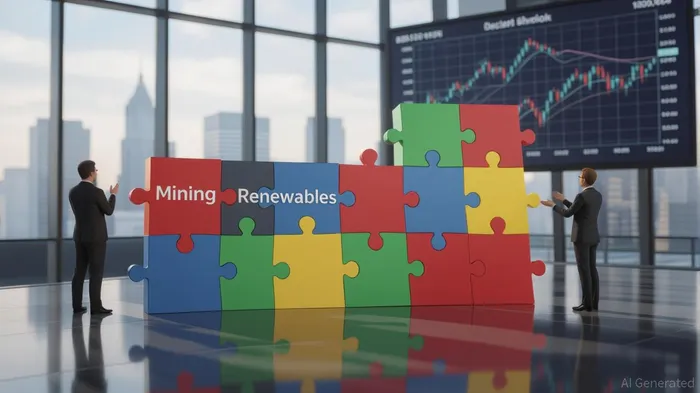
Vedanta's ambitious demerger strategy—aimed at creating standalone business units in natural resources, renewables, and technology—has the potential to unlock significant value for stakeholders. By transforming its conglomerate structure into 17 distinct investment vehicles, the company seeks to enhance balance sheet flexibility and attract targeted capital to each vertical [1]. However, the path to execution is fraught with regulatory risks that could delay the process and ripple across India's mining sector valuations.
The Indian mining sector has long grappled with a complex regulatory environment, including environmental clearances, land acquisition disputes, and compliance with the Mines and Minerals (Development and Regulation) Act. While Vedanta's demerger announcement highlights its focus on "latent potential" and "growth opportunities," the absence of concrete details on regulatory hurdles raises red flags. For instance, the demerger of mining assets could face scrutiny from state governments or environmental watchdogs, particularly in states like Rajasthan and Goa, where Vedanta operates high-profile projects [1]. Delays in approvals could stall capital expenditures, eroding investor confidence and pressuring sector valuations.
Even without direct evidence of roadblocks, history suggests that Indian mining firms often face protracted legal and regulatory challenges. For example, Vedanta's Sterlite Copper plant in Tamil Nadu was shut down for years due to environmental concerns, illustrating how regulatory actions can disrupt operations and stock performance. If the demerger process encounters similar resistance, it could force Vedanta to divert resources to compliance, diluting the value proposition of its standalone units.
Investors must also consider the broader implications for sector valuations. A successful demerger could catalyze a re-rating of mining stocks by isolating high-growth assets from the conglomerate drag. However, regulatory uncertainty introduces volatility. If the demerger is delayed or scaled back, the sector's EBITDA multiples—currently trading at a discount to global peers—may remain under pressure. Timing is critical: investors who bet on Vedanta's mining units now must weigh the potential for regulatory headwinds against the long-term appeal of India's resource-driven growth story.
In conclusion, Vedanta's demerger represents a strategic pivot, but its success hinges on navigating India's regulatory labyrinth. For now, the lack of transparency on specific challenges means investors should approach with caution. Those with a longer time horizon might find opportunities in the aftermath of a smoothly executed demerger, but short-term volatility is likely.
Source:
[1] Vedanta Demerger Information [https://www.vedantaresources.com/investor-relation-vedanta-demerger-information.php]







Comentarios
Aún no hay comentarios