
The Vanishing Solar Tax Credit: How Homeowners and Installers Are Racing Against Time in 2025
The U.S. solar industry is at a critical inflection point. With the 30% residential solar tax credit set to expire on December 31, 2025, homeowners and installers are locked in a high-stakes race against time to meet stringent deadlines. This expiration, accelerated by the One Big Beautiful Bill (OBBB) passed in July 2025, has created a binary choice: act decisively before year-end or forfeit a significant financial incentive. Yet, systemic bottlenecks in supply chains, permitting processes, and labor availability are complicating the race, threatening to leave many behind.
Systemic Bottlenecks: A Perfect Storm of Constraints
The solar industry's ability to meet the 2025 deadline is being hampered by a confluence of structural challenges. While solar panel supply remains sufficient, transformer shortages have emerged as a critical bottleneck. U.S. utilities increasingly restrict the use of non-China equipment, and global transformer production outside China is insufficient for large-scale deployment. This constraint is exacerbated by a shortage of skilled labor, particularly in construction and engineering, which has slowed project timelines.
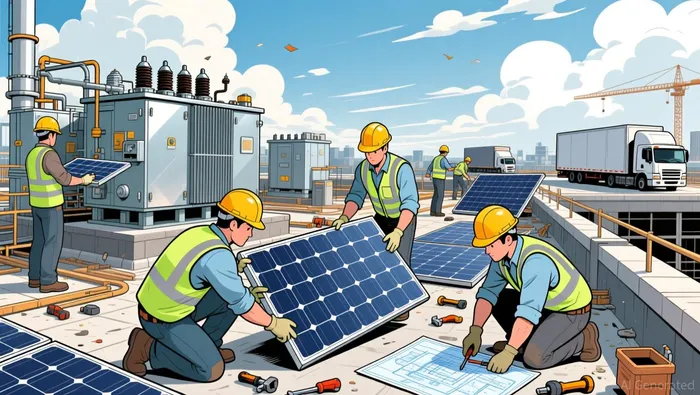 Permitting backlogs further compound the problem. Federal and state agencies have reduced staffing and reprioritized resources, extending approval times by 2–4 years in some cases. For residential systems, which require full installation by December 31, 2025, these delays are particularly acute. Commercial projects, though granted a slightly extended deadline (July 2026 for construction start), face similar hurdles, with the IRS tightening eligibility criteria under Notice 2025-42.
Deployment Rates: A Growing Gap Between Ambition and Reality
For context, the U.S. added 21.2 GW of solar capacity in the first three quarters of 2025, slightly exceeding the 20 GW added in the same period in 2024. However, this growth is uneven. Texas, the nation's leader, accounted for 3.8 GWdc in the first half of 2025 according to the Q3 2025 report, while other states lag due to permitting delays and policy uncertainty. The industry's ability to scale further is constrained by the OBBB's phaseout of key tax credits after 2027.
Policy Uncertainty and Market Implications
The OBBB's accelerated expiration of tax credits has introduced volatility into the market. For instance, the 5% safe harbor rule for commercial projects-allowing cost expenditures to qualify for tax credits-has been eliminated for systems over 1.5 MWac, forcing developers to begin physical work by July 2026. This shift has already led to a 31% year-over-year decline in power purchase agreements (PPAs), signaling reduced long-term confidence.
Homeowners, meanwhile, face a binary decision: act now or lose 30% of their investment. The IRS defines "placed in service" as a system being fully operational and capable of delivering power, requiring completion of design, permits, inspections, and utility interconnection by year-end. Given the average 2–4 month installation timeline, delays in securing permits or equipment could disqualify projects.
Strategic Imperatives for Stakeholders
For homeowners, the path forward demands proactive planning. Engaging experienced installers early, securing permits, and ensuring utility interconnection are critical. Installers, in turn, must navigate bottlenecks by adopting streamlined permitting tools like SolarAPP+ (pioneered in Maryland) and prioritizing projects with clear timelines. Policymakers, meanwhile, face a choice: address systemic bottlenecks through permitting reform and workforce training or risk leaving the U.S. solar industry behind global competitors.
The 2025 deadline is not merely a regulatory milestone-it is a litmus test for the resilience of the U.S. renewable energy sector. As the clock ticks, the stakes have never been higher.







Comentarios
Aún no hay comentarios