
VanEck Rare Earth and Strategic Metals ETF (REMX) as a Strategic Play in the Global Energy Transition
The global energy transition is accelerating, driven by a confluence of technological innovation and geopolitical realignments. At the heart of this transformation lies a critical but often overlooked asset: rare earth and strategic metals. These materials are indispensable for the next generation of clean energy technologies, from electric vehicles (EVs) to wind turbines. For investors seeking to capitalize on this structural shift, the VanEck Rare Earth and Strategic Metals ETF (REMX) offers a compelling vehicle. By aligning with both the technological imperatives and geopolitical dynamics shaping the sector, REMXREMX-- positions itself as a strategic play in a market poised for long-term growth.
REMX: A Focused Exposure to a High-Growth Sector
The VanEck Rare Earth and Strategic Metals ETF (REMX) is explicitly designed to track companies involved in the production, refining, and recycling of rare earth and strategic metals as described in the fund's official materials. As of December 2025, the fund's top 10 holdings account for 64.1% of its portfolio, with significant allocations to firms like PLS Group Ltd, Albemarle Corp, and China Northern Rare Earth (Group) High-Tech Co Ltd according to investment analysis. This concentrated approach reflects the ETF's non-diversified structure, which prioritizes deep exposure to key players in a niche but rapidly expanding industry.
Performance metrics underscore REMX's potential. The fund has delivered a trailing return of 85.75% for the year, with a 12-month return of 78.9%, placing it in the top 20% of its category. These figures highlight not only the ETF's ability to capture sector-specific growth but also the broader market's recognition of rare earth metals as a critical component of the energy transition.
Technological Tailwinds: The Rising Demand for Rare Earth Elements
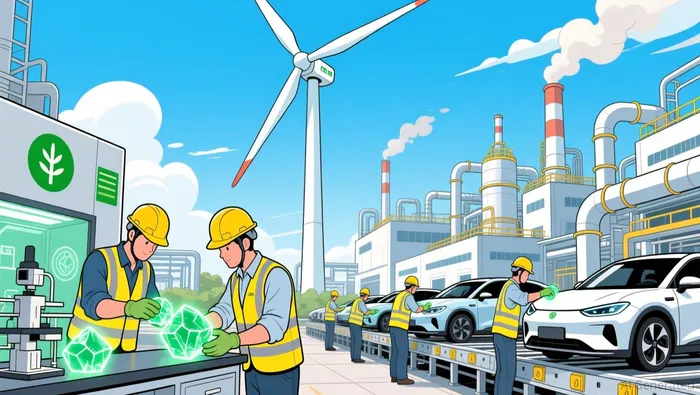 The demand for rare earth elements (REEs) is surging, driven by their role in enabling cutting-edge technologies. Neodymium, praseodymium, dysprosium, and terbium-key components in high-performance magnets-are essential for EV motors and wind turbine generators. According to the International Energy Agency (IEA), demand for REEs could triple by 2040 under current policies and increase sevenfold under a sustainable development scenario. A McKinsey report further projects that global demand for magnetic REEs will rise from 59 kilotons in 2022 to 176 kilotons by 2035 as noted in market analysis.
REMX's portfolio is uniquely positioned to benefit from this demand. For instance, companies like Albemarle Corp, a top holding in the ETF, are already scaling production of lithium and other critical minerals used in EV batteries. Meanwhile, firms such as PLS Group Ltd are advancing recycling technologies to recover rare earths from end-of-life electronics and industrial waste. These innovations are critical to addressing supply constraints and reducing reliance on primary mining.
Geopolitical Dynamics: Supply Chain Resilience as a Strategic Imperative
The geopolitical landscape further amplifies the strategic case for REMX. China's dominance in the rare earth supply chain-92% of global rare earth refinement and 98% of magnet production-has created vulnerabilities that nations are scrambling to address. Export restrictions imposed by China in 2025 disrupted global supply chains, underscoring the urgency of diversification.
In response, the U.S. Inflation Reduction Act (IRA) and the EU Critical Raw Materials Act (CRMA) are incentivizing domestic production. REMX includes companies from North America and Europe, such as Energy Fuels and Ucore Rare Metals, which are advancing projects to reduce dependency on Chinese supply. These firms are capitalizing on policy tailwinds while navigating the challenges of long permitting timelines and environmental regulations.
Challenges and Opportunities in the Rare Earth Ecosystem
Despite the sector's promise, challenges persist. Recycling and secondary sourcing remain nascent, with primary mining still accounting for the majority of supply. Additionally, the high cost of refining and geopolitical tensions could delay the development of alternative supply chains. However, these hurdles also represent opportunities for innovation. REMX's focus on companies engaged in recycling and advanced processing positions it to benefit from the sector's maturation.
International cooperation is another critical factor. Institutions like the IEA and World Economic Forum are advocating for global partnerships to secure supply chains. REMX's diversified portfolio, which spans multiple geographies and technologies, aligns with this collaborative approach.
Conclusion: A Strategic Allocation for the Energy Transition
The VanEck Rare Earth and Strategic Metals ETF (REMX) is more than a bet on a niche sector-it is a strategic allocation in the infrastructure of the future. By combining exposure to companies at the forefront of rare earth production, refining, and recycling, REMX captures the dual forces of technological innovation and geopolitical realignment. As the energy transition accelerates, the demand for rare earth metals will only intensify, making REMX a compelling addition to portfolios seeking to align with the next industrial revolution.





Comentarios
Aún no hay comentarios