
Valvoline's Q3 2025 Earnings Outlook and Strategic Growth Momentum: A Case for the Undervalued Oil Changer
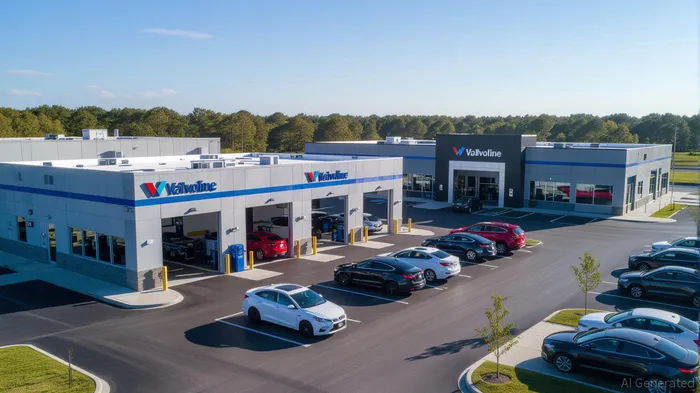
Valvoline Inc. (NYSE: VVV) stands at a pivotal juncture as it prepares to release its Q3 2025 earnings on August 6, 2025. With a stock price of $35.37 and a P/E ratio of 17.4, the company appears modestly valued relative to its historical averages and industry peers. However, the question remains: Does this valuation, combined with recent operational momentum and strategic acquisitions, justify an immediate buy ahead of the earnings release?
Operational Resilience Amid Revised Estimates
Valvoline's Q2 2025 results were a mixed bag. While revenue of $403.2 million fell short of the $405.12 million estimate, the company's adjusted EBITDA growth of 11.6% to $123 million and a 5% rise in adjusted EPS to $0.45 underscore its ability to maintain profitability despite macroeconomic headwinds. The 6.5% system-wide same-store sales (SSS) growth in Q3 2024 (ending June 30, 2024) further highlights its resilience in a competitive retail landscape.
Yet, analysts have tempered expectations. Full-year 2025 revenue estimates have dropped from $1.75 billion to $1.71 billion, and 2026 forecasts have fallen from $2.00 billion to $1.97 billion. Earnings per share projections have similarly declined, with 2025 EPS now at $1.93 (down from $2.01) and 2026 at $1.79 (from $1.91). These downward revisions reflect cautious sentiment, particularly as ValvolineVVV-- navigates integration costs from its $625 million acquisition of Breeze Autocare (Oil Changers) and a high debt-to-equity ratio.
Strategic Growth: Acquisitions and Franchising
The acquisition of Breeze Autocare, expected to close in Q3 2025, is a cornerstone of Valvoline's growth strategy. This deal will add nearly 200 stores across 17 U.S. states, expanding its network to over 2,200 locations and bringing it closer to its 3,500-store target. The acquired stores generated $200 million in annual net sales and trade at a 10.7x EBITDA multiple, aligning with industry standards. Analysts project the acquisition to be EPS-neutral in the first year but accretive over time, with synergies in fleet services, supplier negotiations, and technology deployment.
Simultaneously, Valvoline has refranchised 17 company-owned stores in 2024, prioritizing capital efficiency. This shift to a franchised model—adding 15 new franchised stores in Q3 2024—reduces capital intensity while accelerating network expansion. The company's focus on geographic complementarity, particularly in high-growth markets like California and Texas, positions it to capitalize on summer driving season demand and margin expansion.
Valuation Metrics: A Tale of Two Perspectives
Valvoline's valuation appears compelling at first glance. Its P/E ratio of 17.4 is below the S&P 500's average of 23, and its P/S ratio of 2.66 is a fraction of its 2022 peak of 20.80. Analysts have set a $43.33 average price target (22.5% upside), while GuruFocus' $63.49 estimate suggests a 79.5% upside. This disparity reflects diverging views: the former assumes conservative growth, while the latter anticipates a re-rating driven by the Breeze Autocare integration and margin improvements.
However, risks persist. The company's P/B ratio of 18.29 and high debt load (leverage ratio of 2.5x–3.5x post-acquisition) could weigh on investor sentiment. Technical indicators also suggest a bearish trend, with the stock down 1.94% following Q2's earnings miss.
Earnings Catalysts and Buy Signal
Valvoline's Q3 2025 earnings could serve as a catalyst. If the company exceeds the $436.74 million revenue and $0.45 EPS consensus, the stock may rally on improved guidance and confidence in its strategic execution. Key watchpoints include:
- EBITDA growth: A repeat of Q3 2024's 11.6% increase would validate operational efficiency.
- Breeze Autocare integration: Early signs of cost synergies or store performance could boost long-term optimism.
- Balance sheet updates: Progress on reducing leverage or resuming share buybacks would signal financial discipline.
Investment Thesis: Buy the Dip or Wait?
For investors, the decision hinges on risk tolerance. The stock's current valuation and GuruFocus' aggressive target suggest a compelling entry point for those comfortable with near-term volatility. However, the downward revisions to 2025 estimates and technical headwinds warrant caution. A prudent approach might involve a partial position ahead of earnings, with a stop-loss below $32 to mitigate downside risk.
If Valvoline delivers strong EBITDA growth and provides a clear path to leveraging its expanded store network, the stock could see a re-rating. Conversely, a miss on revenue or EPS may delay the bull case until 2026.
In conclusion, Valvoline's strategic momentum and undervaluation present an intriguing opportunity, but patience and selective entry ahead of Q3 earnings could maximize returns. As the oil changes, so too does the potential for this “oil changer” to deliver long-term value.





Comentarios
Aún no hay comentarios