
Valuation Fairness in Corporate Mergers: Legal and Investor Scrutiny of TreeHouse Foods' Proposed Sale
A Premium, But at What Cost?
The cash component of the TreeHouseTREE-- deal represents a 38% premium over the company's closing price of $16.30 per share on September 26, 2025, according to a Stock Titan report. On the surface, this appears to reward shareholders for a period marked by macroeconomic headwinds, including supply chain disruptions and shifting consumer demand, as reported by ESM Magazine. Yet the law firm Kahn Swick & Foti, LLC-led by former Louisiana Attorney General Charles C. Foti, Jr.-has launched an investigation into whether the consideration "accurately reflects the company's value" or if the process leading to the deal was sufficiently competitive, as noted in a Morningstar alert.
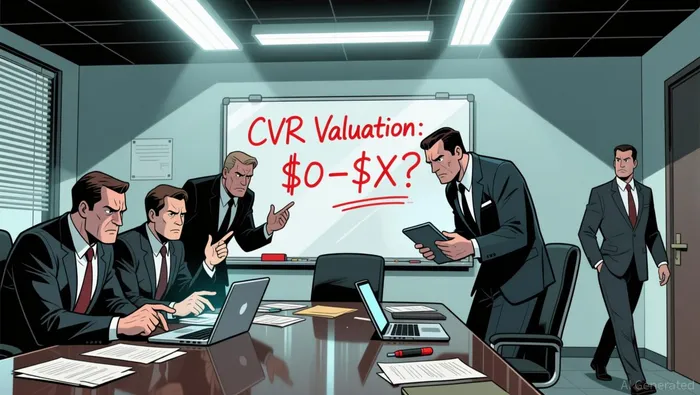
The firm's inquiry hinges on a critical question: Does the CVR structure adequately compensate shareholders for the company's ongoing litigation tied to its coffee business? The CVR entitles holders to a portion of any proceeds from this litigation, but its value is contingent on uncertain outcomes. Critics argue that this creates a "value transfer" from shareholders to acquirers, who may benefit from the CVR's ambiguity, as described in the Stock Titan report.
Investor Sentiment: Liquidity vs. Long-Term Upside
For many shareholders, the immediate cash offer is a compelling proposition. A 38% premium provides liquidity in a volatile market, particularly for a company operating in the fragmented food manufacturing sector. According to a Jefferies analyst, the take-private structure is "likely the best path forward" given the sector's challenges.
However, the CVR introduces a layer of complexity. While it offers potential upside tied to litigation recoveries, its value is not guaranteed. Data from Bloomberg indicates that similar CVR structures in past mergers have underperformed expectations by an average of 20–30% due to regulatory delays and litigation risks, according to the Stock Titan report. This has led some investors to question whether the CVR is a "value enhancer" or a "value diluter."
Legal Scrutiny and the Shadow of "Fairness"
The Kahn Swick & Foti investigation underscores a recurring theme in merger litigation: the subjective nature of "fairness." The firm's focus on the deal's process-specifically, whether TreeHouse's board adequately explored alternatives-echoes arguments from past shareholder challenges. For instance, in the 2023 merger of BlueWave Foods and PantryCo, courts ruled that boards had a fiduciary duty to maximize shareholder value even when contingent rewards were involved, as reported in the Morningstar alert.
TreeHouse's case is further complicated by the CVR's design. Unlike traditional earn-outs tied to financial metrics, this CVR is contingent on litigation outcomes, which are inherently unpredictable. As Foti's firm notes, this structure may disproportionately benefit the acquirer, who assumes no downside risk while retaining control over the company's operations, as described in the Morningstar alert.
Risks and the Road Ahead
The deal's success hinges on three key factors:
1. Regulatory approvals for the take-private transaction.
2. Shareholder vote outcomes, particularly if dissenting shareholders challenge the CVR's valuation.
3. Timing of litigation proceeds, which could delay the CVR's payout for years, as noted in the Stock Titan report.
Analysts at Stock Titan argue that the CVR's potential upside-estimated at $1–$3 per share-could justify the premium if litigation proceeds materialize quickly, as described in the Stock Titan report. Yet this optimism contrasts with the caution of ESM Magazine, which highlights the "agile operating model" TreeHouse aims to adopt post-merger but warns that contingent rewards may not align with long-term strategic goals, as reported in the ESM Magazine report.
Conclusion: A Case Study in Merger Valuation
TreeHouse Foods' proposed sale encapsulates the delicate balance between legal rigor, investor expectations, and corporate strategy. While the cash premium offers immediate value, the CVR's contingent nature invites scrutiny that could reshape how similar deals are structured in the future. As Foti's investigation unfolds and the stock price trends reveal investor sentiment, the case serves as a reminder that valuation fairness is not just a number-it's a negotiation between certainty and possibility.





Comentarios
Aún no hay comentarios